Blog
 Albert RobertsonBearish
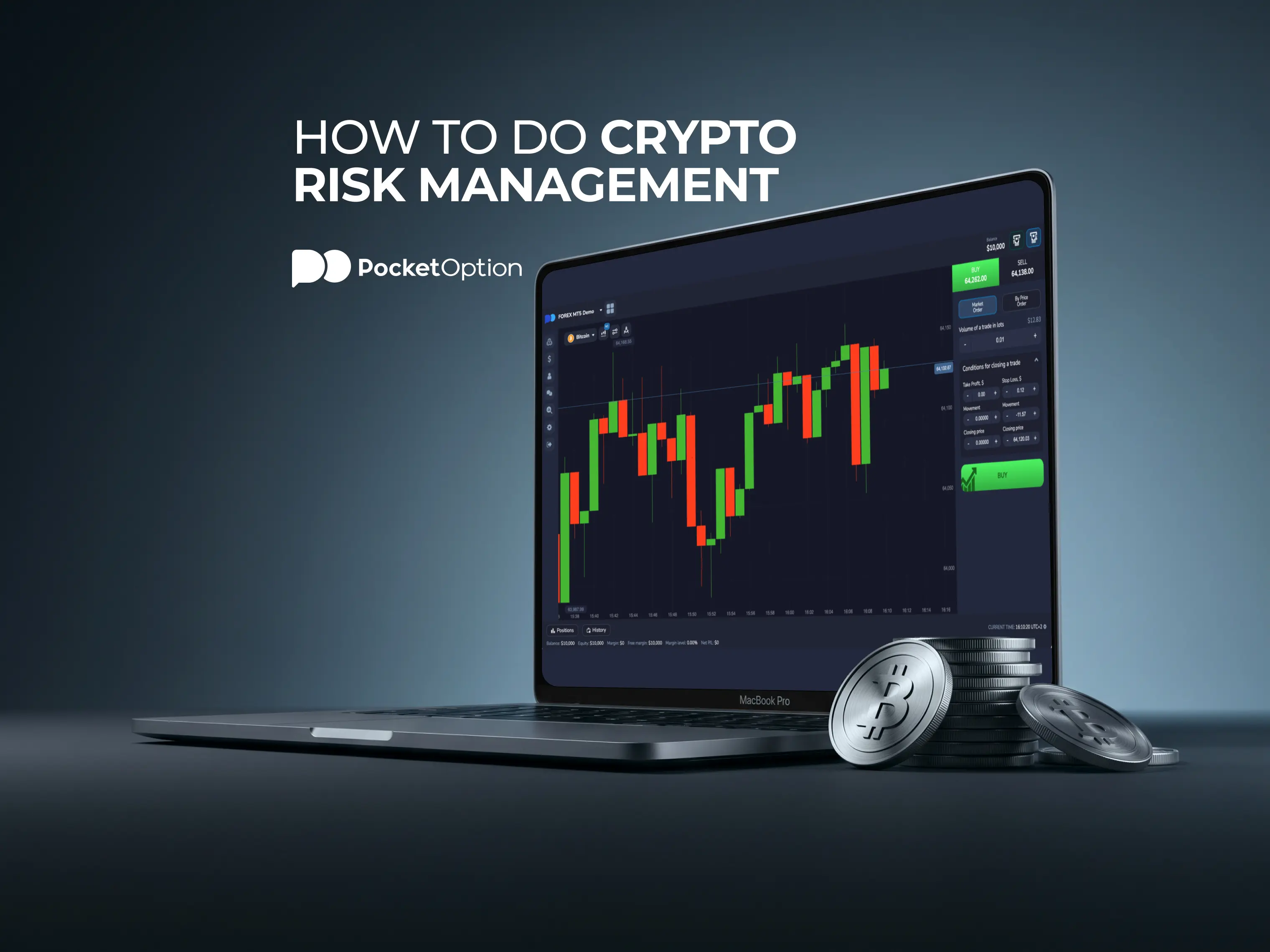
Crypto Risk Management: How to Control Risk When Trading Cryptocurrencies on Pocket Option
Trading and crypto risk management aren’t separate skills. If you are trading crypto, you have to learn both, to not suffer losses. This guide breaks down how to manage crypto risk using core principles: diversification, trade limits, stop rules, position sizing, etc. It also shows how to apply them not just to BTC, but to ETH, SOL, and other coins as well.
 Eric BriggsBearish
Bitcoin Transaction: How BTC Transfers Work and What It Means for Trading and Withdrawals on Pocket Option
Every BTC transfer you make is a Bitcoin transaction moving through the same public network (blockchain) that Bitcoin has run on since 2009. Understanding how that network processes data is important if you want to trade or invest into BTC, or do any crypto payments in general.
 Albert RobertsonBearish
What Is Risk-Reward Ratio in Trading?
Put two weights on a balance scale and the scale doesn't care what either one represents, just how they compare against each other. Risk reward ratio does something similar with money instead of weight, comparing what a trade could cost against what it could return, before either number becomes real.

 Diego FernándezBearish
Forex Trading in South Africa
Forex trading in South Africa comes with a local layer no generic guide covers: ZAR's sensitivity to commodity prices and SARB policy, SAST session timing against the London-New York overlap, and legal specifics that need checking directly with SARB. This guide walks through that context, a worked SAST schedule example, and the mistakes that trip up beginners trading from South Africa.
 Diego FernándezBearish
Forex Trading in India
Forex trading in India comes with a local layer no generic forex guide covers: INR's sensitivity to RBI policy and oil prices, IST session timing against the London-New York overlap, and legal specifics that need checking directly with RBI or SEBI. This guide walks through that context, a worked IST schedule example, and the mistakes that trip up beginners trading from India.
 Albert RobertsonBearish
Safe Haven Currencies Explained
When a storm rolls in at sea, boats do not scatter randomly. They head for harbor, and not just any harbor. The deepest, most sheltered, most trusted ports fill up fastest, while smaller, shakier ones get largely ignored. Currency markets do something similar during periods of stress. Money looks for shelter, and a handful of currencies consistently attract more of that traffic than the rest.
 Albert RobertsonBearish
ADX Indicator Strategies: Day Trading with Trend Strength
Most of the technical indicators show the trend direction. ADX provides information which is more helpful than just pointing to the trend. It shows whether the market has confidence to move at all. Trading in a strong trend with confident momentum is a different game from trading in a noisy range. And ADX helps traders to see it clearly. This article will provide guidelines on how to use ADX indicator for trading on Pocket Option: it will explain what the ADX numbers mean, how the directional lines work, and it will introduce you into creating your own basic ADX indicator strategy to test on a demo account.
 Albert RobertsonBearish
Trade Signals: What They Are and How to Use Them
In essence, trade signals are indications of what you should do next – buy or sell. The signal may be generated by a person, an algorithm or the combination of both. Trade signals are everywhere nowadays: on social platforms, in dashboards and even in automated bots. But is it reliable? What is the right way of using them?
 Eric BriggsBearish
What Is a Fork in Crypto? How Fork Events Can Impact Your Trading
Splits of blockchain into two are called forks, and they are the most violent and misunderstood events in the entire space. There are still debates around Ethereum forks, which block they should happen at, which chain is the ‘main’ one, etc. This guide explains what is a fork in crypto, why forks happen, how they tend to affect price, and what traders on Pocket Option should know when a fork is about to happen.
 Albert RobertsonBearish
Swing Trading: How to Plan Trades That Last Several Days
Of course, not everybody can spend their whole day in front of a computer screen. Well, some people simply do not want to. This is why swing trading was created. Swing trading is meant for those who want to earn money in the market but do not have to follow it constantly. You buy an asset, hold it for some days, and then sell it. In this guide, you will get to know everything about swing trading, its principles, and how to swing trade on Pocket Option. We will explain to you how to plan your trades, enter, manage them, and exit safely and profitably.
 Albert RobertsonBearish
What is Scalping? Ultra Short-Term Moves and Risk
Scalping might be compared to sprinting when it comes to trading. The distance covered is small, and the effort involved in each round is great. There is hardly any room for errors. A scalper opens a position, takes several pips and closes it. Then repeats the process throughout the session numerous times. The question what is scalping trading usually refers to this ultra-short-term approach, where positions may remain open for only seconds or minutes.
 Albert RobertsonBearish
Gap Trading Strategies: How to Work with Price Gaps
It happens often that a gap forms in charts. Pricing closes at a particular point and opens at another, with nothing happening in between. The lack of trading during that period is not an error, rather, it is useful information. For traders who understand what is gap trading strategy and how to trade gaps, it can represent a viable strategy.
 Albert RobertsonBearish
Bullish vs Bearish Divergence How to Use RSI Signals on Charts
Divergence is considered one of the most dependable immediate alerts in technical analysis. Understanding bearish and bullish divergence can meaningfully improve trade timing. This article provides a concise definition of different types of divergence in easy terms, guides the readers through RSI indicator on Pocket Option, and provides a detailed guide explaining how to find divergences.
 Eric BriggsBearish
Proof of Work vs Proof of Stake: How Consensus Mechanisms Affect Crypto Trading
Bitcoin and Ethereum, two largest cryptos by market capitalization, run on entirely different engines. BTC uses Proof of Work concept. Ethereum uses Proof of Stake. In this guide, we explain the difference between proof of work and proof of stake, compare the two, and show how the consensus mechanism is important to trade cryptos well on Pocket Option.
 Albert RobertsonBearish
Backtesting Trading Strategies Turn Raw Ideas into Tested Plans
All traders have ideas. In fact, most of these ideas are incorrect. The difference between a trader who finds that out while testing his trading strategy on a demo platform and a trader who finds that out trading real money is, broadly speaking, the difference between training and losing money. Backtesting of trading strategies is the process of applying a certain set of trading rules to the historical prices data and evaluating its outcome. Backtesting doesn't predict anything but helps filtering out trading strategies that didn't work historically. And this alone makes backtesting one of the most valuable tasks a trader can do prior to starting live trading. In this article we'll explain everything about it: How to develop a trading idea into trading rules and run them on historical prices data. How to evaluate the results using appropriate metrics. And how to verify the system on the demo platform of Pocket Options before risking any real money.
 Albert RobertsonBearish
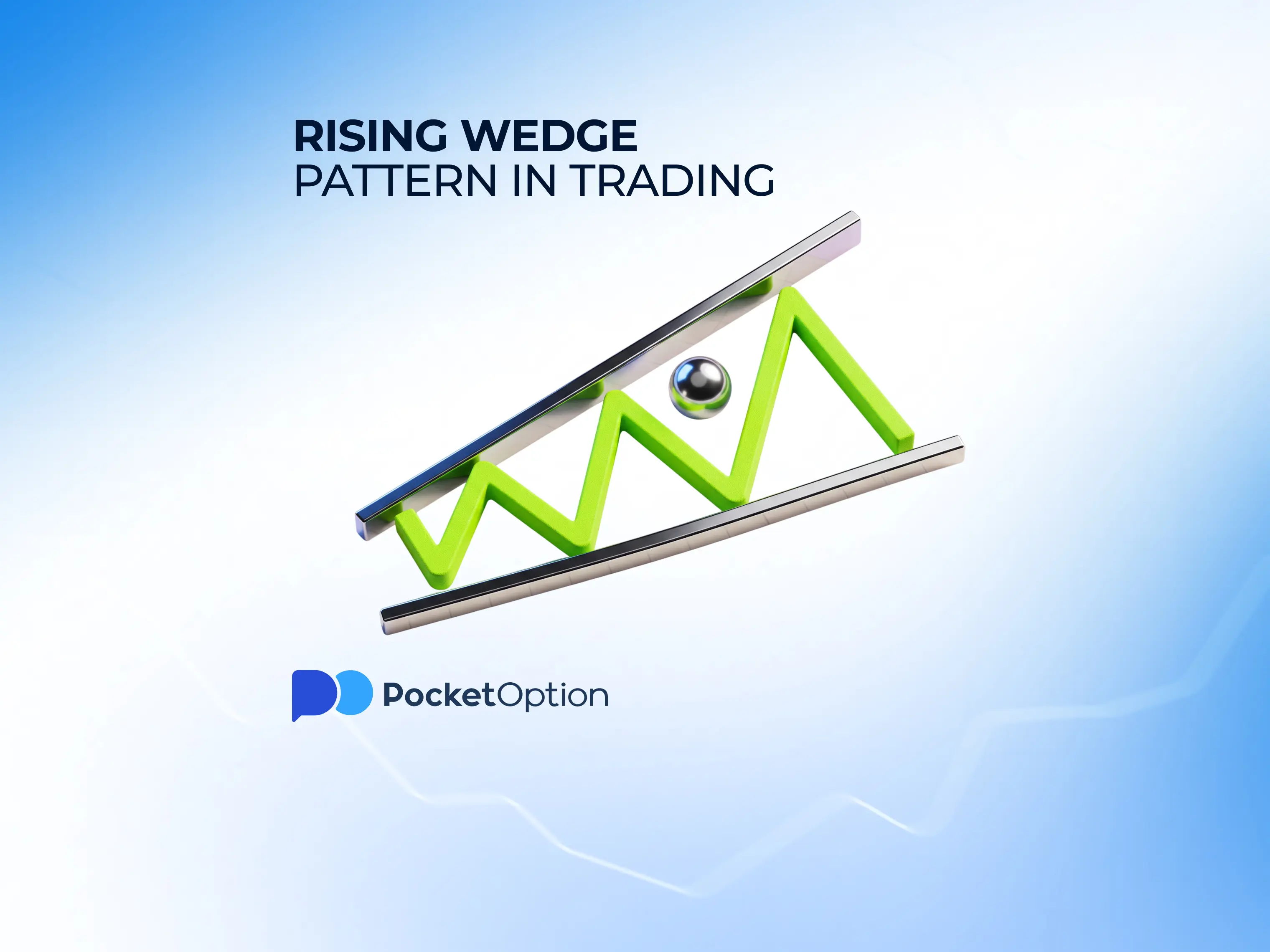
Rising Wedge Pattern: How to Spot and Trade It on Pocket Option Platform Charts
If you have spent enough time looking at chart patterns on any platform, then you have probably noticed that sometimes there is a situation when prices continue to rise, but the momentum gradually weakens. This phenomenon in technical analysis is known as a rising wedge pattern.
 Albert RobertsonBearish
Kelly Criterion Master Position Sizing Without Blowing Your Account
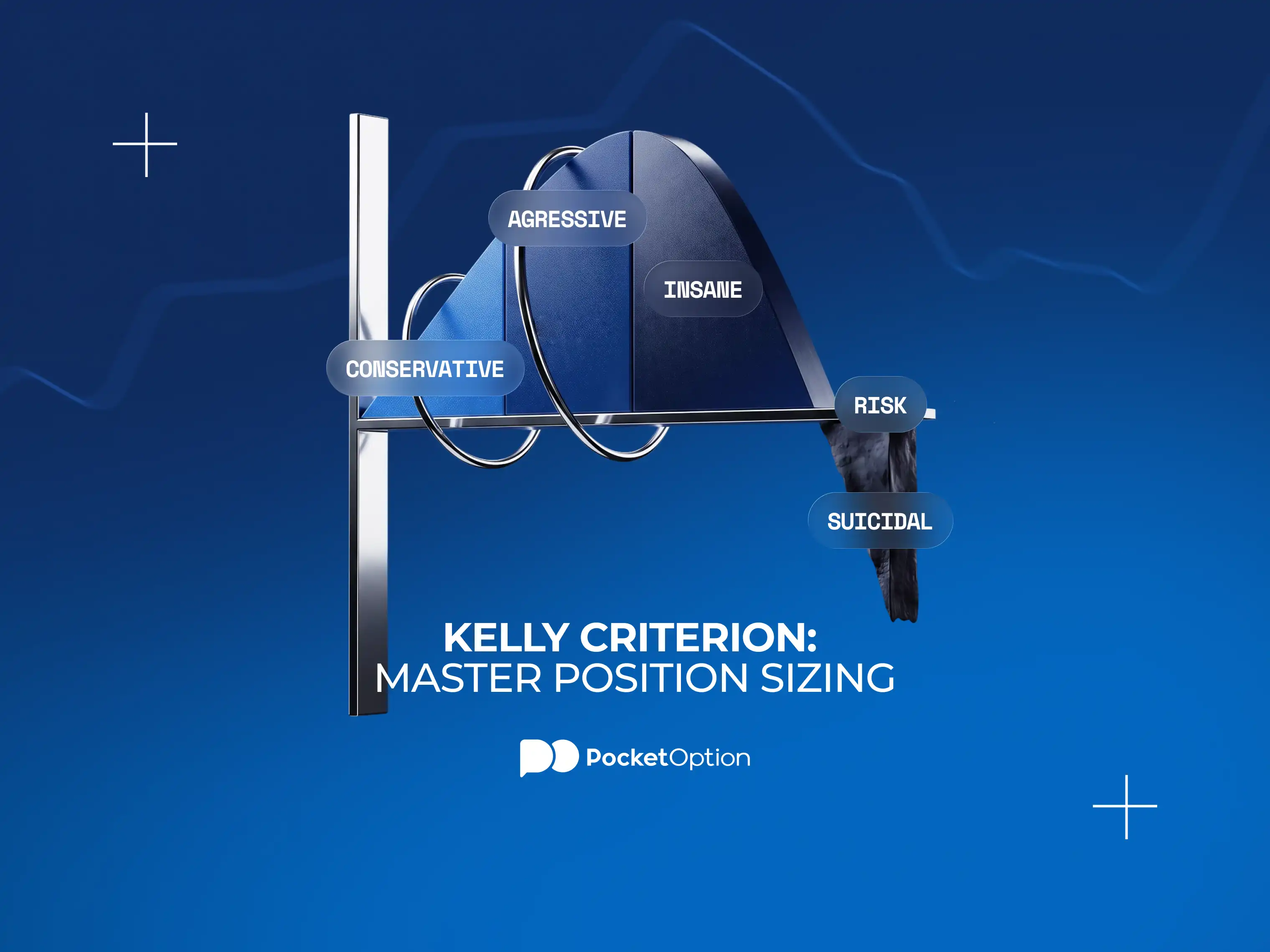
The Kelly Criterion is a formula developed for information theory. It was later adopted by professional gamblers and hedge funds. In theory, it calculates the optimal trade size to stimulate account growth for the long-term. In practice, it has to be handled carefully. Before applying, traders need to understand how it works and why most traders use a conservative fraction of it. They need to understand how to test the Kelly approach on Pocket Option prior to risking real capital.
 Diego FernándezBearish
Trading Psychology for Beginners: Discipline, Emotions and Risk Control
Ask any trader why some people succeed where others fail, and you will probably not get an answer about a particular chart formation or a specific indicator setting. What you will get is a discussion about trading psychology, or the ability to stick to the rules even when you feel like running away from them. This is not an easy conversation to have since discipline cannot be downloaded or implemented from someone else's system. Discipline must be developed and ideally in the demo environment before risking any money. We will give an overview of the common psychological pitfalls for beginner traders, discuss how to develop discipline in the Pocket Options demo mode and give a simple discipline training routine that you can do even when trading live.
 Albert RobertsonBearish
What Is a Pip in Trading, and How to Use It
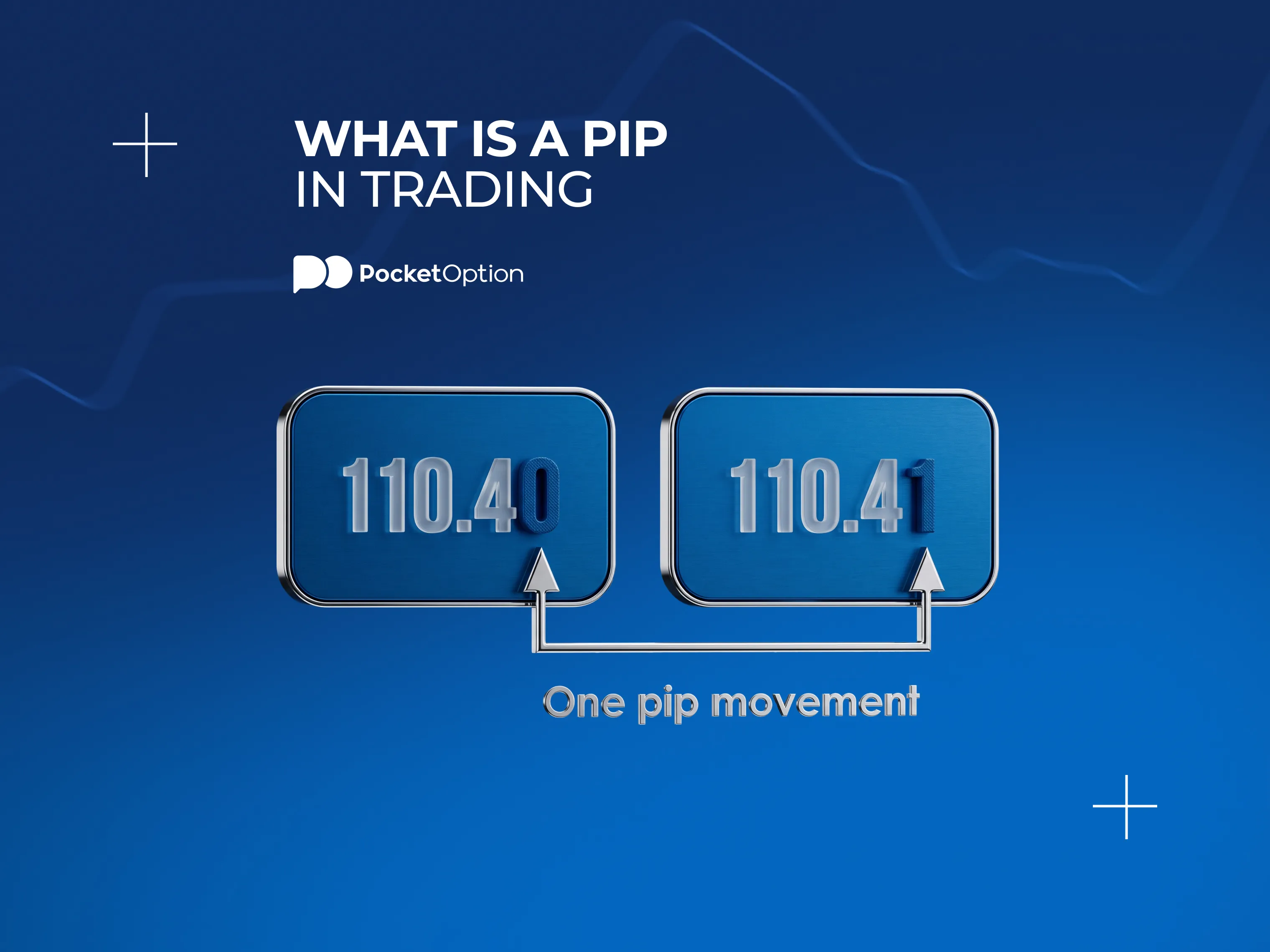
In forex trading, price movements are measured in pips. Profits, losses, spreads, and so on, all pips.This is a language of trading you must know how to read, if you trade currency pairs or CFDs. Here, we explain what is a pip in trading, how pip value is important to lot size, and how to use pips for proper risk management and performance tracking on Pocket Option.
 Albert RobertsonBearish
Types of Trading for Beginners
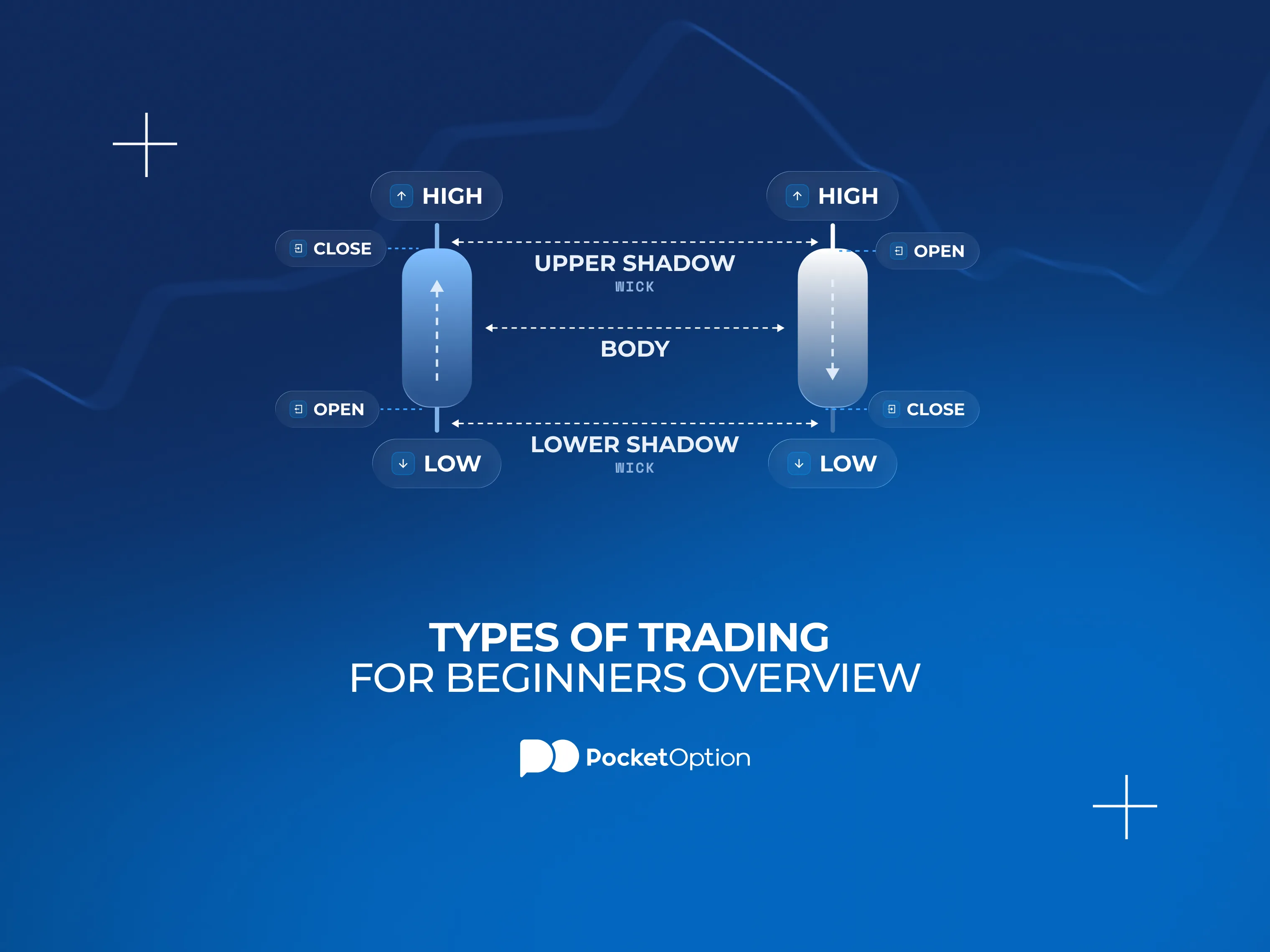
The majority of novices cannot define their trading style, and it is absolutely natural. There is always a very important question: what types of trading are there, and what fits my personality better? Usually, the answer can be found only after some time of trying all types of trading. The article describes all the styles of trading, conditions of their successful implementation and how to test them on Pocket Option using a demo account to avoid losses at the first stages of trading.
 Eric BriggsBearish
Soft Fork vs Hard Fork: How Protocol Changes Affect Crypto Prices
When a blockchain is updated, the change is often implemented through a fork, creating two chains from one. But not all forks are created equal. Some are routine network patches and pass almost unnoticed, others birth entirely new tokens, and send markets into a frenzy of speculation. This guide compares soft fork vs hard fork side by side, and what is the best way to capitalize on any fork event with Pocket Option.
 Albert RobertsonBearish
Break and Retest Trading Strategy
Step onto ice that just cracked under your last footstep and you do not immediately sprint across the pond. You test the crack again, right where it happened, to see whether it holds your weight now or gives way completely. Price does something similar after it breaks through a level. The break proves the ice is thinner than it looked. What happens next, when price steps on that exact same spot again, tells you whether it is actually safe to keep going.
 Albert RobertsonBearish
What Is a Bull Trap in Trading?
A fishing lure is built to look exactly like something worth chasing, a wounded baitfish, easy prey, no danger anywhere in sight. A fish strikes because everything about that lure says opportunity. The hook only reveals itself after the bite, and by then the decision is already made. Markets bait traders with something similar. Price pushes above a level, looking exactly like the start of a real move higher, and traders bite. The reversal that follows is the hook nobody saw coming.
 Albert RobertsonBearish
Pivot Points Trading Strategy
A seesaw has one fixed point holding the whole thing up, the fulcrum, and everything else on the board gets measured relative to that one spot. Move a rider two feet from it, three feet, the board tips differently depending on the distance. Markets build something similar out of yesterday's trading, a single calculated center point, with a handful of marked distances above and below it where price often behaves a little differently than it does everywhere else.