Crypto Risk Management: How to Control Risk When Trading Cryptocurrencies on Pocket Option
Trading and crypto risk management aren’t separate skills. If you are trading crypto, you have to learn both, to not suffer losses. This guide breaks down how to manage crypto risk using core principles: diversification, trade limits, stop rules, position sizing, etc. It also shows how to apply them not just to BTC, but to ETH, SOL, and other coins as well.

Why Cryptocurrency Is Considered High Risk
Crypto risk is high for a few concrete, real reasons:
Extreme volatility. Even if it's lower than in early days, double-digit % moves in a single day are still common. Some memecoins even experience 100-200% runs in a week. This is far beyond what any ETF, currency pair, or large stock can do.
24/7 markets. In cryptocurrency, there's no closing bell. You have to know how to manage crypto risk day and night, even if you’re not at the PC or your phone, while your trade is still running. Positions can be exposed on weekends, and through dramatic news, with no pauses to analyze and reassess.
Uneven liquidity. BTC and ETH have deep liquidity, but hundreds of smaller-cap coins do not. This means more dramatic price swings, even on lower volume. Sometimes one large whale can dramatically shift the market
News sensitivity. Regulatory announcements, incidents on exchanges or with bridges, rapidly changing social sentiment, all of it can move prices much faster in crypto.
Nascent blockchain technology. There are still quirks to polish, and sometimes the whole market takes a tumble, like what happened on 10/10, with over $19 billion in losses for traders. For small coins and chains, such events happen even more frequently.
What Makes Crypto Risk Management Different
In trading, same risk management principles that apply to forex and stocks still affect crypto, except it's even harder. You have to think about trade sizes, stop-losses, take-profits, diversification (especially when investing). But your time horizon shifts, so the monitoring needs to be constant and vigilant. For cryptocurrency, volatility notoriously changes a lot throughout the day, and risks need to be calibrated. Our guide to trading strategies covers this stop-loss logic in more depth, if you're building this out for crypto and other markets.
Just remember that a stop distance that makes full sense for a major FX pair can be way too tight for an altcoin. It will trigger off a random noise, and not a genuine move.
A lot of coins move in locked step together, especially on sharp sell-offs, driven by Bitcoin’s liquidity. This is why diversification requires more than just buying several different coins. In crypto, proper diversification is even harder than in stocks.
Setting a Per-Trade Risk Limit
Before you open any trade, you have to decide the maximum % of your account you're willing to risk on it. Size the position from that number, and not the other way around.
Ideally, this should also be dependent on the coin you’re trading. If it is highly volatile, the % of your account put into that trade should be even lower. BTC trades might take 2% at once, ETH 1.5%, SOL 1%, and some Shiba Inu or completely new memecoin should never take above 0.25% (although the amounts can change, of course). This is why you should do crypto risk monitoring every once in a while, to see how volatile are the coins right now, relative to each other.
A per-trade limit that is properly set in advance removes the temptation to raise the size of a trade that "feels" great (and which might be the one to ruin you in the end).
Using Stop Rules to Cap Losses
A stop rule is a predefined, set exit point, decided before entry. It can be a stop-loss, but in the case of investments it can also be a % that you lost, or a specific price level. The important thing is that it’s not adjusted based on how the trade is going, or your feelings afterwards. It is set in advance, and you stick to it, no matter what.
The stop distance, again, needs to account for the coin's normal trading range. Too tight, and ordinary volatility stops you out of a trade. Too wide, and one bad trade can do serious damage to your account. This is why knowing the currency beforehand, and having experience with its daily swings and price levels, is mandatory on how to manage crypto risk well.
Diversifying Across BTC, ETH, SOL, and other Coins
In the case of investing, or having multiple trading positions opened at the same time, you only really reduce crypto risk if the assets you’re holding do not move together. This is often contrary to what the crypto market does. BTC and altcoin very often mirror each other’s price action, especially during sell-offs.Holding five different coins that all tend to drop at the same time isn't really diversification, even though it looks like it on paper. Our Bitcoin trading guide covers how BTC usually leads the broader market, and how to lower the risks involved.
Asset | General Volatility | Typical Liquidity | Diversification Note |
|---|---|---|---|
BTC | Lower (relative to altcoins) | Deep | Moves the broader market |
ETH | Moderate-high | Deep | Correlated with BTC, but not perfectly |
SOL, other large-cap alts | High | Moderate | Usually amplifies BTC's direction rather than diverges from it |
Smaller-cap coins | Highest | Thinner | Highest individual risk; correlation varies |
Some coins, like HYPE and ZEC, are treated as a ‘hedge’ against BTC, and can help with management of the risk. But finding those ones, that move independently, is often quite hard.
Position Sizing for Volatile Crypto Assets
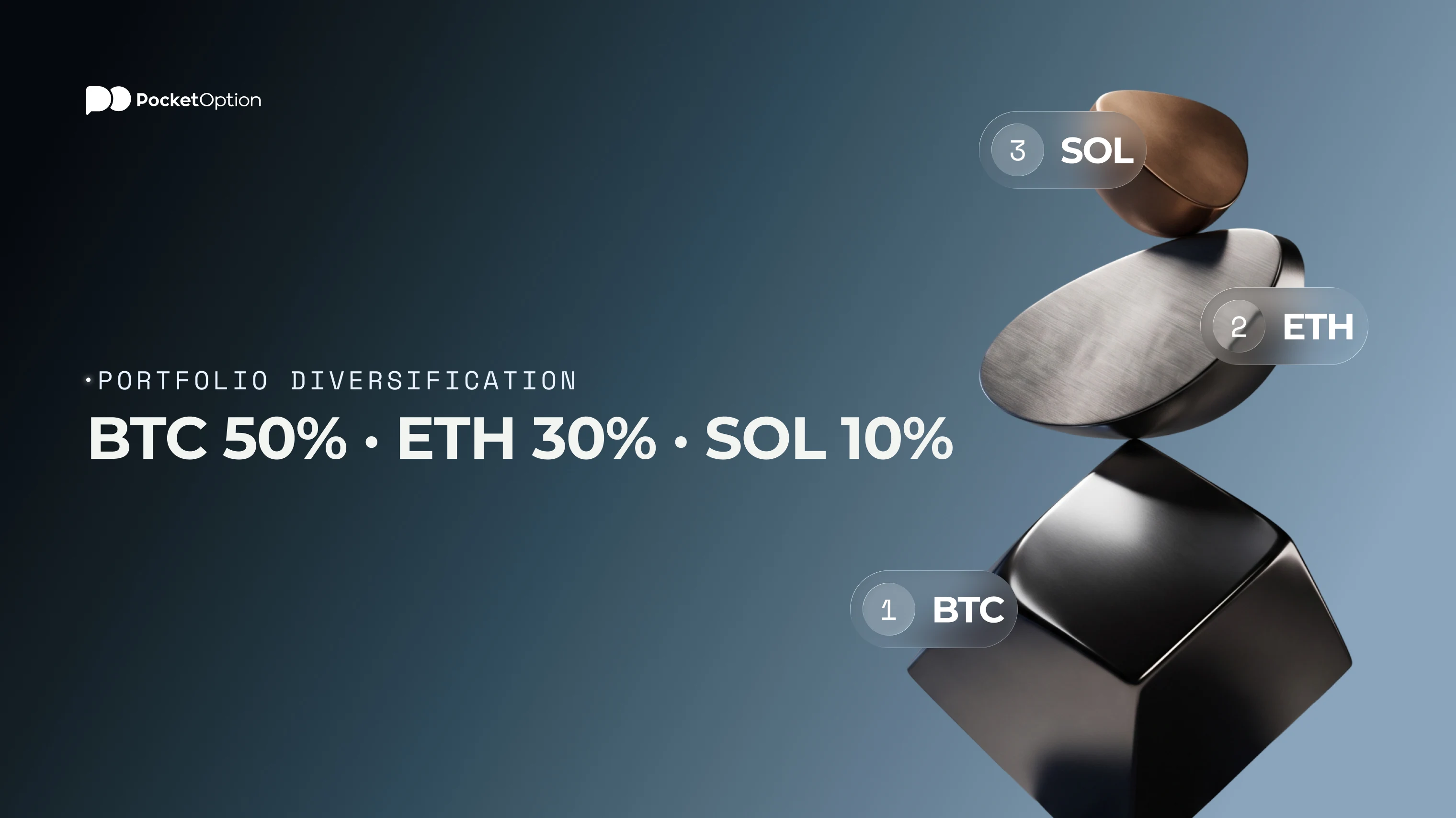
In trading, same dollar amounts don't represent same risks across different coins. Memecoins and low-cap altcoins (especially below $10 million) are the crypto high risk assets, meanwhile major blockchain tokens such as BTC, ETH, and SOL, are considered less risky.
A position sized in BTC vs a memecoin exposes your account to very different risk, even though the numbers on the trade look the same. A good rule is to adjust the position size down for assets with higher volatility. Same goes for when BTC starts its parabolic run (or parabolic drop): as the volatility increases, the position sizes for trades should go down. The profits should come from good trading decisions, not from relying on one-time, all-or-nothing gambles. Otherwise, this will not be sustainable long-term.
How To Do Crypto Risk Monitoring With Multiple Open Positions
A limit size for each trade is only part of the story. Entire risk management in crypto can’t rely on just this one mechanic. You have to track exposure across all the open positions, not just each individual trade.
Proper crypto risk monitoring means taking into account the fact that several individually "small" positions, but in correlated coins, are adding up to one large one. That is why you need to set a cap for total capital assigned to crypto trading or investing, at any point in time. If a trade or an investment does particularly well, it’s not a bad thing to ‘trim’ the position a bit. Management of such positions is a skill to develop as well: even if you do the right trades, one overgrown loss in cryptocurrency can often be brutal. You need such concentrated positions before they can become a problem.
Building a Simple Crypto Risk Management Routine
A good risk management crypto strategy doesn't need to be complicated:
Set your total exposure limits (like 5% or 10% of your account), and a limit per trade (say, 1% or 2%, depending on the asset). These should be set before the session starts, and never changed later on.
For trading, define your stop rule, for each position. This should be done at entry, not after it.
Log every trade. Asset, size, stop, reason for taking it, and outcome. Platforms like Pocket Option do most of this for you automatically, but you’re the only one who knows the reason for taking a trade.
Review this log on a fixed schedule, ideally weekly.
Adjust the rules for your exposure and entries based on the pattern across many trades.
Ideally, do it all on a demo account, where you can refine your crypto risk management strategy without accruing any real losses.
Practicing Risk Rules on the Pocket Option Demo Account
Free demo account will let you test specific numbers, and adjust them for maximum profitability. You can experiment with your per-trade percentage, stop distances, take profit, indicators you use for entries. You can experience real market volatility, and see how your strategy would perform. It is recommended to do a large sample of demo trades, not just a handful, to see whether the rules really hold up.
Unlimited test funds and possibilities
Try Demo AccountCommon Crypto Risk Management Mistakes
Using the same position size across coins with different volatility.
Treating highly correlated coins as a diversification.
Moving a stop further away during the trade, instead of accepting the original plan didn't work out, and accepting it for the future.
Increasing position size after a loss, to try to recover it faster.
Tracking risk per trade, but ignoring total exposure across ongoing cryptocurrency trades.
Conclusion
Crypto high risk and volatility does not mean a blank check to not manage risks. In fact, the diligence with stop losses and sizing in this case should be even higher. Set the rules before you trade, test them on demo for weeks, and review the log of the trades to see how well each of the trading decisions seems to perform against the market. Knowing how to manage crypto high risk comes down to the same core principles, applied over and over again.
Disclaimer: Cryptocurrency trading involves significant risk of capital loss due to high volatility. This article is for educational purposes only and does not constitute financial advice. Always test risk management rules on a demo account before trading real funds.
See more:InterestingTrading Strategies