What Is a Governance Token and How Do Holders Use It to Vote?
A governance token gives its holders a say in how a crypto protocol is run. What that say covers, and how votes are cast, depends on each protocol's own rules.

What Is a Governance Token?
A governance token is a crypto token that carries voting rights in a protocol's decision-making process, which is often organised as a decentralised autonomous organisation (DAO). In most systems one token equals one vote, so holders with more tokens carry more voting power.
The scope of those rights is set by the protocol's governance rules. Some tokens can only vote on narrow technical settings, while others control upgrades and large treasuries. Voting rights do not automatically entitle holders to revenue, and a token's market price reflects many factors beyond governance, as this piece on why crypto has value explains.
What Decisions Can Governance Token Holders Influence?
Depending on the protocol, holders may vote on:
Protocol parameters, such as trading fees, interest rate models or collateral requirements.
Upgrades to smart contracts and new product features.
Treasury spending, including grants, security audits and contributor budgets.
Incentive programmes that reward users or liquidity providers with tokens.
Votes on incentives and token emissions can also change supply and demand for the token itself, a relationship explored in this guide to tokenomics.
How Governance Token Voting Works
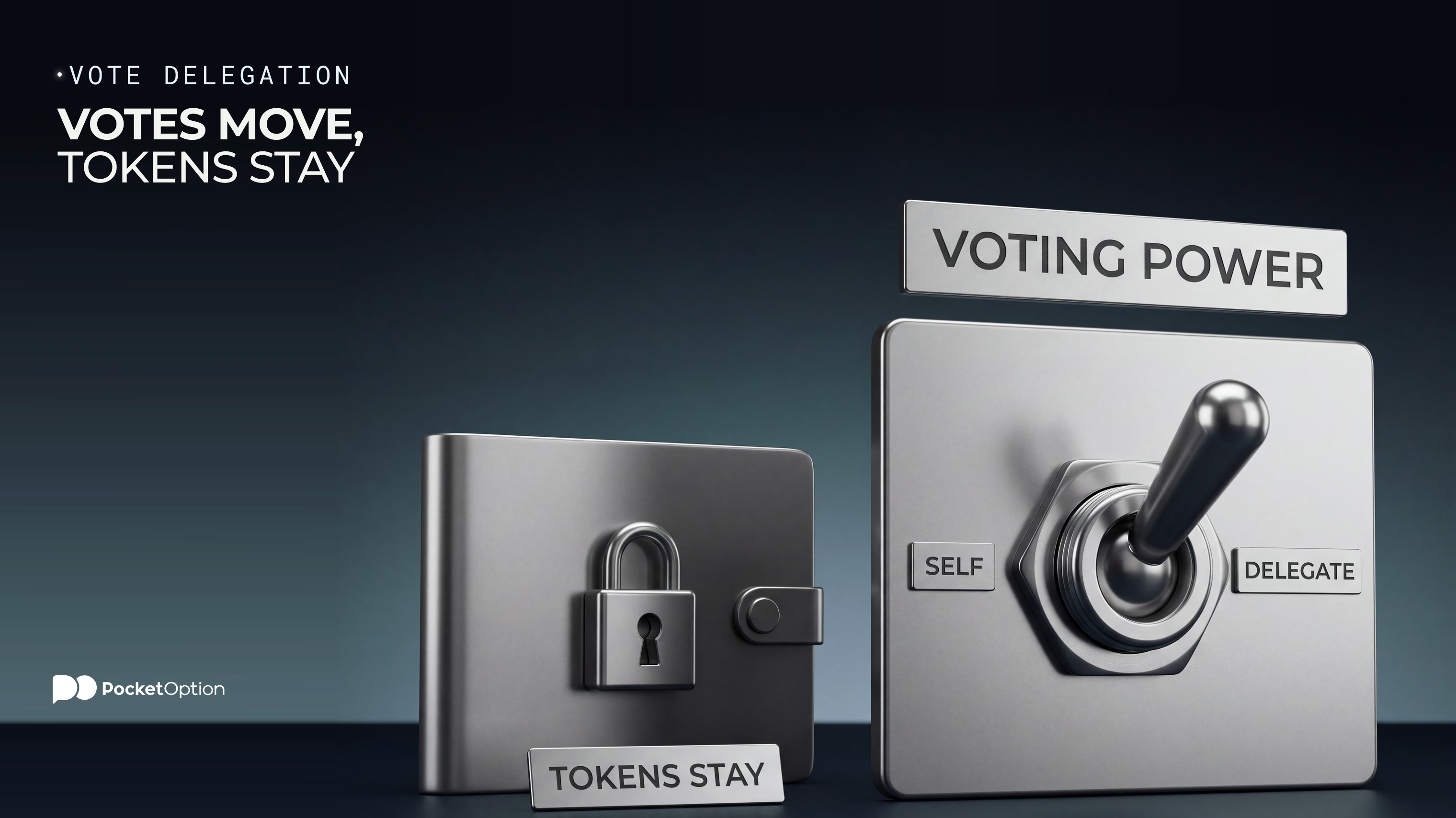
Holders can usually take part in one of three ways:
Direct voting: the holder casts votes on each proposal personally.
Self-delegation: the holder assigns their voting power to their own address so that it can be used.
Vote delegation: the holder assigns voting power to another address, known as a governance delegate, who votes on their behalf.
Some protocols, particularly those built on token standards with checkpointed voting, do not count tokens as votes until they are delegated. In these systems a holder must delegate, even to themselves, before their voting power becomes usable. Voting power is typically recorded at a snapshot taken when voting opens, so tokens acquired afterwards do not count for that proposal.
Delegation transfers votes, not tokens. The holder keeps ownership and can usually change or withdraw the delegation at any time.
From Governance Proposal to Implementation
A governance proposal is a formal request to change something in the protocol. A typical lifecycle runs as follows:
Discussion: the idea is posted on a community forum for feedback.
Temperature check: an informal, often offchain, poll gauges support.
Submission: the final proposal is published for a binding vote.
Voting: holders and delegates vote during a fixed period, and the proposal must reach a quorum, a minimum level of participation, as well as the required majority.
Implementation: approved changes are executed, often after a timelock delay that gives users time to react.
Voting and proposing have different requirements. Any holder with active voting power can usually vote, but submitting a formal proposal often requires meeting a proposal threshold, a minimum amount of voting power held directly or through delegation. Onchain execution is carried out by smart contracts, which apply the approved changes automatically.
Onchain Voting vs Offchain Voting
Onchain voting records each vote as a blockchain transaction. Results can trigger execution automatically, but every vote costs a network fee. Offchain voting, often run on platforms such as Snapshot, uses signed messages instead. Voting is free, but the result has to be implemented separately, for example by a multisignature wallet controlled by a group of trusted signers.
A Simple Governance Voting Example
Imagine a lending protocol whose rules set a proposal threshold of 10,000 votes, a quorum of 50,000 votes in favour and a seven-day voting period.
A delegate holding 12,000 delegated votes submits a proposal to cut the borrowing fee from 0.5% to 0.4%.
Maria holds 800 tokens. She completes self-delegation and votes in favour herself.
Tom holds 1,500 tokens and uses vote delegation to pass his votes to a delegate he trusts, without moving the tokens from his wallet.
When voting closes, 64,000 votes are in favour and 21,000 against, so both the quorum and the majority are met.
After a two-day timelock, the new fee takes effect.
Had only 40,000 votes been cast in favour, the proposal would have failed on quorum despite its majority, which shows why participation matters.
Conclusion
A governance token turns token ownership into voting power, but only within the limits each protocol sets. Holders may need to delegate before they can vote, proposing requires more than voting, and approved changes usually pass through a timelock before taking effect.
Start with a demo account.
Get StartedLow turnout and concentrated holdings can shape outcomes as much as the formal rules, so both are worth checking before relying on any governance system.
Disclaimer: This article is for informational purposes only and does not constitute investment advice. Cryptocurrency trading involves a high risk of capital loss.
See more:Glossary