
How Much Can You Make Day Trading? Discover Real Incomes, Tools, and Tactics
Wondering how much can you make day trading? This guide reveals realistic earning potential, expert strategies, and practical tips to help you start trading smarter with platforms like Pocket Option.

Understanding Day Trading
Day trading means buying and selling financial instruments — like stocks, forex, or crypto — within the same trading day. The goal is to capitalize on short-term price movements, avoid overnight risk, and secure consistent day trading income. A winning approach requires a plan, emotional discipline, and constant learning.
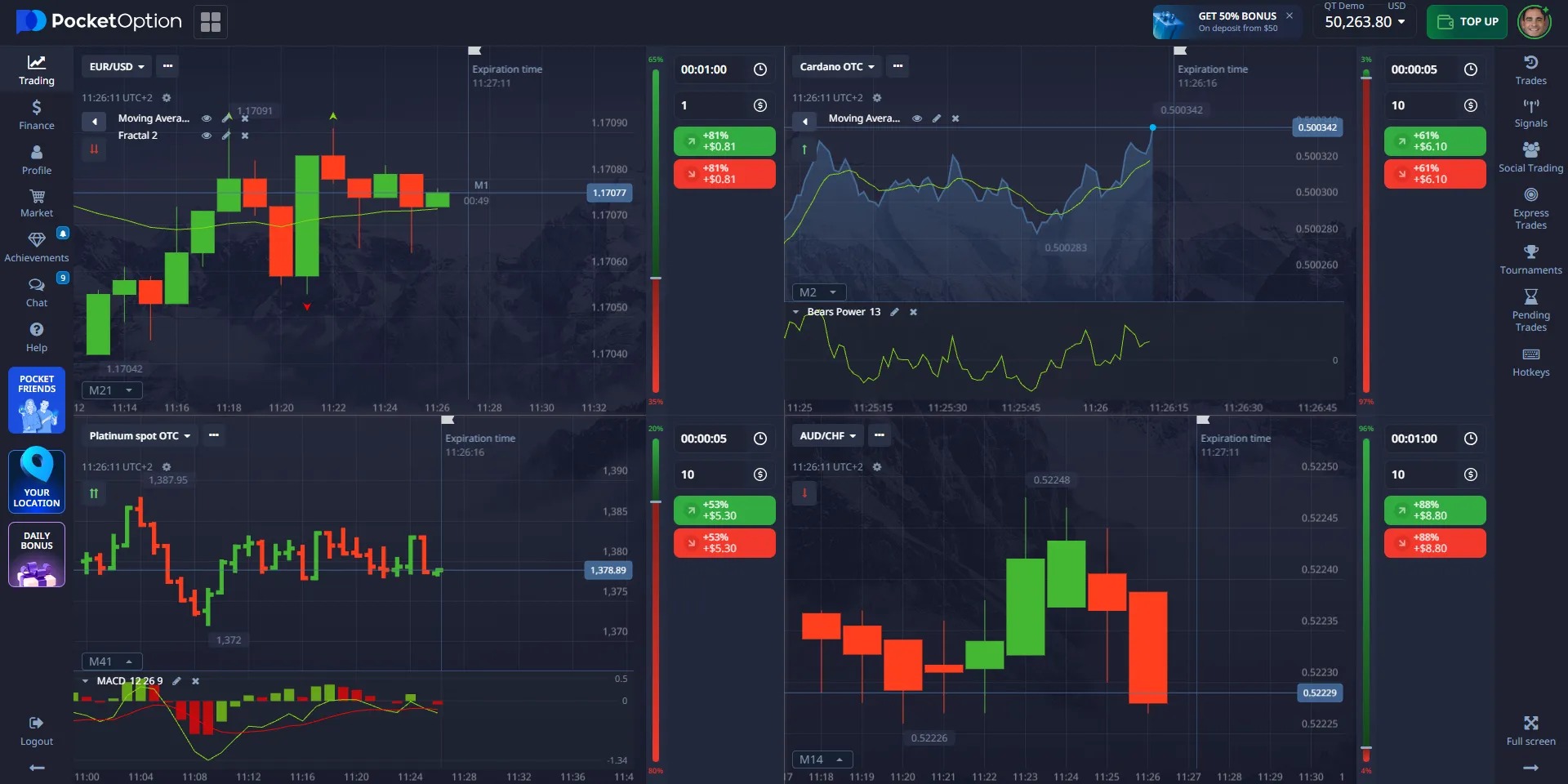
📊 Overview of Popular Assets on Pocket Option
-
EUR/USD
The most traded currency pair in the world — euro versus US dollar. Known for its high liquidity and tight spreads, making it ideal for short-term trades. EUR/USD respects classic support/resistance levels, which is why it’s a favorite among day traders.
-
Cardano (ADA) OTC
A popular cryptocurrency available 24/7 on Pocket Option through OTC markets. Perfect for weekend trading and strategy testing. Cardano is known for its volatility and strong price swings, offering opportunities for scalping and momentum strategies.
-
Platinum Spot OTC
A commodity asset tracking the spot price of platinum. Traders use it to diversify portfolios and hedge against inflation. Platinum often moves faster than gold or silver, making it attractive for those looking for strong trend moves.
-
AUD/CHF
The Australian dollar versus Swiss franc pair. It reacts to commodity market news (AUD) and Swiss economic data (CHF). This pair is favored by traders who prefer smoother, less volatile charts and well-defined trends.
Traits of a Successful Day Trader
- Discipline & Focus: Professional day traders stay calm under pressure.
- Risk Management: Limiting each trade to 1–2% of capital.
- Market Awareness: Staying updated on economic news and stock market trends.
- Consistency: Reviewing trades and refining strategies daily.
💡 Expert Insight: “Profitable traders treat day trading like a business — not a lottery ticket. Consistency matters more than a single big win,” — Laura Gomez, Bloomberg columnist.
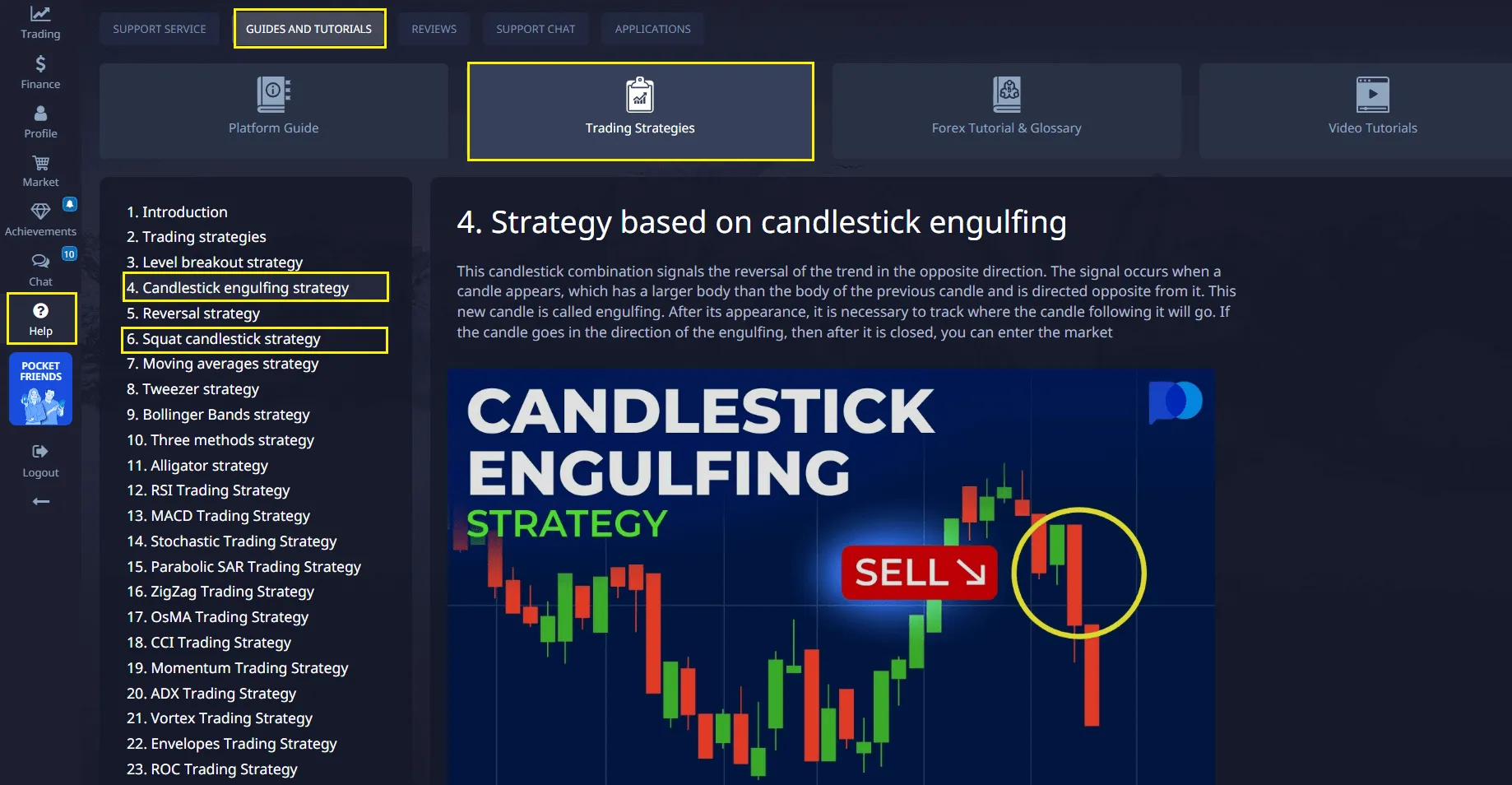
Learn day trading strategies on Pocket Option and test them for free on a demo account!
How Much Can You Make Day Trading?
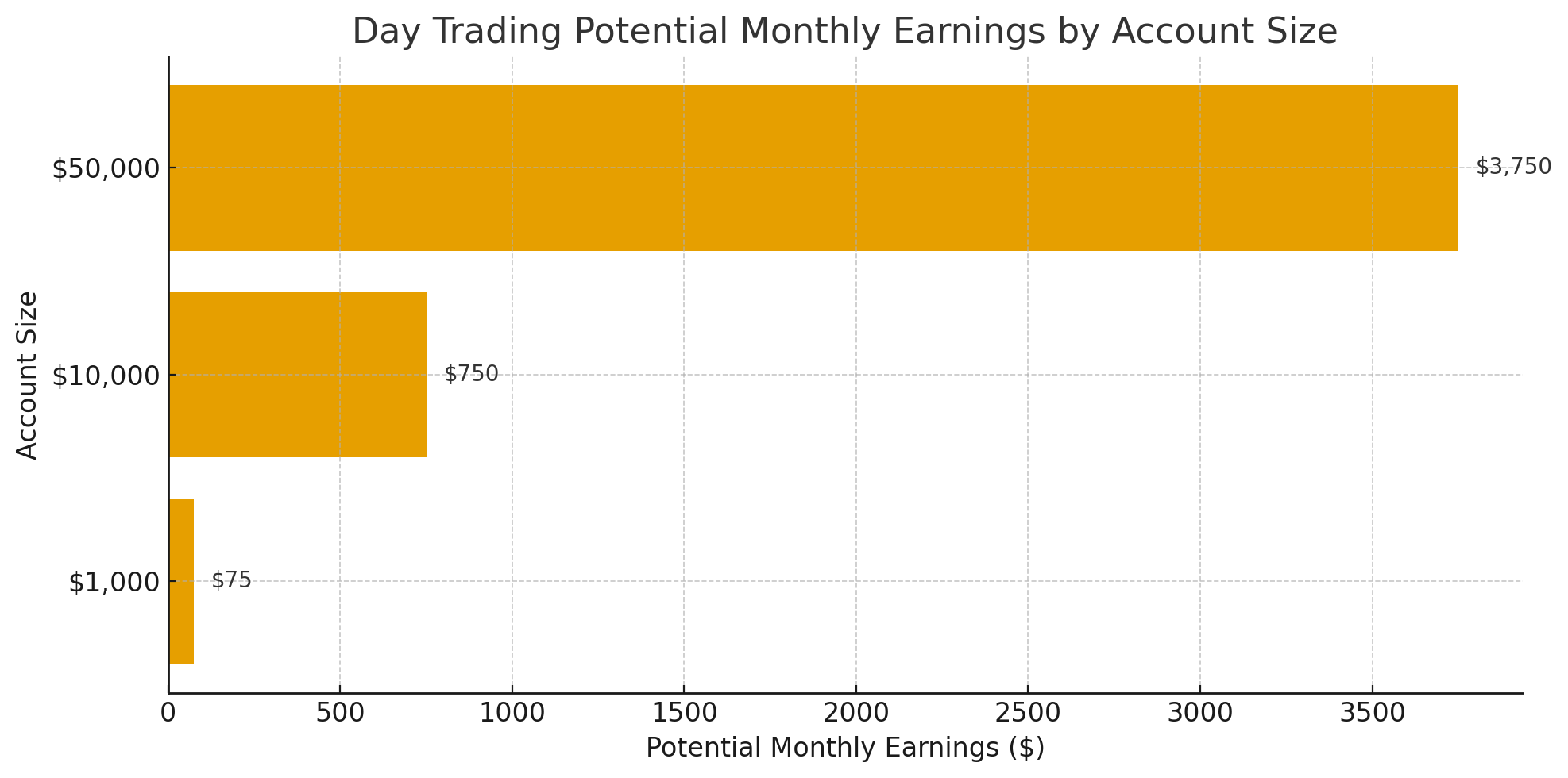
There’s no magic number — your earnings depend on account size, trading strategy, and emotional control. Below is a realistic look at potential profits from day trading:
| Account Size | Risk Per Trade | Expected Monthly ROI | Potential Monthly Earnings |
|---|---|---|---|
| $1,000 | 1% | 5–10% | $50 – $100 |
| $10,000 | 1% | 5–10% | $500 – $1,000 |
| $50,000 | 1% | 5–10% | $2,500 – $5,000 |
📈 Expert Quote: “Aim for consistent 5–10% returns monthly — compounding is your best friend,” — Kevin Brooks, CFA, MarketWatch.
Day Trader Salary vs. Other Incomes
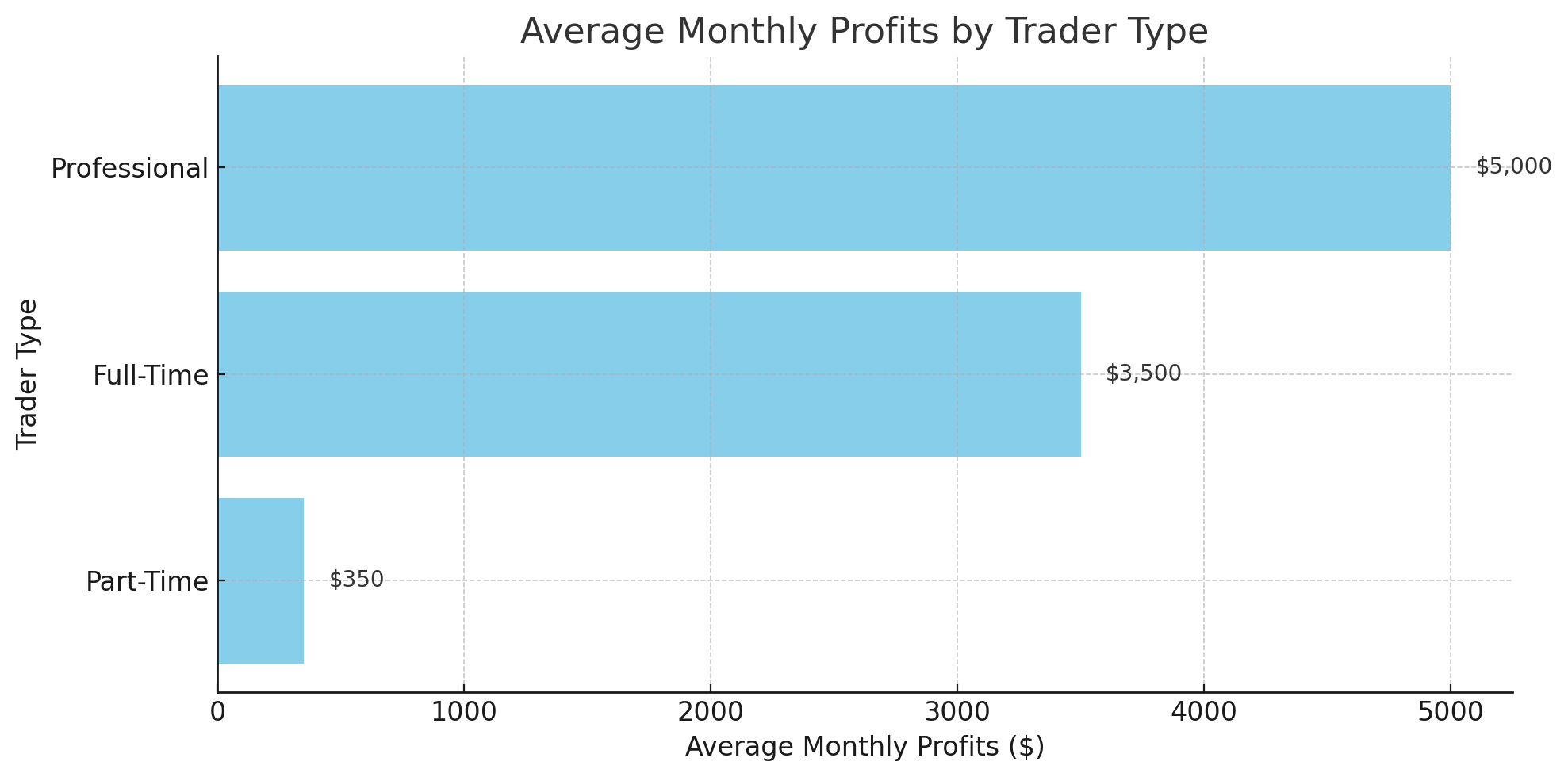
Day trader salary is variable — some months can outperform a 9–5 job, others may be break-even or slightly negative.
| Trader Type | Hours per Week | Average Monthly Profits |
|---|---|---|
| Part-Time | 5–10 hrs | $200 – $500 |
| Full-Time | 20–40 hrs | $2,000 – $5,000 |
| Professional | 40+ hrs | $5,000+ |
🎯 Key Takeaway: Treating trading as a business allows your earnings to grow beyond a fixed salary over time.
Choosing the Right Day Trading Platform
Execution speed and tools matter. Pocket Option offers:
- 100+ assets (stocks, forex, crypto) 24/7
- AI Trading 🤖 to automate winning strategies
- Telegram Signal Bot ⚡ for instant alerts
- Social Trading – copy top-performing traders
- Trading tournaments with real prizes 🏆
- $5 minimum (the amount may vary depending on the geo and payment method) deposit & free demo account
💬 Trader Review: “I started with $5 on Pocket Option and turned it into $80 in one weekend. The social trading feature helped me learn fast.” — Chris L.
📊 Example Trade:
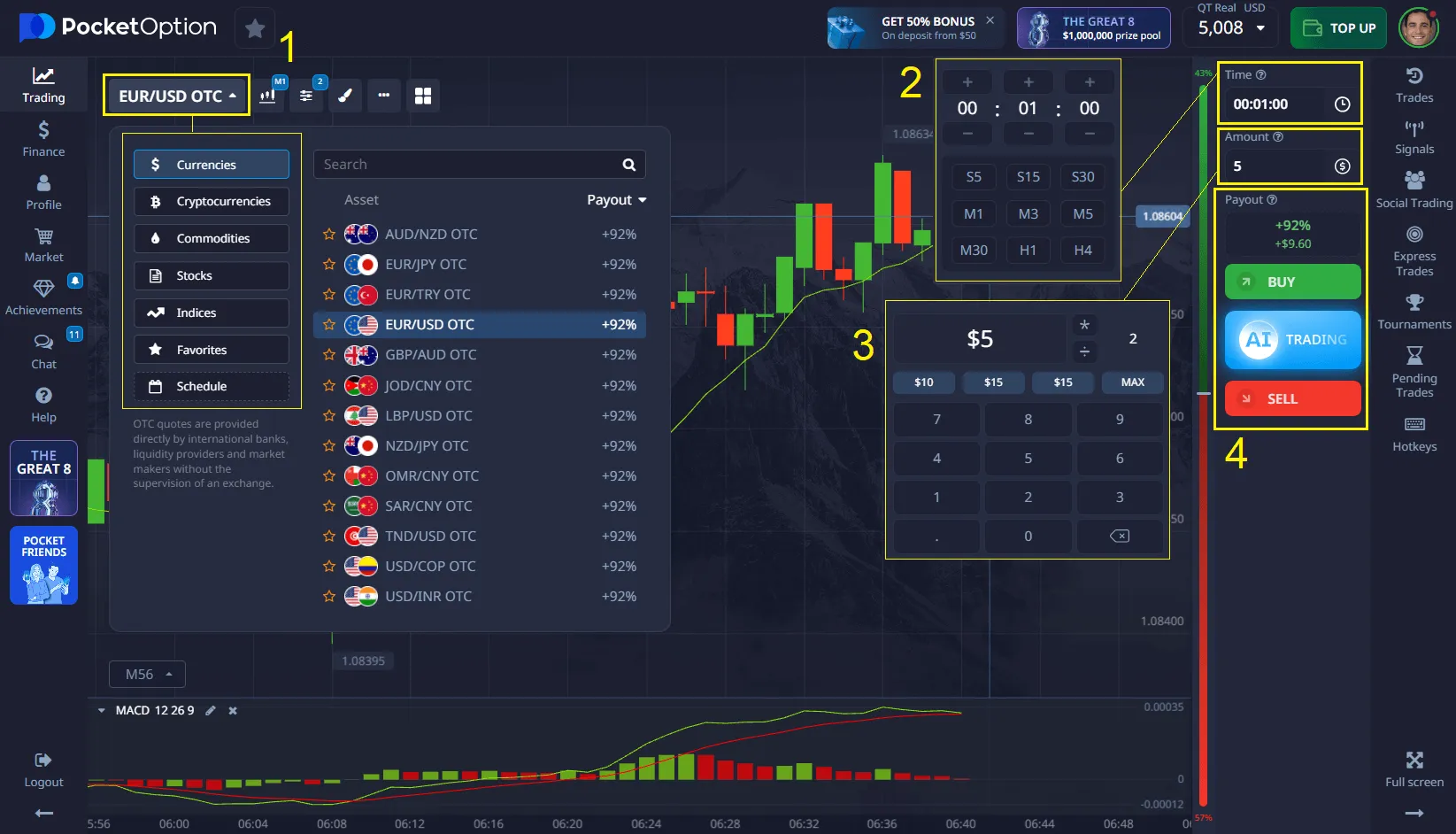
EUR/USD is trending up during the London session. Price breaks above 1.0850, retests it, and shows a bullish candle. You enter Higher with a 3-minute expiration. The price closes above the entry level — trade ends in profit.
Best Trading Strategies for Day Traders
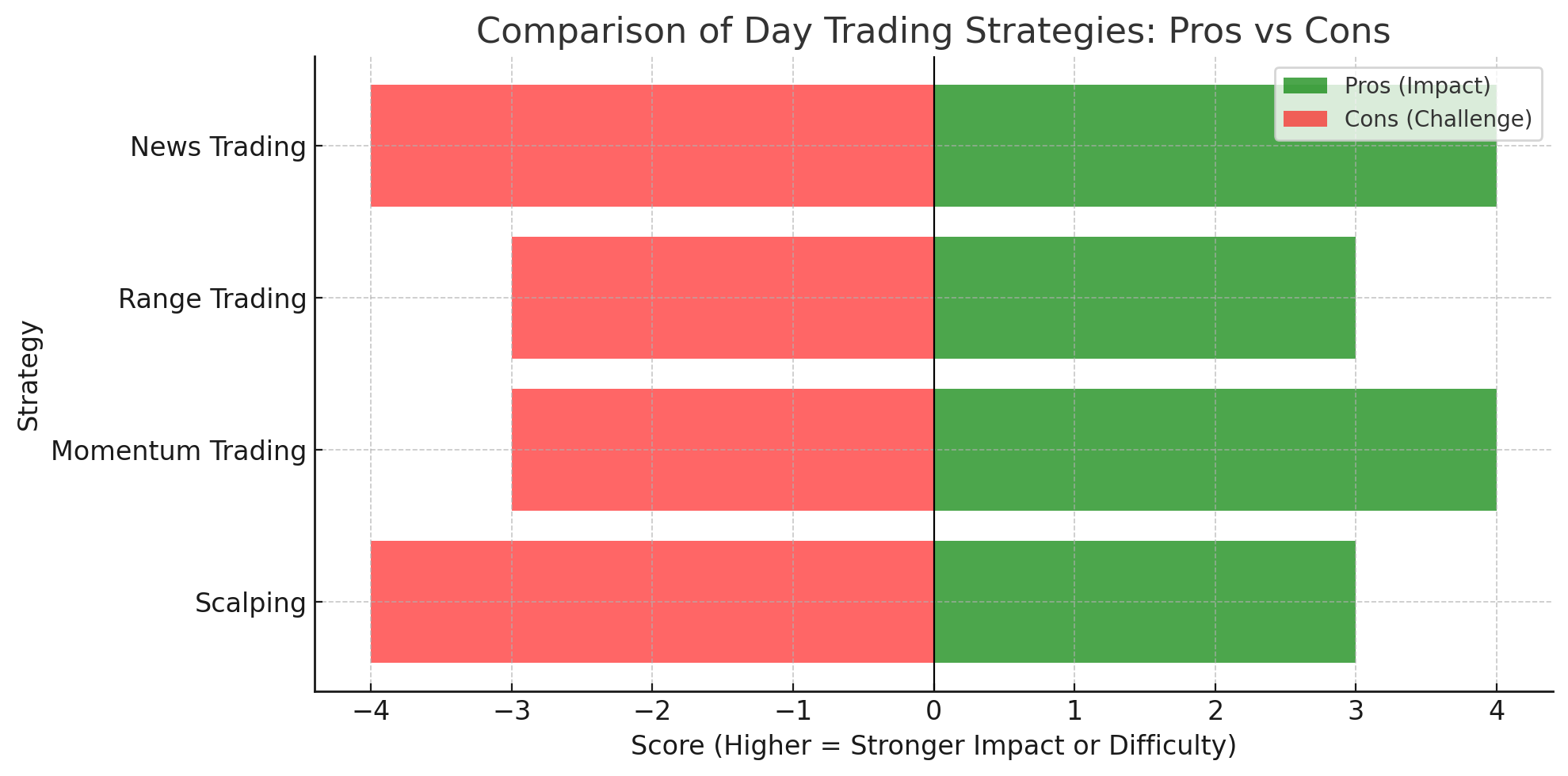
| Strategy | Best For | Pros | Cons |
|---|---|---|---|
| Scalping | Fast movers | Many small profits | High commissions can eat returns |
| Momentum Trading | Trending markets | Large wins possible | Risk of late entries |
| Range Trading | Sideways markets | Clear risk levels | Breakouts can trigger losses |
| News Trading | Economic events | High volatility moves | Requires fast reaction |
💡 Expert Tip: “Keep a journal. Document every trade and emotion — you’ll spot patterns you can fix,” — Maya Stern, trader & coach.
One of the fastest methods for active traders is the 5-second strategy — check out the full guide on Pocket Option’s blog here.
Using Leverage Wisely
Leverage is one of the most powerful — and dangerous — tools in day trading. It allows traders to control a much larger position with a relatively small amount of capital. For example, with 5:1 leverage, a $1,000 account can control $5,000 worth of assets. This means even a small 2% market move could result in a $100 gain — or a $100 loss — which is 10% of your entire account.
To use leverage effectively:
- Set strict stop-losses to protect capital when trades go against you.
- Limit leverage to 2–3x until you have a consistent profitable record.
- Avoid over-leveraging after losing trades — revenge trading can wipe an account quickly.
- Combine leverage with risk management so no single trade risks more than 1–2% of account equity.
💡 Expert Insight: “Leverage is a double-edged sword — it can accelerate growth but also accelerate failure. Control position sizing before chasing larger profits,” — Ethan Moore, senior trader at AlphaDesk.
Risk Management — The Secret Weapon
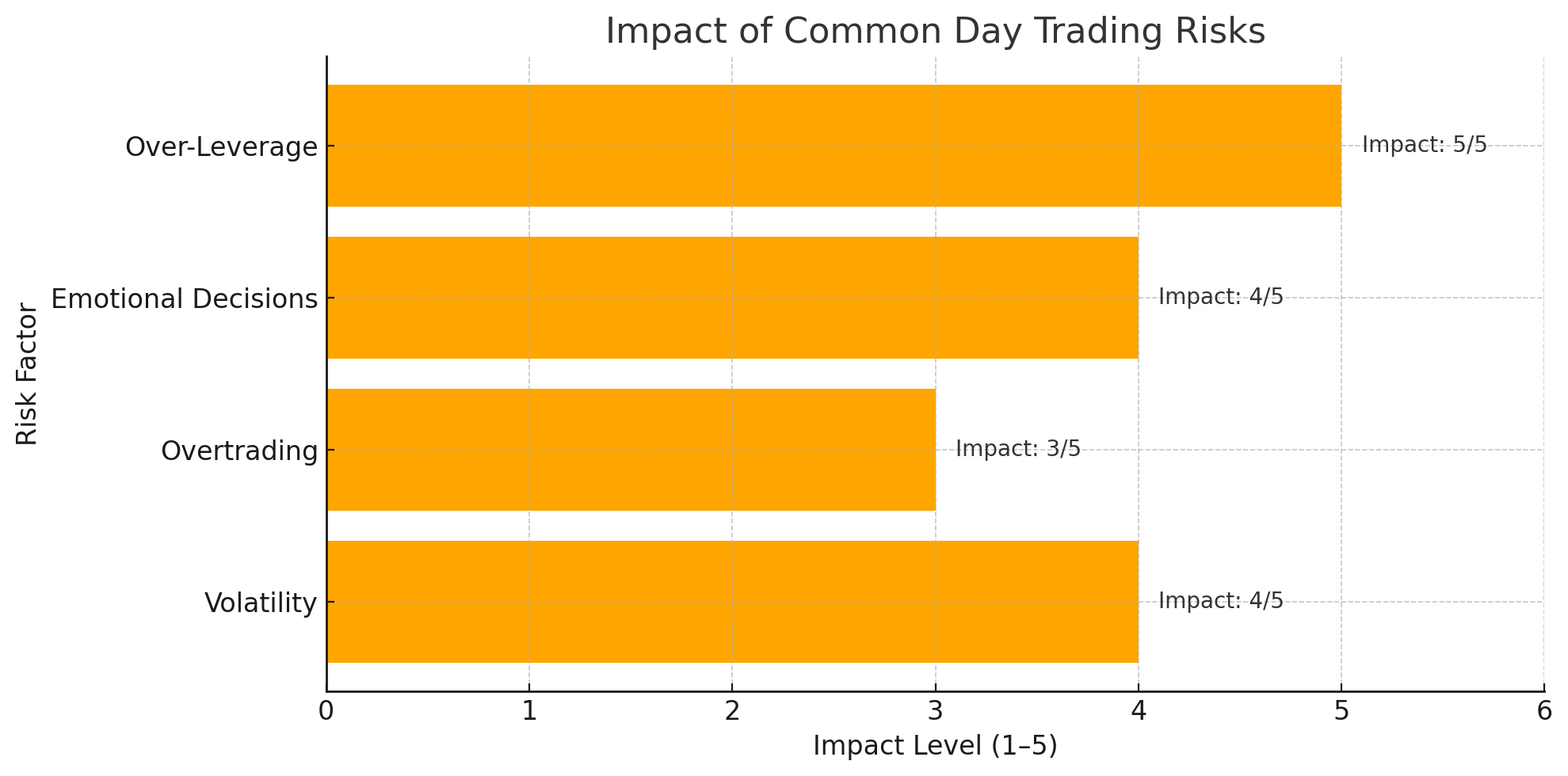
| Risk | Impact | Solution |
|---|---|---|
| Volatility | Unexpected losses | Use stop-losses & proper lot sizes |
| Overtrading | Account drawdown | Trade only A+ setups |
| Emotional Decisions | Revenge trades | Step away after 2 losses |
| Over-Leverage | Total account loss | Limit leverage to 2–3x |
✅ Pro Advice: Risk no more than 1–2% of your account per trade.
Evaluating Your Performance
Evaluating your performance is a critical habit for every serious trader. Keeping detailed records helps you spot what’s working and what isn’t, turning random trading into a measurable process.
| Metric | Why It Matters | How to Track |
| Win/Loss Ratio | Shows if strategy is profitable | Count winning vs. losing trades weekly |
| Average Gain vs. Loss | Reveals risk/reward balance | Calculate average $ gained per win vs. lost per loss |
| Risk per Trade | Keeps losses controlled | Ensure each trade risks ≤2% of equity |
| Adherence to Plan | Builds discipline | Mark whether each trade followed rules |
📊 Expert Insight: “Regular reviews are what turn beginners into consistent earners. The best traders act like scientists — they collect data, analyze patterns, and adjust,” — Sarah N., financial educator.
Realistic Expectations & Long-Term Growth
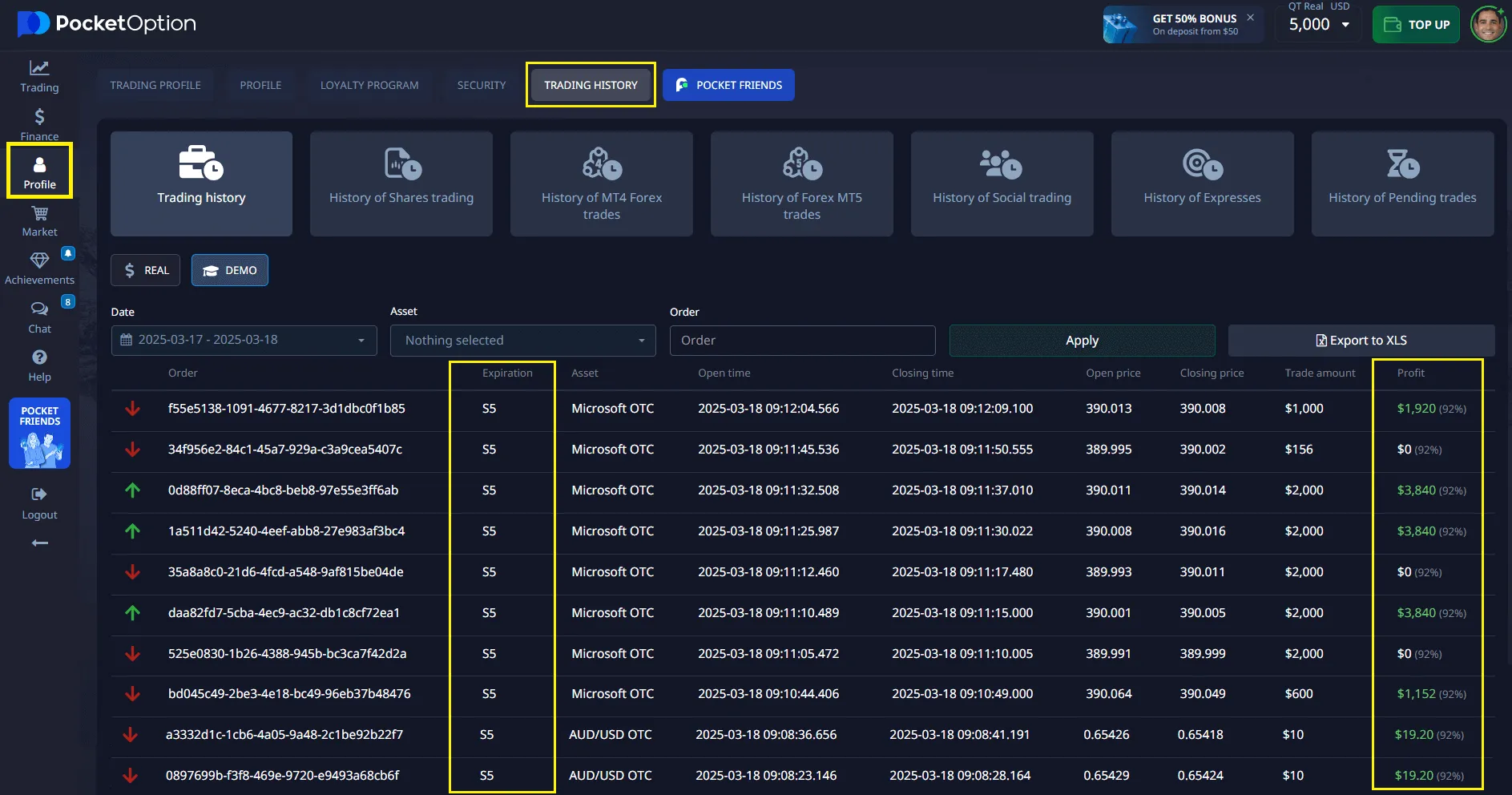
Many new traders ask: how much can you make day trading in your first year? Expect break-even or small profits at first. Your first 6–12 months are for learning — consider them tuition.
💡 Veteran Insight: “I lost for 3 months straight before I turned profitable. Discipline was the game-changer,” — Mark D., full-time trader.
ดูเพิ่มเติม:strategyAIhowKnowledge baseTrading