
Meta Stock Split: What Investors Should Know About This Corporate Action
Recent market analysis reveals that Meta Platforms Inc. remains one of the few tech giants that has never conducted a stock split, despite shares trading above $500—a decision that significantly impacts retail investor accessibility.

Meta Stock Split Analysis: Why Meta Platforms Inc. Hasn't Split and What It Means for Investors
While tech giants like Apple and Google have utilized stock splits to make their shares more accessible to retail investors, Meta Platforms Inc. has taken a different approach. This comprehensive analysis examines the implications of Meta's decision to avoid stock splits and how modern trading platforms like Pocket Option help investors navigate these high-priced equities.
Understanding Meta's Stock Split Strategy
Meta Platforms Inc. has maintained a unique position among FAANG stocks by never conducting a traditional stock split. This decision reflects the company's corporate philosophy and strategic approach to share structure management.
"Meta's approach to share structure demonstrates confidence in their long-term value proposition--they're prioritizing fundamental growth over accessibility optics," notes financial analyst Sarah Chen, 2025.
- Meta has never announced or executed a stock split since its IPO
- Share price accessibility remains a secondary concern to fundamental value
- The company focuses on buybacks and operational efficiency instead
- Institutional ownership patterns support higher share prices
Even with Meta's high share price, Pocket Option empowers every trader with fractional access, turning a challenge into an opportunity. 📈
Comparative Analysis: How Meta Differs from Other Tech Giants
To understand Meta's position, examining how other major technology companies have approached stock splits provides valuable context for investors using platforms like Pocket Option.
| Company | Last Stock Split | Split Ratio | Current Strategy |
|---|---|---|---|
| Meta Platforms | Never | N/A | Buybacks & Growth Focus |
| Apple | August 2020 | 4:1 | Regular Accessibility Splits |
| Google (Alphabet) | July 2022 | 20:1 | Periodic Retail Access |
| Amazon | June 2022 | 20:1 | Liquidity Enhancement |
"The absence of Meta stock splits creates unique opportunities for traders who understand market dynamics--platforms like Pocket Option level the playing field through fractional access," explains trading strategist Michael Rodriguez, 2025.
Market Impact of Meta's No-Split Policy
Meta's decision to avoid stock splits has created distinct market dynamics that savvy traders on Quick Trading platforms can leverage effectively.
Liquidity and Trading Volume Considerations
For example, traders using Pocket Option's real-time market data can observe how Meta's higher share price affects trading patterns compared to split-adjusted competitors.
- Institutional Dominance: Higher share prices naturally favor institutional investors
- Reduced Retail Participation: Psychological barriers limit smaller investor engagement
- Volatility Patterns: Different intraday movement characteristics compared to split stocks
- Options Market Impact: Higher underlying prices affect derivative strategies
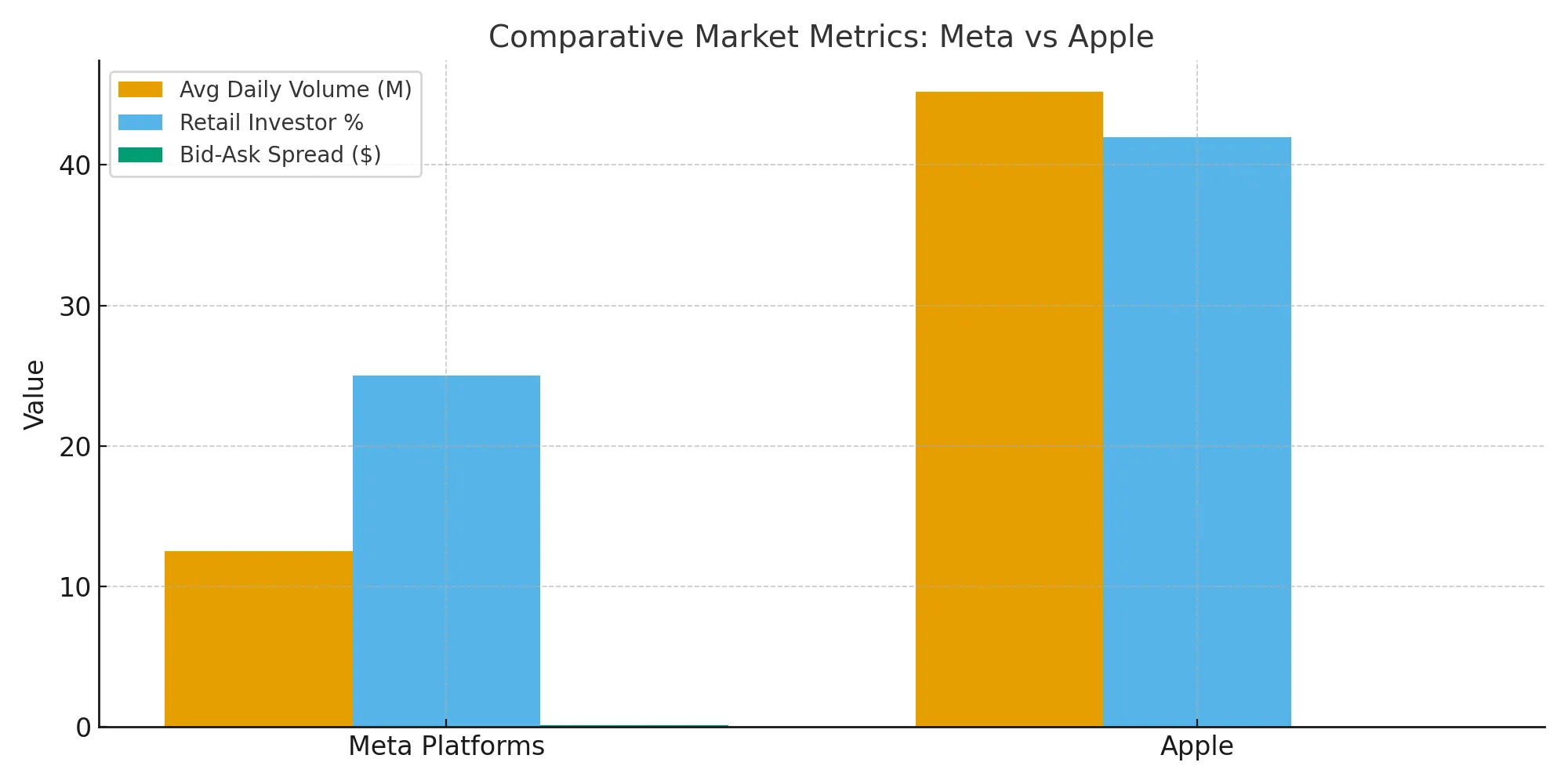
| Metric | Meta (No Splits) | Apple (Regular Splits) | Impact |
|---|---|---|---|
| Average Daily Volume | 12.5M shares | 45.2M shares | Lower retail participation |
| Retail Investor % | 25% | 42% | Institutional focus |
| Bid-Ask Spread | $0.08-0.12 | $0.02-0.04 | Higher trading costs |
Mastering the unique volatility of stocks like Meta is easier when you can practice risk-free. With Pocket Option's free $50,000 demo account, you can hone your strategy before trading for real. 💰
Strategic Implications for Investors
"Modern trading platforms have essentially eliminated the accessibility argument for stock splits--what matters now is understanding the strategic signals these decisions send," states portfolio manager Lisa Zhang, 2025.
In practice, traders often apply different strategies when dealing with high-priced stocks like Meta compared to split-adjusted equities. Pocket Option's advanced tools, free knowledge base with strategies, and educational videos help investors navigate these nuances effectively.
- Position Sizing: Higher share prices require more precise capital allocation
- Risk Management: Dollar-based stops become more critical than percentage-based
- Entry Timing: Fractional share capabilities become essential for optimal entries
- Portfolio Weighting: Single share purchases can significantly impact small portfolios
Don't let high share prices intimidate you! Pocket Option lets you start with a real account from just $5 and utilize powerful features like Social Trading and cashback to maximize your potential. 🚀
How to Open a Trade on Meta (Facebook) with Pocket Option
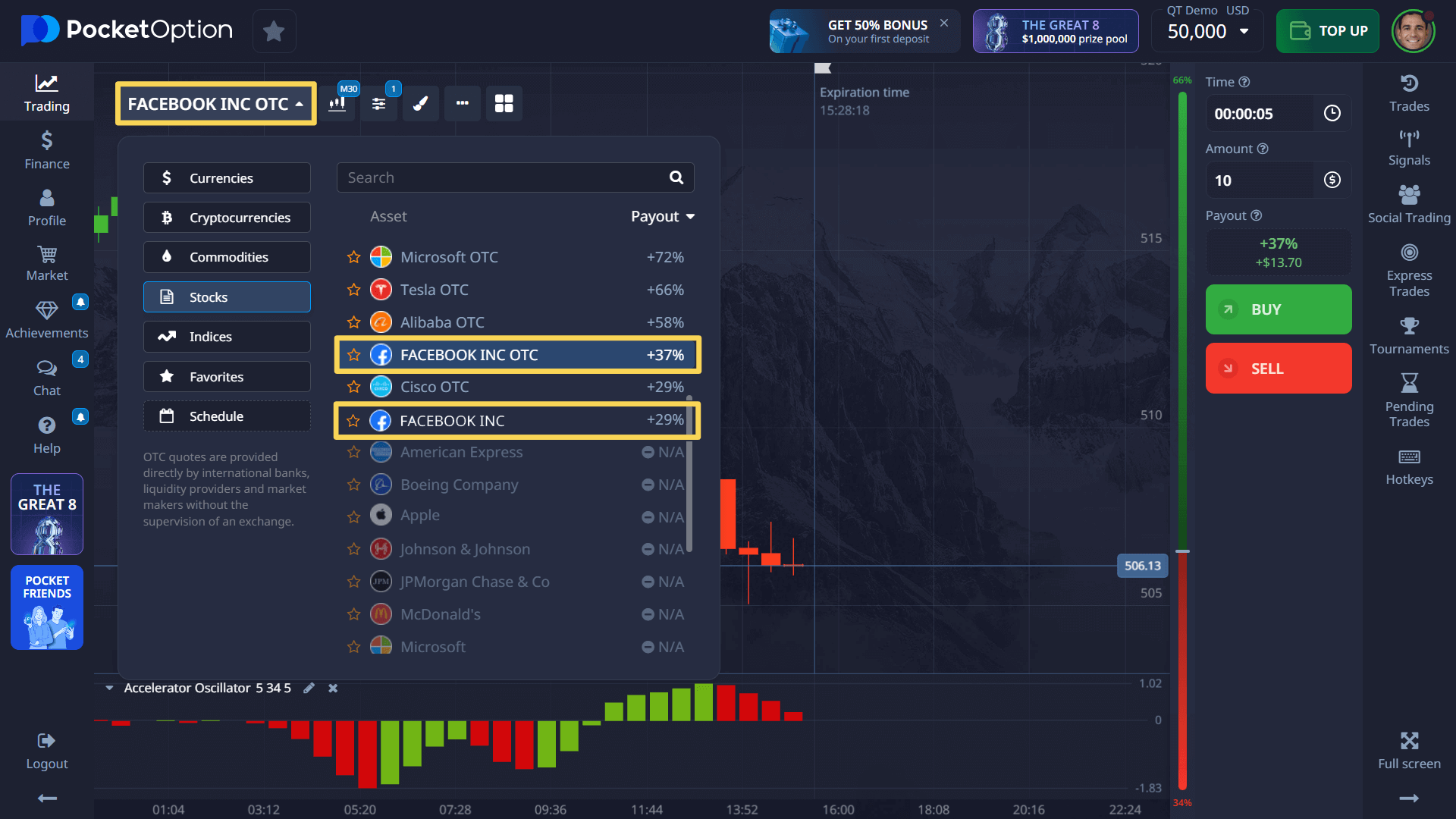
Here is a simple example of how to open a trade on stock using the Pocket Option platform:
- Choose the Asset: Select Facebook from the list of over 100 available assets.
- Analyze the Chart: Use the Trader's Mood indicator or other technical tools available on your workspace to analyze the price chart and form a hypothesis.
- Choose the Trade Amount: Enter the amount you wish to invest, starting from just $1.
- Choose the Trade Time and Make a Forecast: Select the expiration time for your trade, starting from 5 seconds on OTC assets. Predict the price direction:
- If you believe the price will go UP, press the BUY button.
- If you believe the price will go DOWN, press the SELL button.
- Collect Your Profit: If your forecast is correct, you will receive a profit of up to 92% of your investment. This potential profit percentage is clearly displayed before you open the trade.
By opening a real account, which requires a minimum deposit from as low as $5 (may vary depending on your region and payment method), you unlock even more powerful features like Social Trading (to copy the trades of successful users), cashback on your trades, participation in tournaments, and many other benefits.
Future Possibilities and Market Speculation
"While Meta hasn't split historically, market conditions and shareholder composition changes could influence future corporate actions--staying informed through reliable platforms is crucial," advises market analyst David Park, 2025.
Market observers continue to speculate about potential Meta stock split scenarios, particularly as share prices reach new highs and retail investor interest grows.
Factors That Could Trigger a Future Split
Traders using Quick Trading platforms should monitor several key indicators that might signal a change in Meta's stock split policy:
- Share price reaching psychological resistance levels ($1,000+)
- Significant changes in retail investor advocacy
- Board composition shifts favoring accessibility measures
- Competitive pressure from other tech giants' policies
- Index inclusion considerations requiring enhanced liquidity
"The key is not predicting if Meta will split, but understanding how to capitalize on the current structure while staying prepared for potential changes," notes trading educator Amanda Foster, 2025.