What Is Vesting and How Do Vesting Schedules Release Locked Assets?
Founders, employees and early investors often receive shares or tokens long before they can fully own them. Vesting is the schedule that releases that ownership step by step, and in crypto the release dates are closely watched by traders.

What Is Vesting
Vesting is the process by which a person gradually earns full ownership of assets granted to them, usually shares, stock options or tokens. Four terms describe where a holder stands:
Vested: assets the holder now owns outright.
Unvested: assets still waiting to be released.
Cliff: a starting period during which nothing vests at all.
Fully vested: the point at which the whole grant is owned.
Why Vesting Exists
Vesting rewards people for staying and contributing over time rather than on day one. A founder who could sell a full allocation in the first week would have less reason to keep building. Gradual release also limits how many new shares or tokens can reach the market at once, and it signals to outside investors that insiders are committed for the long term.
Types of Vesting Schedules
Type | How it releases | Typical use |
|---|---|---|
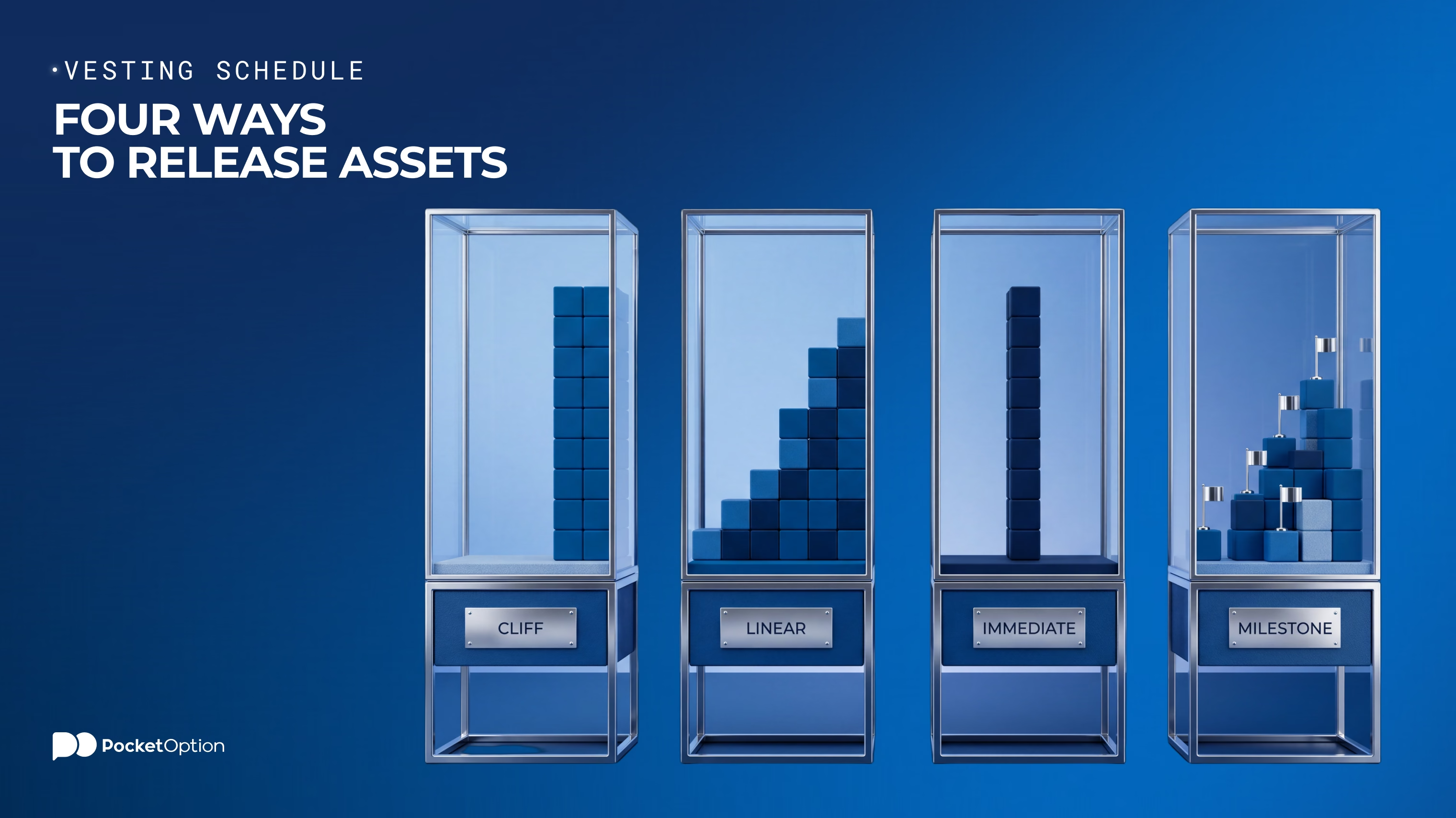
Cliff vesting | Nothing until a set date, then a block at once | First year of an employee grant |
Graded or linear | Equal amounts at regular intervals | Most equity and token grants after the cliff |
Immediate | Everything vests at once | Some advisor or bonus grants |
Milestone-based | Released when a goal is met, such as a product launch | Performance grants, some token projects |
Many grants combine types, with a cliff first and linear release after it, and together these terms form the vesting schedule.
Example: Four Years With a One-Year Cliff
An employee receives 48,000 shares that vest over four years with a one-year cliff:
Months 1 to 11: nothing is vested.
Month 12: the cliff passes and 12,000 shares, a quarter of the grant, vest at once.
Months 13 to 48: 1,000 shares vest each month until the grant is fully vested.
If the employee leaves after 18 months, 18,000 shares are vested and kept, while the remaining 30,000 unvested shares are forfeited and return to the company. How listed shares are bought and held is covered in this guide on how to buy stocks.
Vesting in Crypto: Token Unlocks
Token vesting works the same way, enforced by a smart contract or a custodian. A token unlock is the date when vested tokens become transferable. Suppose a team holds 120 million tokens with a 12-month cliff and 24 months of linear release: nothing unlocks in the first year, and then 5 million tokens unlock each month for two years. Many projects publish unlock calendars, and data sites track them, since each release adds to circulating supply, a key input in tokenomics.
Why Vesting Matters to the Market
Vesting shapes supply. When a large unlock approaches, traders weigh whether recipients will sell, and some prices weaken in the run-up. The effect is not automatic: if demand is strong, recipients hold their tokens or the unlock was already priced in, the price may hold or even rise. The size of an unlock relative to circulating supply and daily trading volume matters more than the headline number. Watching unlock dates belongs in sound crypto risk management, not in a trading signal on its own.
Vesting vs Lock-Up and Other Meanings
A lock-up is different: it stops holders from selling assets they already own for a set period, as after an IPO, where lock-ups often last 90 to 180 days. Vesting decides when assets are owned, while a lock-up decides when they can be sold. The word also appears in retirement plans. In a US 401(k), for instance, vesting sets how much of the employer's contributions an employee keeps after leaving, and the employee's own contributions are always fully vested.
Conclusion
Vesting releases ownership of shares or tokens over time, often with a cliff first and steady release after, so insiders earn their assets by staying involved. Read the full vesting schedule before buying a token, compare upcoming unlocks with circulating supply and trading volume, and treat an unlock as one input among many rather than a sign that the price must fall.
Learn the market before committing funds.
Get StartedDisclaimer: This article is for informational purposes only and does not constitute financial advice. Trading involves risk, and losses can exceed initial deposits.
See more:Glossary