What Is Margin Call Definition and How Do Margin Calls Work in Trading?
A margin call is not a warning that something might go wrong. It is a demand, and it arrives after the thing already went wrong. Understanding how the trigger works is most of the protection available.

Margin Call Definition
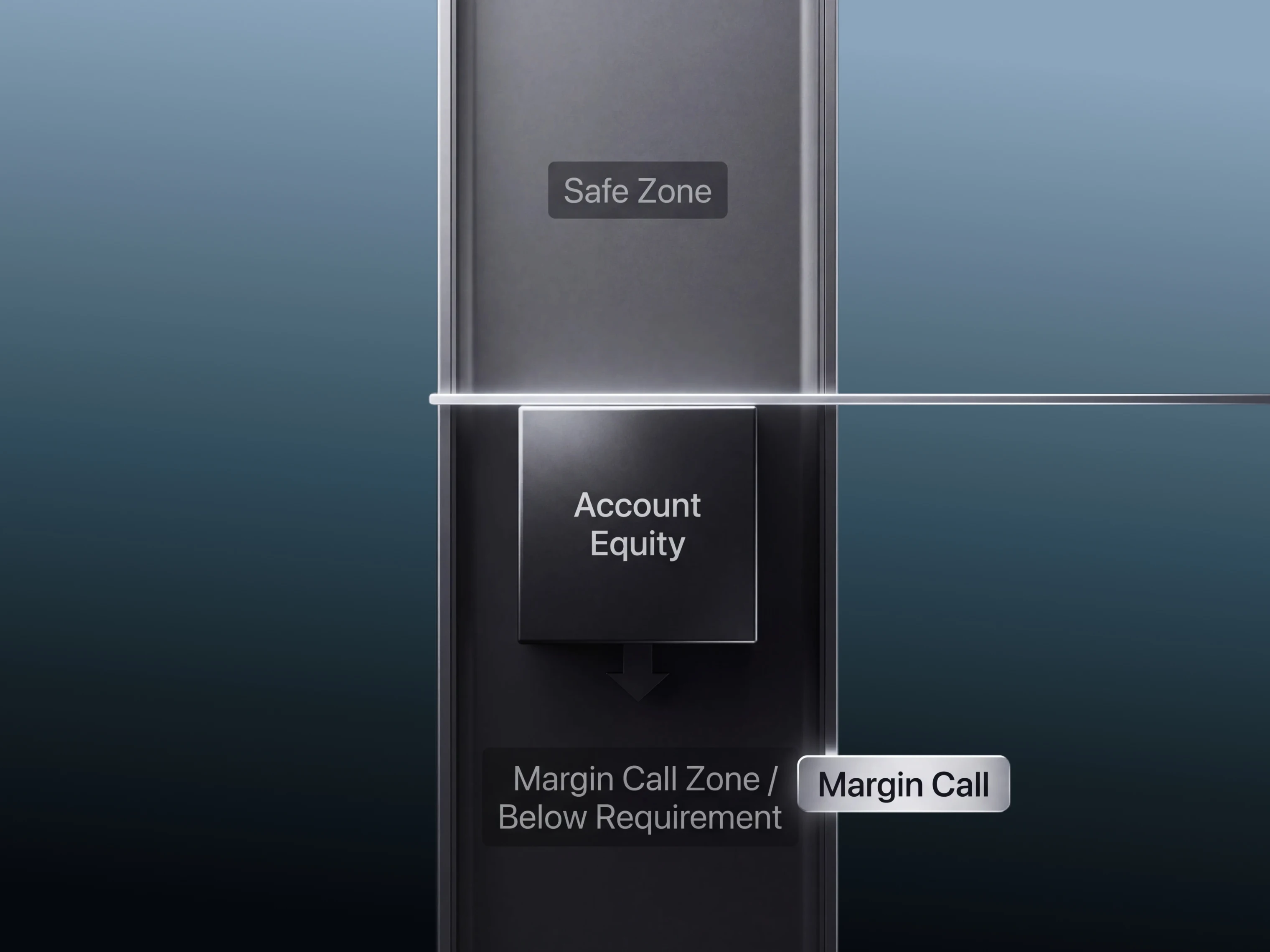
The margin call definition is straightforward enough. It is a broker's demand for more funds or eligible securities, issued when the equity in a margin account drops below the required level, whether that is the regulatory maintenance minimum or the broker's own higher house requirement.
What follows is less straightforward, and it is the part usually described wrongly. A demand is not a guaranteed opportunity to fix things. Margin agreements are generally written so that the broker may close positions as soon as the shortfall appears, without contacting you first and without waiting out any period it happens to have mentioned. Where time is given, meeting the call keeps the position open. Where it is not, liquidation can arrive before any notice does.
A few terms have to come with it. A margin account is one that lets you borrow from the broker to trade. Initial margin is what you must put up to open a position. Maintenance margin is the minimum you must keep afterwards. Equity is your own money in the account, meaning the value of your holdings minus what you owe. And the margin loan is the borrowed part, secured against the holdings themselves. The mechanics of trading on margin follow from those five definitions and not much else.
How Margin Accounts and Leverage Work
Here is a margin account explained without the jargon. You deposit money, the broker lends you more, and you buy a larger position than your own cash would allow. Put up $5,000, borrow $5,000, hold $10,000 of stock. Your buying power doubled and so did your exposure to every price move.
That is the whole of it, and it is also the whole of the problem. Gains are calculated on the full position while losses are subtracted from your own share, so a 10 percent fall against a $10,000 position costs $1,000, which is 20 percent of the $5,000 you actually put in. This asymmetry is the core of leveraged trading risks, and a worked forex leverage example shows the same arithmetic at higher ratios, where it bites much faster.
The margin loan and collateral relationship is worth noting too. The assets you bought with borrowed money are the security for that loan. When their value falls, the collateral behind the loan weakens, which is exactly the situation a maintenance requirement exists to prevent.
What Triggers a Margin Call?
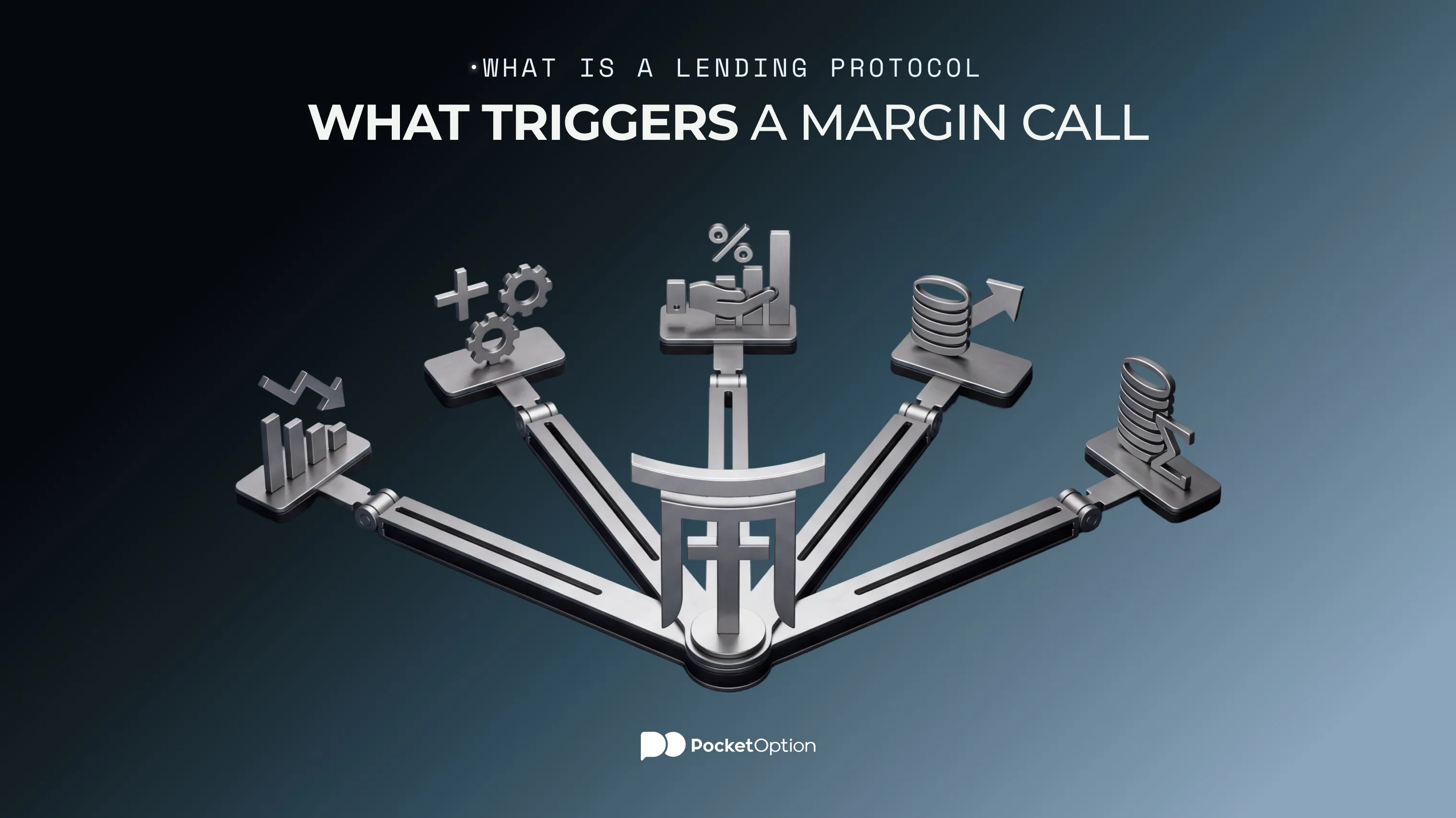
Margin call triggers are not limited to a falling market, though that is the usual one.
Position values fall, so equity drops while the loan stays the same size.
New positions are opened, using up available margin and leaving a thinner cushion.
The broker raises its requirement on a specific asset, often after volatility picks up.
Withdrawals reduce the cash sitting in the account.
Borrowing costs and fees accumulate against the balance over time.
The third one surprises people most. A broker can increase the maintenance requirement on a holding, or on the whole account, without the market having done anything unusual that day. Requirements are set by the broker within regulatory minimums and can change, so the current terms are the ones that apply rather than the ones in force when you opened the position.
Simple Example of a Margin Call
Take the $10,000 position from earlier, funded with $5,000 of your own cash and a $5,000 loan. Assume a maintenance requirement of 30 percent, meaning your equity must stay at or above 30 percent of the position value.
Position value | Loan | Your equity | Equity as % of position |
|---|---|---|---|
$10,000 | $5,000 | $5,000 | 50% |
$8,000 | $5,000 | $3,000 | 37.5% |
$7,143 | $5,000 | $2,143 | 30% (call level) |
$6,500 | $5,000 | $1,500 | 23% (call issued) |
At $6,500 the equity in margin trading terms has fallen to 23 percent, below the 30 percent floor. Restoring it means getting equity back to 30 percent of the position value, so roughly $1,950 against a $6,500 holding, which is about $450 of new funds. Alternatively you sell part of the position, which shrinks the loan and the requirement at the same time. Note how far the price had to fall for that: 35 percent on the asset, from a starting cushion that looked comfortable.
How to Meet a Margin Call
Three routes exist, assuming the broker leaves you the room to use one of them. They are not equivalent either.
Deposit cash. The cleanest option, and it keeps the position intact, but it commits more of your capital to a trade that is already losing.
Deposit eligible securities. Works at some brokers, subject to what they accept as collateral and at what valuation.
Sell positions. Reduces both the loan and the requirement, though it locks in the loss and may not be the trade you wanted to close.
Timing is the part worth being clear about. A stated deadline, where one is offered at all, is something the broker extends rather than something you are owed. The agreement normally permits positions to be closed at any point while equity sits below the requirement, with no prior notice and no window to fund the account, and in fast markets that is often what happens. The safer assumption is that no window appears. Setting exits in advance, as covered in this guide on how to set a stop loss, generally beats waiting to find out whether a chance to respond gets offered.
What Happens If You Do Not Meet the Call?
The broker closes positions on your behalf. It picks what to sell, not you, and it sells at whatever the market offers rather than at a price you would have chosen. Any shortfall remaining after the sale is still a debt you owe. In a sharp move the sale can happen at a much worse level than the call level implied, which is how losses on margin sometimes exceed the deposit entirely.
Reducing the odds of getting there is mostly about the size of the initial cushion. Lower leverage means the price has to travel much further before the maintenance level comes into view. Watching the equity percentage rather than the profit and loss figure gives earlier notice, since that ratio is what the broker is actually monitoring. Pre-set exits help, and so does leaving unused cash in the account instead of deploying all of it.
See the maintenance level move.
Open Demo AccountConclusion
The number worth calculating before you open a leveraged position is the price at which the call arrives. Not the target, not the stop, the call level. It can be worked out from the position size, the loan and the maintenance requirement in about a minute, and most people who get caught by a margin call never worked it out at all.
Disclaimer: Trading involves significant risk of capital loss and may not be suitable for all investors. Leveraged positions can result in losses that exceed your initial deposit.
See more:Glossary