How to Buy New Crypto Before Listing: Risks, Methods and What Listing Really Means
The process seems easy, but "early" depends on perspective. The token can be sold to private investors, launched via ICO and traded in liquidity pools way before any exchange mentions it. Each stage has a price, lock-up period and its own risks.

What Does "Listing" Actually Mean in Crypto
The listing is the stage when the cryptocurrency becomes publicly available for trading. At least, that is the general idea as it can happen in various ways.
If you are asking what is listing crypto in the sense the industry uses it, there are at least two commonly used definitions:
Listing on a centralized exchange: the exchange checks the project and agrees to include it on its list.
Listing on a decentralized exchange: the listing procedure is permissionless and any user can create the liquidity pool for the asset and then trade it after the pool goes live.
That affects how to buy crypto before listing, as tokens available on DEX pools are already listed in a practical sense. Thus, you are not buying in the pre-list stage but in an active market with a small liquidity. Speaking of pre-list stages in the crypto market, people usually refer to the stages that precede the public market appearance of the asset.
These are the names of the stages and they are not interchangeable:
Stage | Description | Is there any public market |
|---|---|---|
Presale / private round | The tokens are sold to early backers at a fixed price with the vesting period | No |
ICO | The public sale held by the project itself | No |
IEO | The sale on the centralized exchange launchpad | No, although it is followed by the listing on the exchange |
IDO | The sale on the decentralized exchange launchpad | Yes, very soon as the liquidity pool opens |
STO | The sale of the token as a regulated security | Very restricted, only eligible investors |
Liquidity pool opens | The DEX liquidity pool opens and trading begins | Yes. That is already a listing |
Reread this table before investing as many people are disappointed because they considered themselves to be purchasing on the presale stage while they were trading on the public market.
Where to Find New Crypto Projects Before They List
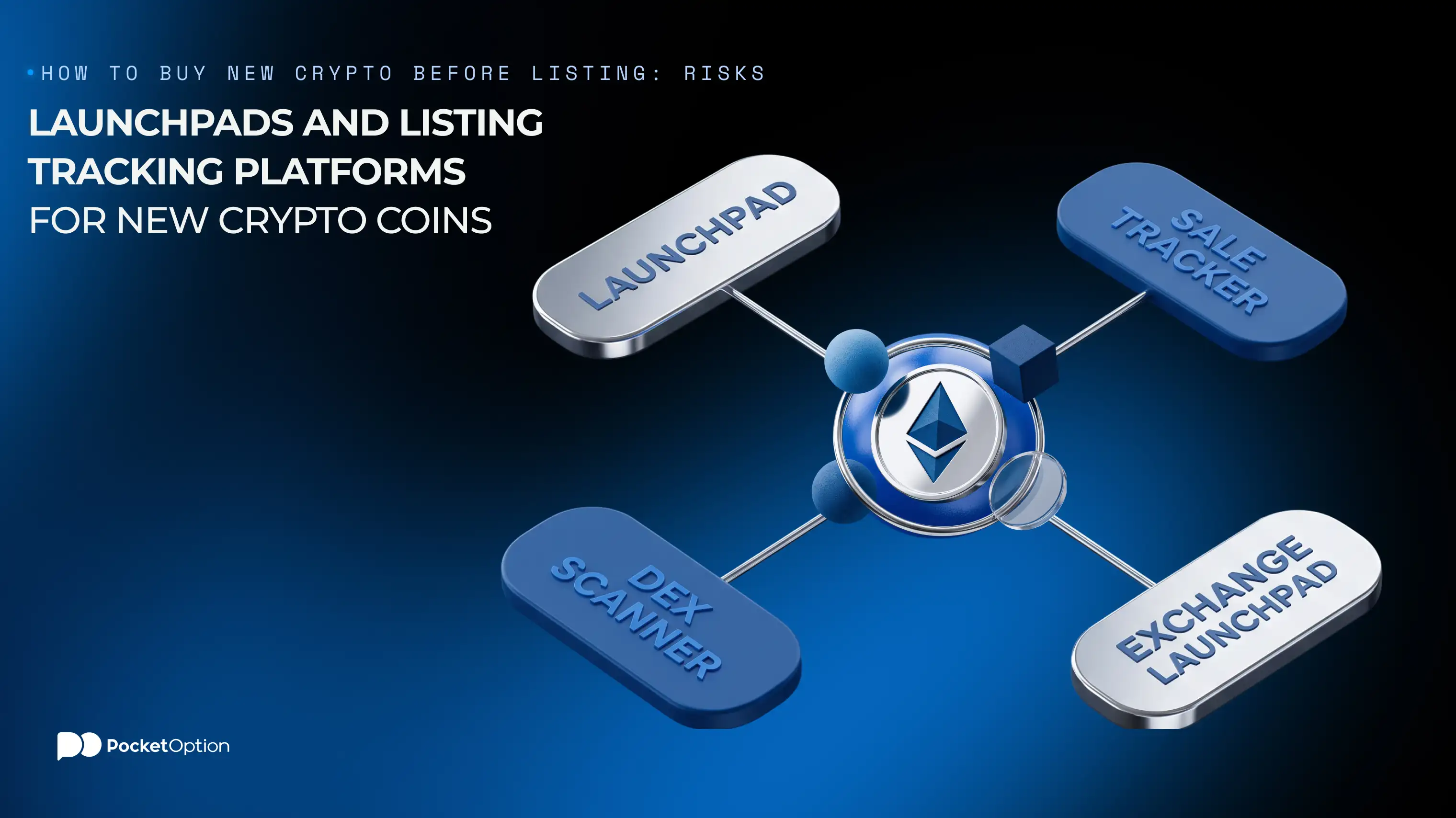
Finding crypto assets is easy, but filtering them is not. Here are the platforms where new crypto coins appear first, and where the newest cryptocurrency projects show up before being added to the big exchanges.
Source | Description | Considerations |
|---|---|---|
CoinList and other launchpads | The sales on vetted projects with the KYC requirement and published terms | Allocation is usually limited or determined by a lottery |
Exchange launchpads | The sales on the exchange platform followed by the listing there | Access requires holding or staking the exchange token |
Decentralized launchpads | Earlier access and lighter vetting | The quality of the projects varies |
Sale tracking and calendar platforms | The aggregated upcoming sales on different blockchains | The listings are paid advertisements rather than the endorsement |
The new pairs scanners on the DEXes | Opening of the liquidity pools for trading | This is already the trading, not pre-listing |
Project communities and testnets | The opportunities to earn the allocation via usage | The cost of time here is real, no guarantees of any rewards |
Note: on the question of where to buy new crypto before listing, only the first three rows are the pre-listing platforms. Others are just the sources of information on new coins. Using a scanner feed as a method of early access to new coins is the most popular mistake.
Liquidity is what beginners often ignore.
Get StartedMethods to Buy New Crypto Before Listing
There are five actual methods, and they are what people mean when they ask how to buy new crypto before listing. They differ in the access level, the need for verification and in how badly they work in case the project is not what it claims to be.
Method | How it works | Risk |
|---|---|---|
Presale or private round | The investor applies for the sale, passes the KYC, sends the funds and receives the tokens on a vesting schedule | Your money is locked while the project is untested |
Launchpad sale (IEO) | The exchange holds the sale of the project that has passed its vetting process, usually with the allocation lottery | Small allocation, the vetting process is not a guarantee |
Decentralized launchpad sale (IDO) | The funds are committed by the smart contract, usually after staking the platform token | Contract risk, and the liquidity pool can open immediately at a much higher price |
Purchase at the opening of the liquidity pool | You trade the DEX pool in the first minutes | Not pre-listing, thin liquidity and slippage |
Airdrops and testing the product in the testnet | You earn the allocation through using the product | Time expense with no guaranteed rewards |
Except the last one, all of these involve sending funds to a counterparty before you receive anything in return, and that is worth stating clearly. Whether you would have a legal claim if something went wrong depends on who is issuing the token, how the sale is structured, where the issuing entity is registered and what the terms of the sale actually say. A launchpad sale run by a licensed exchange under a named legal entity is a different proposition from an anonymous team collecting to a wallet address. The practical risk is that your protection may be limited and enforcement difficult, not that recourse is certain to be absent. Recovering funds across borders from a small entity is slow, expensive and uncertain even where a right exists on paper, which is why the identity and jurisdiction of the issuer belong on your checklist rather than in the small print.
The people who ask how to buy a coin before it launches often expect a technical explanation, but the process consists of creating a wallet, entering the whitelist and transferring the funds. The most important actions happen before that, in the vetting.
How to Vet a Project Before Buying
Do these checks in the following order. If something fails early, further checks will not help you.
Check the supply and allocation: how much of the token goes to the team, private buyers and public buyers. The fully diluted value and the price you pay.
The vesting schedule. The cliff with a large unlock means there will be a lot of selling at the known date.
The liquidity locks: if there is none, the pool can be emptied by whoever controls it.
Check the contract: an audit by a known company will help, but will not guarantee anything. Can sell functions be disabled?
Identify the team: named persons with the track record will behave differently from the anonymous ones.
Whether there is a product: whether the testnet works, whether there are real commits in the repository or paying users.
Check the local laws and the issuer. Some sales are restricted by country, and participating from a restricted jurisdiction can weaken whatever protections would otherwise apply to you. Find out which legal entity is running the sale and where it is registered, since that is what determines the claim you would have and how realistic enforcement would be.
The first two items are the most important as they are the ones people often skip. If you need to understand how the supply schedules and unlocks will affect the price, the explanation of how tokenomics shapes supply, demand and crypto prices covers the part a whitepaper summary usually leaves out.
Risks of Buying Before Listing
Each method has its risks:
Rug pull: the liquidity is pulled away and/or the team disappears, leaving the coin unsellable at any meaningful price.
Honeypot contract: you can buy but cannot sell.
Presale fraud: fake websites, presale addresses or the project that doesn't exist. The payments cannot be reversed.
Unlock pressure: early backers unlock and sell while you still cannot sell.
No listing at all: there was no listing on the exchange, thus the liquidity is low or absent.
Regulatory exposure: some tokens can be treated as securities and it affects your rights.
One thing is important: a thin market with a lot of one-way trading can move drastically when this pressure releases, which is the same mechanic described in the guide to how crowded short positions can explode into a squeeze. A new token may experience significant movements in both directions, and only the upward one gets screenshotted.
Why Some Investors Do This, and Why It's Not Guaranteed
The presale price is fixed prior to existence of a market for the token, so early buyers have an opportunity to gain if the market later evaluates the token higher. The allocation is relatively large in comparison with post-listing purchases.
However, not all new launches maintain their opening price, and many of them trade below the sale price within months. The successful ones are shown, which makes this strategy seem to be more reliable than it is. The early purchase also involves the risks of timing, as even knowing that the project is good does not guarantee that you will be able to sell it when you want to.
If you are new to the crypto market, it is better to work through the steps involved in starting out with crypto trading first, which is a more durable use of the same money than a presale allocation.
Conclusion
Decide at what stage you actually buy the token before you commit. With new crypto coins, a presale, a launchpad sale and the newly opened DEX pool are three different products with the same label. Only the first two are the pre-listing stages.
Then the work is clear: check the supply and allocation, vesting dates, liquidity locks, real team, product and participation rules. Anyone who sells you the early access without these is selling you the risk.
Disclaimer: Trading and investing in digital assets carries high risks of losses and may not be suitable for every investor. Early stage token sales are largely unregulated in many places and may lead to losing all your investment. This article is not investment advice, so check your local regulations before participating.
See more:Crypto