
What Is a Short Squeeze? How Crowded Short Positions Can Explode
If a heavily shorted stock or asset rises quickly, short sellers might be forced to buy it back, to cover their short positions and limit their losses. This new buying pressure can push the price even higher. This is what is called a ‘short squeeze’, and understanding it can be rather important for trading.

What Is a Short Squeeze: Definition
So what is a short squeeze? It's a rapid price spike happening because the short sellers are being ‘squeezed’ to close their positions. If a short position is closed, it’s essentially the same as an asset being bought back. This reflexivity causes the price of the asset to rise. The amount of floating shares (or tokens, or metals) on the open market can be limited, and the buying pressure can exceed what the market provides.
The indiscriminate buying can occur even at elevated prices, much higher than expected, albeit temporarily. This is a crypto or stock market with too few assets and too much demand. This can be a good environment for prepared longs, or for new shorts coming after the ‘short squeeze’ has already happened.
The short squeeze meaning always comes back to forced buying. It isn't driven by new information about the company (although that can be the initial catalyst). The drastic spike in price is caused by the underlying mechanics of unwinding bets that are being liquidated.
How Short Selling Works: Quick Refresher
A short selling stock means borrowing its shares (from an exchange or a broker, for instance), and then selling them at the current price. The hope is to be able to buy them cheaper later on. This is essentially what is happening with shorts, whether during day trading, or when swinging shorts on the stock market. People are hoping the price will come down, and so they will be able to buy back the same amount of shares, pocketing the difference between the sell price today, and the sell price later on.
If the price falls, shorts win. They buy shares cheaper, and repay the ‘loan’ from their broker. This is how short selling actually works. But if the share prices rise, the costs of keeping the loan might not be worth it anymore, and the forced buying starts.
The Feedback Loop: Why a Squeeze Feeds on Itself
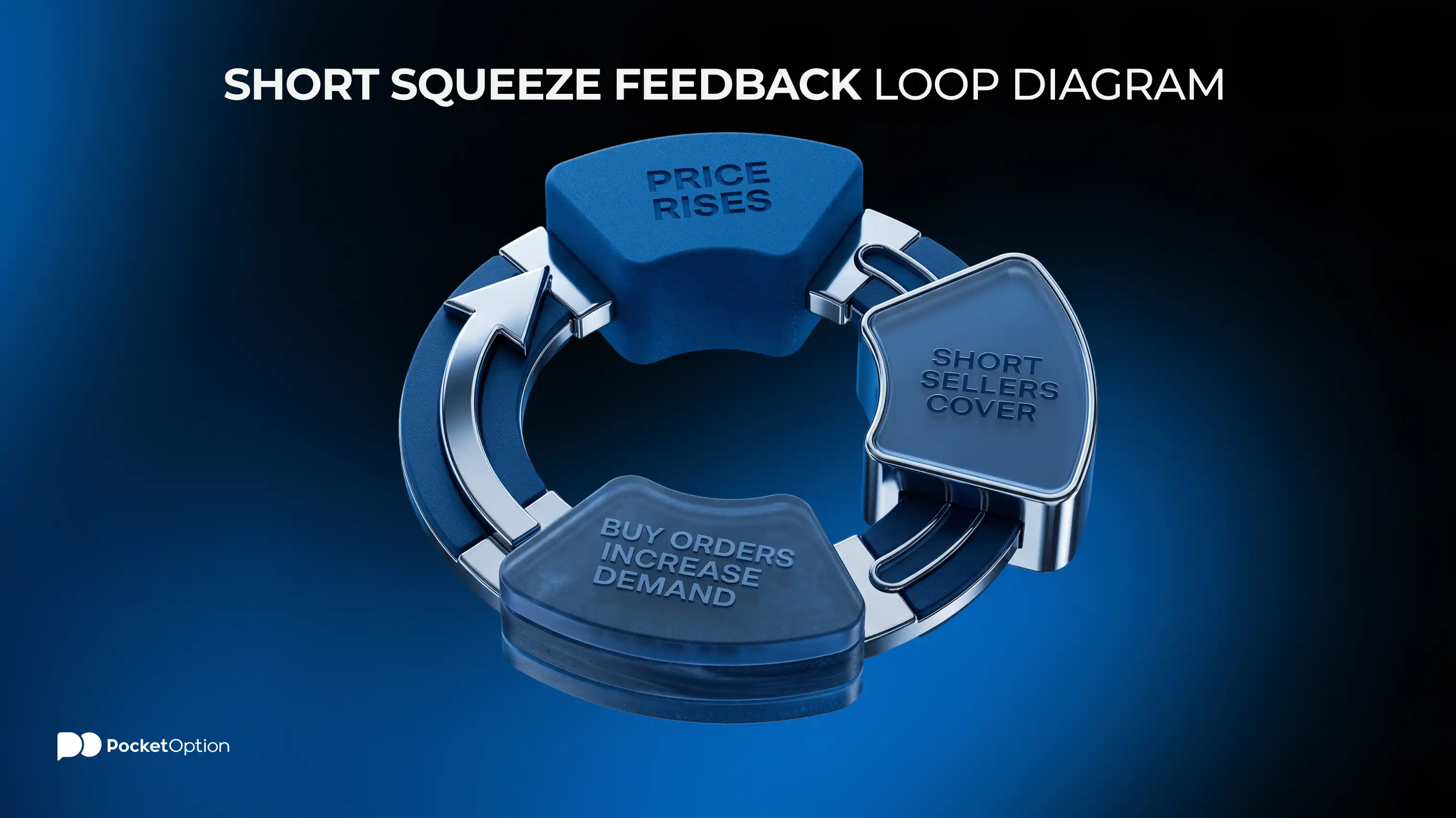
Rising prices start to hurt short sellers. Some of them decide to cut losses, which means abandoning their short positions (meaning buying back shares at the price at the time). That buying now creates fresh demand for the asset. This pushes price even higher, and even more short sellers start thinking about the exit. This is a reflexive feedback loop, built on short covering, with each round of buying triggering the next. The price keeps rising, sometimes beyond many expectations, such as with the famous GameStop incident, where it rose by 2700%.
GameStop is far from being the only example. Koss Corporation, BB, AMC, and many others have experienced this at one point in time. A short squeeze stocks can even have up to +3000% rise in price, in some extreme cases.
The reflexive loop only breaks once enough short positions have exited the stock market, or once buying demand from other sources dried up.
Metric 1: Short Interest
One of the ways to see if an asset is primed for a short squeeze are the metrics. In stock market, a ‘short interest’ is the total number of shares that are being sold but have not yet been covered.
This metric is usually reported 2 times a month. It shows how large the potential forced buyer pool is. If a price rises high and fast, this is the amount of forced buying that could trigger. Sometimes a mass of retail traders, or some hedge funds, might prey on that buying power, and decide to try to trigger this short squeeze, for profit.
If a short interest is rising over several reporting periods, this signals that bearish positioning is continuing to build. This raises the squeeze potential later on even more.
Metric 2: Short Interest Ratio (Days to Cover)
The ‘short interest ratio’ is short interest, divided by stock's average day trading volume. This is a useful metric, as it shows how many days of normal trading it would take for all shorts to be able to close their positions.
If a ratio is high, a short squeeze is more likely, and more likely to be violent. A ratio above 5-10 days is elevated, and the ratio above 20 is even more so. It means that stock doesn't have enough volume on the market to absorb enough forced buying, for the price to stay relatively unaffected.
Metric 3: Percentage of Float Shorted
This is short interest, divided by the float (number of shares available for public trading). The less the float is, the more likely a short squeeze is, on average. Float excludes restricted stocks, or closely held stocks that are unlikely to be sold in short order.
If the percentage of float shorted is above ~20%, chances for a squeeze start to rise. Smaller float implies less available supply, compared to the amount of shorts piling in. This is why understanding the short float is important for trading heavily shorted assets.
A Worked Example: Reading the Metrics on a Real Stock
Let’s say a stock has 10 million shares in its float right now. And 4 million of them are currently sold short (as seen in the ‘short interest’ metric).
So 40% of the float is being shorted. This percentage of float is well above the 20% threshold! This certainly draws attention, both from retail investors/traders, and from various funds. Some of them might start thinking about triggering what is a short squeeze, or it might trigger from other causes, such as unexpectedly good news.
If the day trading volume for the stock is, let’s say, 500,000 shares, this means it would take 8 days of this volume to cover the amount of shorts. The short interest ratio is therefore 8 (also on the high end).
Combined, these three figures show a stock with a meaningful chance for a short squeeze happening, if the sentiment flips, and the prices unexpectedly rise. This is why short selling stock with a setup like that can be rather dangerous.
The GameStop 2021 Short Squeeze: What Happened
A famous case of short squeeze was GameStop in January 2021. It was one of the most shorted stocks on the market. Its short interest has risen to 140% above all of its float (only possible because shares were re-lent and shorted multiple times over). People on Reddit organized to try to buy back the stock, and push the short sellers out. This caused the price to rise from $17 at the start of the month, to up to $347.51 on January 27, and even an intraday high of $483 on January 28. This became one of the most impressive short squeeze stocks stories of recent years.
Melvin Capital, a hedge fund which was holding a large short before this started happening, had lost ~53% of their value in that one month alone. They needed an emergency $2.75 billion investment to even stay solvent. The troubles spread beyond hedge funds: some brokerages, like Robinhood, were forced to restrict buying the stock. That decision was heavily criticized by retail investors, which were determined to buy GameStop at any price, to continue the ‘squeeze’.
However, after that fateful month ended, the stock market returned to relative normalcy. By mid-February already, GameStop had fallen back down to ~$40, more than ten times down compared to the peak. This illustrates how sharp a squeeze-driven spike can be, and how fast it can reverse, once the forced buying from short sellers and the hype-driven narrative is no longer there.
High Short Interest Doesn't Always Mean a Squeeze
There are, of course, shorted stocks that never squeeze. This is why short selling stock can be profitable: selling may be the right decision for months, or even years. If a stock is being sold off, it doesn’t mean the squeeze is just around the corner. Even in the short interest is elevated, or all 3 discussed metrics are high.
What a squeeze needs is a trigger. Some significant positive catalyst, or a coordinated wave of buying, whether from institutions or from retail. Just high short interest isn’t enough. It’s simply a dry twig, ready to catch fire, but there still needs to be a large enough spark, to complete the equation.
How to Spot a High-Risk Squeeze Candidate
More than 20% of float is shorted. The more, the better.
Short interest ratio on the stock market is above 5-10 days (this means normal trading volume can't absorb a rush).
Small float, preferably shrinking one. Not a lot of shares available to satisfy buying demand.
Rising short interest, bearish position continuing to build, not unwinding.
Unusual volume or price action that could signal a catalyst might happen soon, or is already happening (for example, a rise in buying volume over the last few sessions).
get started with a free account
Get StartedRisks of Trading Into a Short Squeeze
GameStop and other similar cases show that a squeeze can reverse just as fast as it happens. So what is a short squeeze? It’s a temporary event. Sometimes lasting just days, or even hours. Then, the forced buying demand runs out, and if no new buyers step in at these elevated prices, at least part of the move is likely to retrace.
Entering late, therefore, is a risk. Chasing a price that has already spiked is one of the more common ways traders and investors get caught. Reviewing day trading risk management principles, in particular position sizing and predefined exit points, matters more here than in calm stock market conditions. Often squeeze-driven moves are more volatile in both directions, and this can lead to higher losses than most typical day trading setups.
Conclusion
A short squeeze is a supply problem: too many short positions, forced to buy shares, and not enough shares at cheap prices on the market at the time. The short interest ratio, short interest, and percentage of float shorted can show how much fuel exists, and if the potential for a ‘squeeze’ is there. None of them can say definitively whether a spark actually arrives, or when that might happen, however.
Disclaimer: Trading involves significant risks of capital losses, and may not be suitable for all investors and traders. Past performances do not guarantee future results.
See more:Education