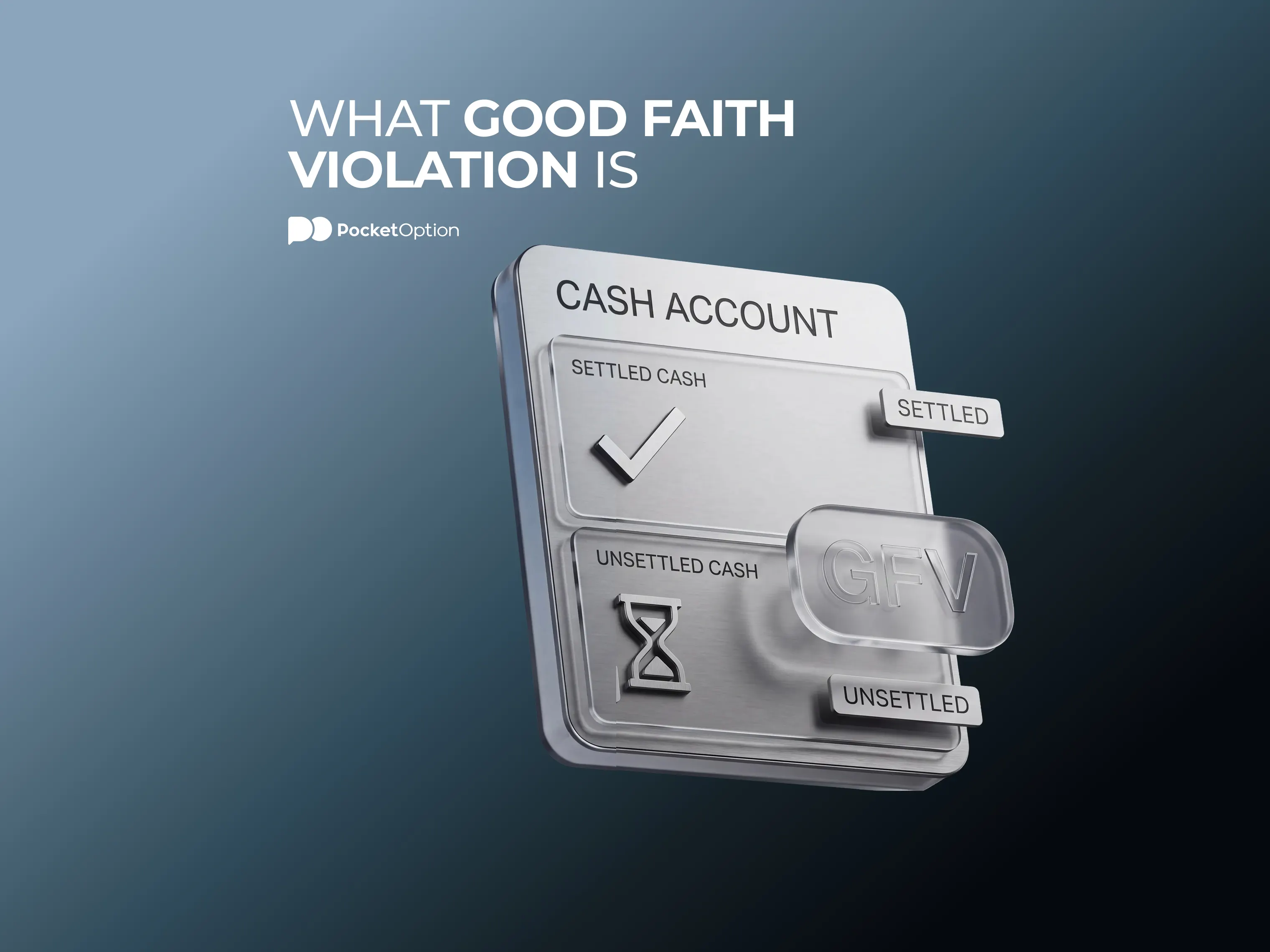
What Good Faith Violation Is and How It Affects Your Stock Account
You execute a trade, then use the proceeds of this trade to purchase another security during the same day. You exit the position in less than a week. Your broker warns you that there is a good faith violation on your account. None of this is illegal. You just paid with money that hasn't settled yet. This is the GFV meaning in one sentence.

What Is a Good Faith Violation: Definition
A good faith violation occurs in a cash account when you purchase a security with unsettled proceeds of the earlier sale and then you sell this security before the money you paid with settles.
So what is GFV in practice? It means your broker claims that you have not made a purchase in good faith. Your broker expects the cash that has settled by the time of purchase. But if you fund it with proceeds of your sale that are yet to settle, you never actually had the cash to cover the purchase.
Three conditions must be met for the GFV to occur:
The account must be a cash account with no margin buying power.
You must have used unsettled proceeds to make the purchase.
You must have sold the position prior to these proceeds settling.
If one of these three is not met, there is no violation. Using unsettled funds to buy is allowed. Holding the position until the proceeds settle is allowed. It's only the second sale that causes the problem, which most traders misunderstand.
Traders searching for stocks good faith violation are usually looking at a flag that already appeared on the account. They must understand: the flag is an internal broker note, not a fine or a penalty. No money is withdrawn. The consequence is what you can do with your money next, which is discussed below.
How T+1 Settlement Changed the Timing (Since May 2024)
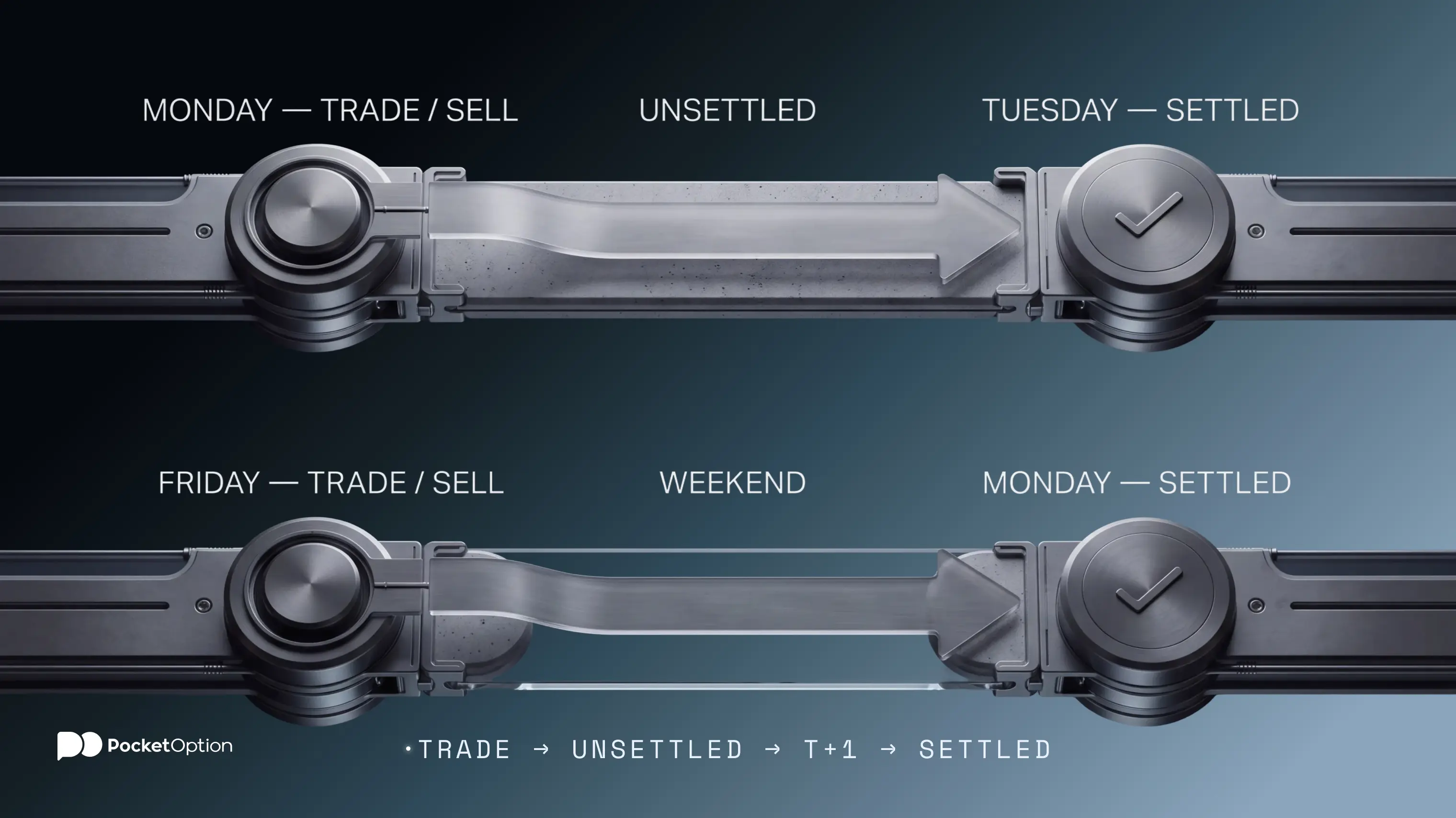
The settlement is the moment when money and securities get exchanged between the parties. Starting May 2024, US stocks trades get settled on T+1, which means that money transfers take place on the first business day after the transaction was made. Previously, they were settled on T+2, two business days after the transaction.
GFV rule logic stays the same, only timing has changed. If you sell on Monday, the money will settle on Tuesday. If you sell on Friday, the money will settle on Monday (the weekends and holidays do not count as working days). The time interval got shortened, but some articles describing the GFV rule have not been updated yet. All statements about two-day settlement became outdated.
Additional tip: timing is important in this case. Selling on Thursday will settle on Friday, and selling on Friday will settle on Monday. Leaving the unsettled money to over the weekend might be risky, and you can find out it by yourself through the backtesting process.
Step-by-Step Example: No Violation
Starting from a cash account with 5,000 settled cash and no open positions. This example doesn't contain GFV, because there are no unsettled purchases in it. You are purchasing with settled cash and making sure you don't rely on unsettled money.
When | What you do | Cash status |
|---|---|---|
Monday | Purchase 3,000 of stock A with settled cash | The purchase is funded by settled money |
Monday | Sell stock A for 3,150 | The purchase was paid for, and thus the sale is clean |
Monday end | The proceeds of 3,150 are unsettled | They will settle on Tuesday |
Tuesday | Proceeds settle. Purchase stock B for 3,000 | Again, the purchase is paid for with settled cash |
Tuesday | Sell stock B | No violation, because the purchase used settled money |
The key point here is: all purchases are funded with the money that has already settled. You can reuse the same money over and over again and you can close the position immediately after opening it, as long as the purchase was funded by settled cash.
Settlement timing is easier to learn cold.
with Pocket OptionStep-by-Step Example: GFV Occurs
The same account, again with 5,000 settled cash. This time, the second purchase is funded by unsettled money.
When | What you do | Cash status |
|---|---|---|
Monday morning | Sell stock A, already held, for 5,000 | Proceeds are unsettled until Tuesday |
Monday midday | Purchase 5,000 of stock B with those proceeds | It is allowed. Brokers do let you buy against unsettled proceeds |
Monday afternoon | You sell stock B | The violation happens here |
Tuesday | Proceeds from stock A finally settle | It is too late, stock B was sold prior to its funding arriving |
The broker notes a GFV violation on Tuesday or shortly after. If you are wondering what does GFV mean when it appears like this, it means that stock B was not funded by settled money at any point.
Changing one detail changes the result. If you hold stock B until Tuesday, when proceeds of stock A settle, there is no violation, regardless of how the price moved during this period. The violation is about the funding.
GFV vs Freeriding Violation
The similarity is that both violations occur because of payment for something with money one doesn’t have yet. The difference is in what went wrong in the transaction.
In a good faith violation the proceeds of the previous trade exist, but they are unsettled, and you sell the newly purchased security prior to them settling. In freeriding there are no proceeds at all. You purchase a security without any cash, and then sell it, using the proceeds of this sale to pay for the initial purchase. It is considered a more serious issue, and one violation can cause stricter consequences.
Good faith violation | Freeriding violation | |
|---|---|---|
What funds the purchase | Unsettled proceeds of an earlier sale | Nothing. The purchase is never covered |
What triggers it | Selling the new position before the earlier proceeds settle | Selling the position to pay for itself |
Example | Sell A Monday, purchase B Monday, sell B Monday | Purchase B with no cash, sell B to cover the cost of B |
Typical penalty | Three in twelve months brings a 90 day restriction | One violation can bring a 90 day restriction |
Brokers publish their own summaries of these cases, and the overview of the main cash account trading violations and what each one restricts is worth reading next to your own broker's policy, since the enforcement details differ a little between firms.
GFV vs Cash Liquidation Violation
These are two different things. In a GFV you sell the very position you have purchased recently, prior to the funding of that purchase settling. In a cash liquidation violation you sell a different position to fund the purchase of the security, and those proceeds settle late.
Good faith violation | Cash liquidation violation | |
|---|---|---|
What you sell | The position you have just purchased | A different position you already held |
Why it goes wrong | The new position is closed before its funding settles | The purchase is paid for with proceeds that settle too late |
Example | Purchase B with unsettled cash, sell B the same day | Purchase B without cash, sell C afterwards to cover it |
Typical penalty | Three in twelve months brings a 90 day restriction | Handled like a good faith violation by most brokers |
If you keep the three of them straight with one question, make it this one: what paid for the purchase, and had it arrived yet.
A demo account forgives what a broker will not.
Try DemoPenalties: 3 GFVs in 12 Months
One violation does not cost you anything directly. There are no fees, fines, forced sell orders or regulators being notified. The consequence builds up and manifests itself on the third violation.
Most brokers calculate number of violations within 12 months period. If you violate three times within it, your account will be restricted to settled cash for 90 days. This means you can only make purchases with settled money. No buying against unsettled proceeds. For an active trader running a GFV stock account with a modest balance, this is a significant restriction.
The 12-month period rolls forward, so the violation from 11 months ago counts today and falls off next month. Brokers differ in how they warn you of your violations, and they might remove the first violation out of courtesy. That is a policy decision on their side, not a right on yours.
How to Avoid a Good Faith Violation
Avoiding a GFV violation is mostly a matter of knowing which number on the screen is the one that matters.
Find out how much settled money there is in your account. Your total money in the account or buying power will be misleading for this purpose.
Before placing an order, find out what kind of money you will use for purchasing the stocks. If the source of the money is either today’s or yesterday’s sale, you have a limited time before violating GFV.
If you cannot help but buy securities using unsettled proceeds, then you should keep holding them until after the date of their settlement.
Settlement is measured in working days. The settlement of Friday’s sale will only be completed on Monday. Holidays delay the settlement deadline even more.
Keep track of which orders are already settled, especially if you reuse your money often.
In case you prefer to sacrifice simplicity for flexibility, you can ask your broker about margin account possibilities.
Simple enough, but something that bears remembering where you’ll see it: the practice of creating a realistic trading plan and then keeping that plan in sight applies to timing settlements as much as it does to sizing positions, and traders who do so don’t have that problem anymore.
Conclusion
GFV is not a judgement of your trading performance. It is just a bookkeeping requirement about timing of cash, and can catch both meticulous and careless traders.
Since May 2024, settlement period is one business day. So the window is short, and the solution is easy. Knowing your settled cash, knowing what is funding each purchase and holding anything purchased with unsettled proceeds until proceeds settle keeps your three violations counter at zero. Thus, the 90-day restriction is not likely.
Disclaimer: Trading is risky and might not be right for you. Settle procedures and policy violations vary from broker to broker and country to country, so you should check the terms of your account before doing anything I’ve suggested.
See more:Knowledge baseTrading