
Option Trading: Opportunities, Risks, and Strategies for 2025
If you’re looking for a smart way to grow your capital with flexibility, option trading offers one of the most dynamic opportunities in the financial markets.

What Is Option Trading?
At its core, option trading means buying or selling contracts that give you the right - but not the obligation - to buy (call option) or sell (put option) an underlying asset at a predetermined price within a specific period.
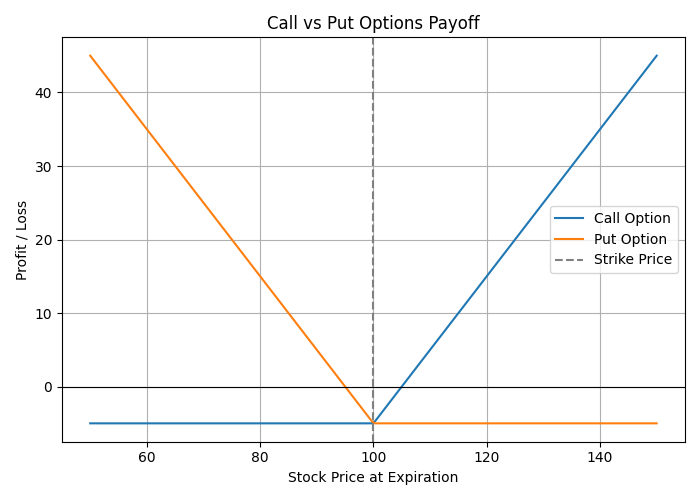
This flexibility allows traders to hedge risks, speculate on price movements, and implement advanced strategies that combine calls, puts, and volatility analysis.
👉 Think of it this way: unlike buying a stock outright, options give you leverage - a way to control more value with less capital, while keeping your risk defined.
Why Traders Choose Options
Options are popular because they allow you to profit in different market conditions - rising, falling, or sideways. Traders use them to:
- Hedge stock portfolios against sudden market drops.
- Speculate with limited capital but high potential.
- Generate income through strategies like covered calls.
- Benefit from volatility trading, where price swings create opportunities.
Expert insight: According to Investopedia analysts, retail traders using options with defined risk strategies have shown higher survival rates in volatile markets compared to traditional margin trading.
Pocket Option: A Simple Way to Start
Pocket Option offers a Quick Trading model that resembles the logic of options trading - but with a much simpler and faster execution. No complicated terms or formulas - just choose the price direction and click Buy or Sell. If your prediction is correct, you can earn up to 92% profit in a single trade.
New to trading or want to explore the platform first? Register now and start practicing with a free demo account - no risks, no deposits required.
Unlike traditional brokers with high entry barriers, Pocket Option gives you a fast track to start learning and applying strategies:
- Minimum deposit: from just $5.
- Unlimited free demo account for practicing.
- Over 100+ assets available (stocks, crypto, indices, forex).
- AI trading tools and a signal Telegram bot.
- Social Trading - copy successful traders.
- Weekly tournaments with real prizes.
- Bonuses and promo codes to boost deposits.
- Mobile app to trade anytime, anywhere 📱.
Options Trading Guide: Key Terminology
To succeed, you need to master the essential terms. Here’s a quick options trading guide in table form:
| Term | Meaning |
|---|---|
| Call Options | Contract that gives you the right to buy an asset at a fixed price. |
| Put Options | Contract that gives you the right to sell an asset at a fixed price. |
| Options Greeks | Metrics (Delta, Gamma, Theta, Vega, Rho) that measure sensitivity. |
| Strike Price | The fixed price at which the option can be exercised. |
| Expiration | The date when the option contract expires. |
| Premium | The price paid to buy the option. |
👉 Learning these basics is step one in understanding how to trade options effectively.
How to Trade Options: Step-by-Step
Many beginners ask: how to trade options without getting overwhelmed? Here’s a simple process:
- Choose your asset (e.g., Apple stock, EUR/USD, or Bitcoin).
- Select the option type - call (if you expect price to rise) or put (if you expect it to fall).
- Set strike price and expiration.
- Pay the premium to enter the contract.
- Manage the trade until expiration -- decide whether to hold, sell, or exercise.
💡 Example: If Apple stock trades at $150 and you buy a call option with a strike at $155 expiring in one month, you profit if Apple goes above $155 before expiration.
The Role of Options Greeks
Professional traders rely heavily on options Greeks to measure risk and probability:
| Greek | What It Measures | Why It Matters |
|---|---|---|
| Delta | Sensitivity of option to $1 move in underlying | Helps forecast potential profit/loss |
| Gamma | Rate of change of Delta | Shows how Delta changes as price moves |
| Theta | Time decay | Tells how much value you lose each day ⏳ |
| Vega | Sensitivity to volatility | Crucial for volatility trading |
| Rho | Sensitivity to interest rates | Important in long-term option pricing |
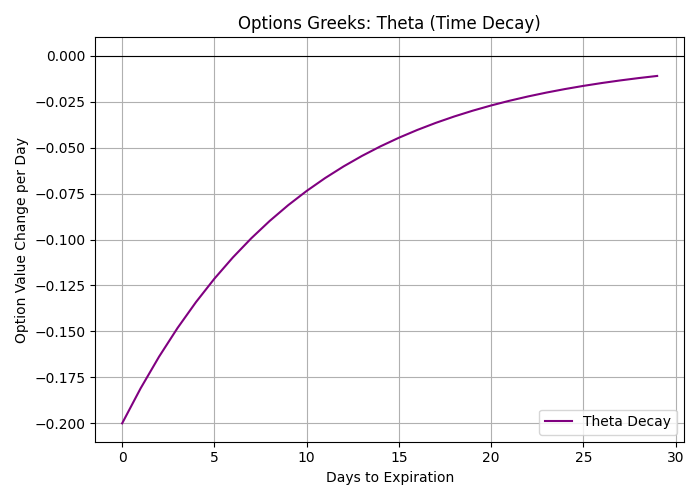
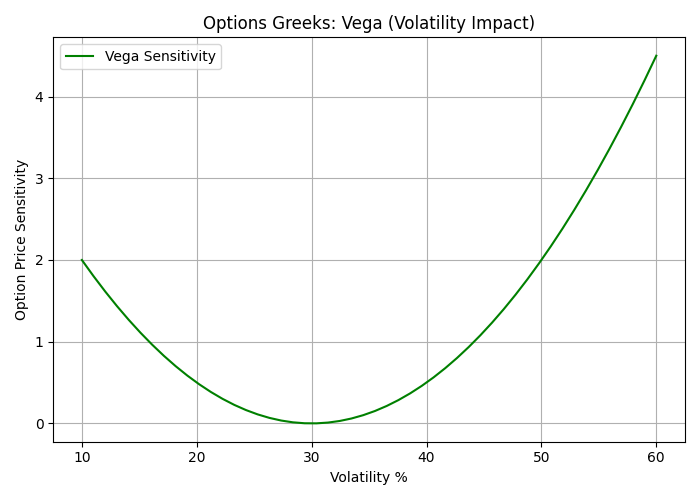
👉 By combining Greeks, traders design options strategies that align with risk tolerance.
Popular Options Strategies
Let’s explore some practical options strategies for 2025:
1. Covered Calls
A conservative strategy: own 100 shares of a stock and sell a call option on it.
- Pros: Generates steady income.
- Cons: Caps upside if stock rises sharply.
2. Protective Puts: Buy a put option on a stock you own to hedge against losses.
3. Straddles (Volatility Trading): Buy both a call and a put at the same strike -- perfect when you expect big moves but don’t know the direction.
4. Iron Condor: Sell two out-of-the-money options (call and put) and buy two further out-of-the-money options. Profits from low volatility.
📊 Strategy Comparison:
| Strategy | Best For | Risk Level | Profit Potential |
|---|---|---|---|
| Covered Calls | Income generation | Low | Limited |
| Protective Put | Hedging | Medium | Unlimited downside protection |
| Straddle | Volatility trading | Medium | High if big movement |
| Iron Condor | Range-bound markets | Medium | Moderate, consistent |
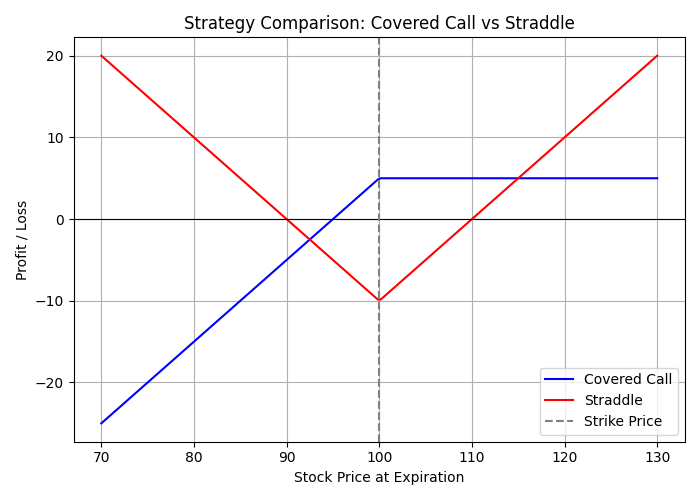
Expert Insights: Financial author John Hull, in Options, Futures, and Other Derivatives, emphasizes that mastering volatility trading and Greeks is what separates beginners from professionals. Traders who stick to simple calls and puts without understanding Theta (time decay) often lose money, while those who analyze volatility can profit even in sideways markets.
Risk Management in Option Trading
Even though options have defined risk, poor planning can drain accounts fast. Some tips:
- Never risk more than 2--5% of your capital on one trade.
- Plan your profit/loss limits before entering a trade.
- Diversify across asset classes (stocks, forex, crypto).
- Track your risk/reward ratio.
👉 Example: Investing $100 in a single option with potential $300 upside but $100 max loss is more sustainable than risking $1000 at once.
Quick Trading vs Traditional Investing
| Aspect | Quick Option Trading | Traditional Stock Investing |
|---|---|---|
| Risk | Defined, limited | Variable, market-dependent |
| Capital Required | Low (from $5 at Pocket Option) | Higher, must buy full shares |
| Profit Potential | Fast, leveraged | Long-term growth, dividends |
| Complexity | Moderate (needs education) | Lower, buy & hold |
| Asset Ownership | No ownership | Full ownership of stock |
See more:beginnerKnowledge baseMarkets