How Many Bitcoin Nodes Are There and Their Significance
Ask how many Bitcoin nodes are there and a few different answers come back, all of them sort of right. Number hangs on who does the counting and what they bother to count. In 2026 the trackers are apt to sit apart by tens of thousands, and not one of them sees the whole network.

What Is a Bitcoin Node?
A node is merely a computer that runs Bitcoin software and keeps in touch with other computers doing the same. It passes transactions and blocks on to its peers, and a full node goes a step further and checks each one against the rules before handing it along. Nobody signs off on any of this from up top, which is more or less the whole idea.
So what is a Bitcoin node like in real life? Oftener than not, a small box in somebody's home, some old laptop with a big drive hung off the side. That's the Bitcoin full node explained in one go: what sets it apart is it keeps its own copy of the rules and won't take anybody's word for anything.
There's a longer primer on how nodes work on our blog for anyone after the plumbing.
Full Nodes vs Other Node Types
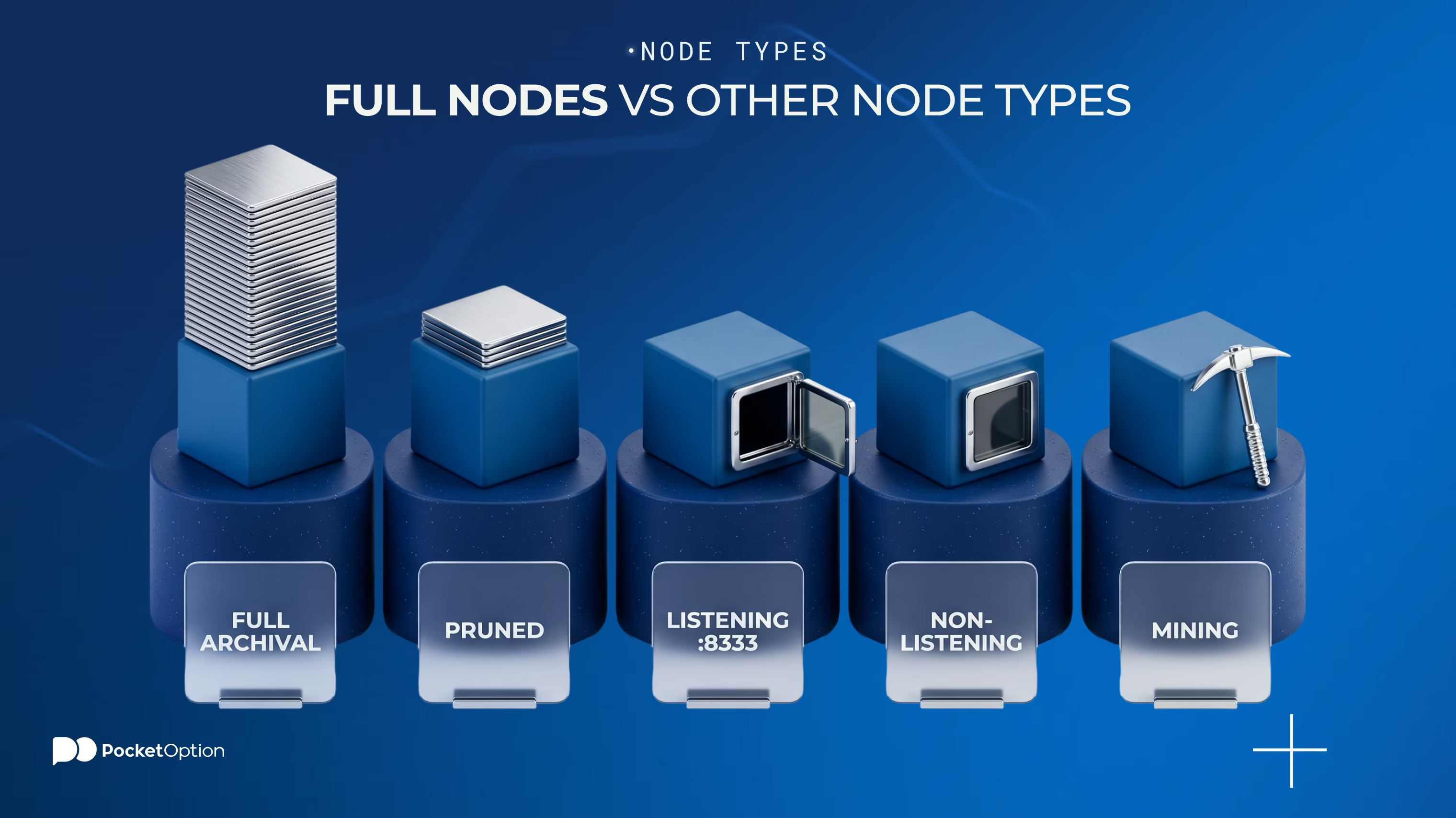
The labels run into one another somewhat. Main kinds folk run:
Full archival nodes, which hang on to every block right back to 2009.
A pruned Bitcoin node checks the lot just the same, then bins old blocks, so it runs just as easy off a small drive.
Listening nodes. Port open for strangers, 8333 as a rule.
Non-listening nodes reach out to peers but let nobody reach in, mostly from behind a home router.
Mining nodes? They put new blocks together, a separate matter from the node count.
For counting, the reachable vs unreachable nodes split matters most, since a crawler can only talk to a node that answers the door. A listening node Bitcoin peers can dial into gets picked up, a node sat behind a router mostly doesn't. In September 2025 Bitnodes snapshots, pruned nodes came to a shade over 8% of the reachable set.
Miners' end of things, the hashing and how much bitcoin gets mined per day, is a different subject again.
How Many Bitcoin Nodes Are There?
So, how many Bitcoin nodes are there? Depends who you ask, and on which day.
The reachable count, the one most sites put up front, was put at roughly 24,481 in January 2026, and the rebuilt Bitnodes site showed 25,760 reachable nodes in its 22 September 2026 snapshot. Anyone typing how many Bitcoin nodes are there currently into a search bar is apt to get one of those back, with not a lot said about what got left out.
Tracker | What gets counted | Figure given | When |
|---|---|---|---|
Bitnodes (rebuilt) | Reachable nodes | 25,760 | 22 September 2026 snapshot |
Coin Dance | Public listening nodes, duplicates taken out | 23,189 | Early 2026 |
Luke Dashjr's tracker | Listening and non-listening nodes | 72,682 Core plus 18,724 Knots | May 2026 |
Bitnod.es (BitMEX Research) | Reachable nodes, bare-bones crawler | Under 2,500 | May 2026 |
Figures are as reported by each source on the date shown. They move daily, and any tracker's availability can change.
Same network, four readings. Gap between them is at bottom a gap in method.
A quick tour, step by step.
Quick startHow Many Bitcoin Full Nodes Are There Worldwide?
Here it gets murkier. How many Bitcoin full nodes are there once the unreachable ones are counted too? No crawler can say, since those machines never pick up when called.
Estimates that fold them in come out a great deal higher. Luke Dashjr's tracker, which does go after non-listening nodes, showed 72,682 Bitcoin Core nodes and 18,724 Bitcoin Knots nodes in May 2026, a little over 91,000 all told. Bitnodes' own notes warn such all-node figures are rough and may take in bogus addresses, so a bigger number isn't by default a truer one.
About two in every three reachable nodes in 2025 Bitnodes snapshots had no country against them at all, because they ran over Tor. So when folk ask how many Bitcoin nodes are there worldwide, the straight answer is a range: past 25,000 that can be seen, and a good many more out of sight.
Why Node Counts Change Over Time
Counts shift for dull reasons in the main. A home node gets unplugged when its owner moves house. An internet provider hands out a fresh IP address overnight. Which is how the one box can end up logged twice for a day or so.
Then there are the counters themselves. Bitnodes, which had run since 2013 and down the years became the source a great many dashboards leaned on, went dark after its domain expired on 3 May 2026. Sites built atop its data went blank as well, or showed stale numbers after that. It has since come back as an independent rebuild under Rodrigo Martínez.
A shift toward Bitcoin Knots after Bitcoin Core changed how it relays certain data moved figures too. Searches for how many Bitcoin nodes are there 2025 bring up something near 22,000 reachable in May of that year, going by Bitnodes snapshots of the time. Type how many Bitcoin nodes are there 2026 instead and the mid 20,000s come back, give or take a tracker.
What Node Numbers Tell Us About Decentralization
A higher count tends to be read as good news, other things being equal, since there's no single spot from which the whole lot could be switched off. Still, a headcount is a blunt tool for gauging Bitcoin network decentralization. Jameson Lopp has made the point that nodes come cheap to spin up and Tor addresses are close to free.
August 2026 showed as much. Nodes running a BIP-110 build of Bitcoin Knots began turning away blocks from the main chain at block 961,632 and went off onto a chain of their own, and scarce any mining power went with them, that chain turning out two blocks in its first days. Backers call it a user-activated soft fork, critics a chain split.
Where nodes sit and whose software they run, that says a good deal more than the headline figure.
Try the tools on virtual funds.
Try demoHow to Check Live Bitcoin Node Data
Any Bitcoin node count tracker is a view through one window, so it pays to look through more than one. The rebuilt Bitnodes site puts out reachable-node snapshots again, Coin Dance takes out duplicates and non-listening nodes, and Luke Dashjr's charts reach further, into machines that don't listen. Check the date on the snapshot, and whether the figure sticks to reachable nodes only.
Anybody running a node can look for themselves too. In Bitcoin Core, getpeerinfo lists every peer the node is presently hooked up to. It's a small window, one node only ever talks to a limited set of peers, but it's first-hand, which none of the websites are.
Should You Run Your Own Bitcoin Node?
Not needed for buying, holding or trading bitcoin, and a step by step guide to buying Bitcoin covers that side with no node anywhere in the picture. A node is for those who'd sooner check the rules themselves. What it asks for, roughly:
Disk room. The full chain stood at 767.78 GB on 11 September 2026, per Blockchain.com data.
Or a pruned setup, if the drive is on the small side.
Patience, since the first sync can run to days on modest kit.
Reachable or not? Only if port 8333 gets opened on the router.
Pay-off is a quiet one. A node earns nothing, it merely lets its owner check things for themselves.
Conclusion
Plainest lesson on node counts has come in May 2026, when one lapsed domain took the best-known counter offline. Bitcoin carried on as before, a block every ten minutes or thereabouts, not one of those tens of thousands of nodes needing a website to tell it that it existed. Count is a reading taken from the outside. Network runs whether anybody reads it or not.
Disclaimer: Trading involves significant risk of capital loss and may not be suitable for all investors. Past performance does not guarantee future results.
See more:Knowledge baseLearning