Easy Trading Signals: A Thorough Path to Smarter Trading
Easy trading signals are commonly presented as a shortcut, and therein lies the root cause of problems. A signal is simply an opinion on a possible price move by somebody else. And this is it. This guide covers how to identify reliable sources of easy trading signals and ways of incorporating them in your trading strategy within the limits of your risk management rules.

What Are Trading Signals
A trading signal is a recommendation to open a deal in a particular moment of time. This recommendation could be issued on the basis of an indicator's reading, a chart pattern recognized by the signal source, or a trader watching the screen, who feels like the euro will decline during the day. That's all.
Most signals come bundled with some information, such as the asset, the type of the signal (buy/sell), sometimes an entry level, sometimes an exit recommendation, and, ideally, some reasoning explaining why this call was made. The worst-case scenario would be "buy" only, and nothing else.
What is offered as easy trading signals is just an additional layer wrapped around this concept, but not an entirely different product. Somebody is doing the watching, and you are getting notified. The appeal is obvious for beginners, who don't yet understand what's going on the price charts.
However, a signal should remain your starting point, rather than a ready decision, which you should accept. A signal could be right or wrong in a way of causing the loss of the position. No provider of easy forex trading signals is immune to errors. Forex trading signals tend to come quickly and to become outdated as fast, providing no chances for reconsideration as the marketing often promises. This is especially true of forex signals on the shorter timeframes.
Manual vs Automated Signals
The main distinction between the sources of signals is in who or what is generating the signal: a person or a program implementing some rule.
Manual signals are generated by an analyst or a team, who analyzes the markets and detects something to be signaled. They come slowly and usually contain reasoning, which allows you to question it if you feel that this logic is not quite right. Obviously, the drawback of manual signals is that a person generating them can be tired and has his/her personal moods, as well as inability to monitor dozens of assets simultaneously.
Automated signals come from programs. When the conditions set in the rule coincide with reality, a program triggers the alert immediately, making no further assessment. Automated signals are more stable than manual ones and cover a much wider range of markets. However, they cannot detect a central bank's speech in eleven minutes ahead and conclude that the setup is unlikely to be traded successfully.
Feature | Manual signals | Automated signals |
|---|---|---|
Source | An analyst or trading desk | A rule implemented in software |
Speed | Slower, generated after analysis | Immediate |
Coverage | Restricted by the amount of assets a person can watch | Wider, covers multiple markets |
Reasoning given | Usually present, sometimes detailed | Usually not present, except of the trigger condition |
Major flaw | Fatigue, bias, missed setups | Lack of awareness of context surrounding the trigger |
Neither of these two options is superior to each other in terms of reliability. Many traders combine the two sources, considering the concurrence as a trigger for action.
Common Indicators Behind Signal Generation
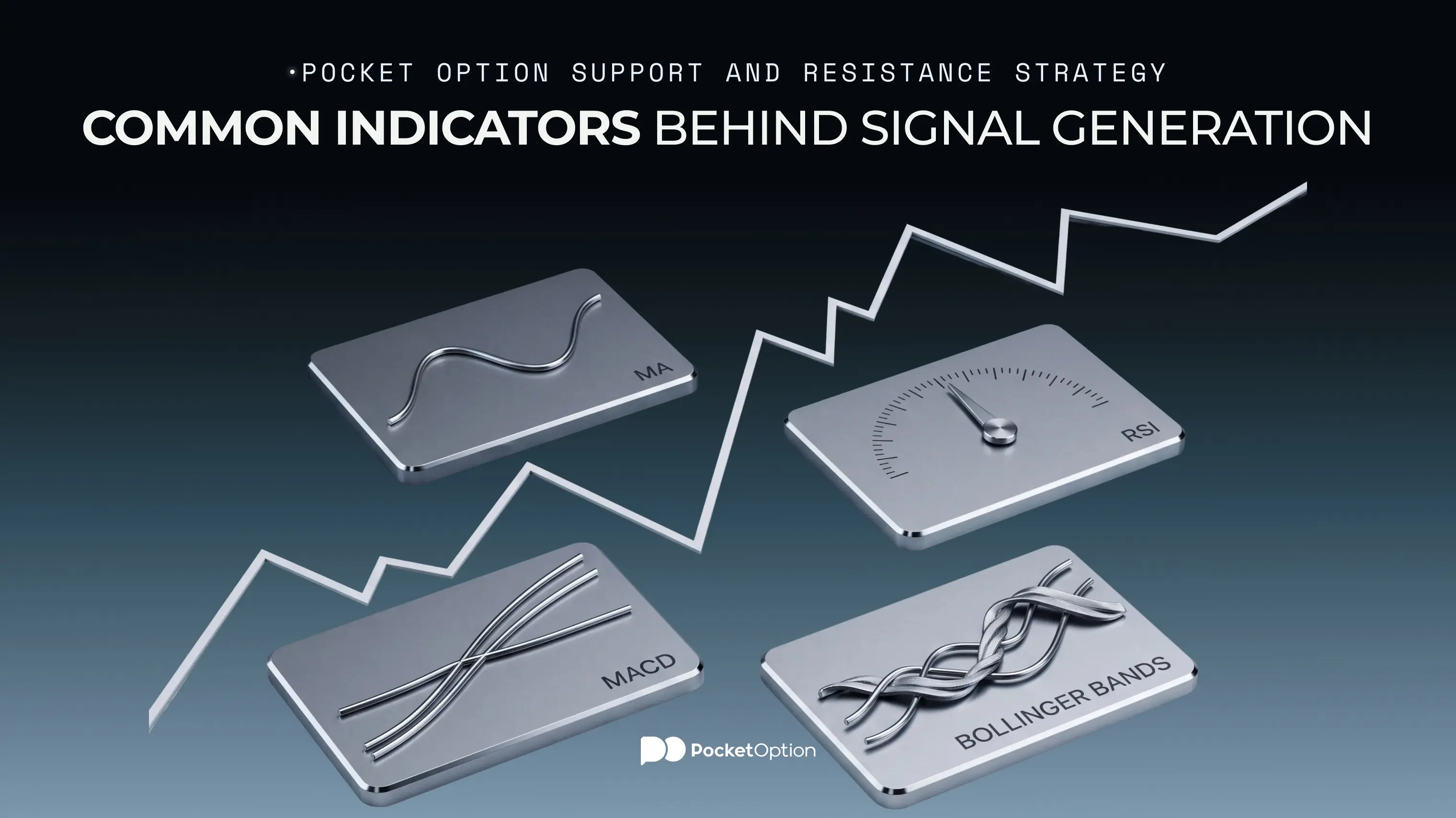
Most automatic feeds are built upon a handful of analytical tools. The ones people nominate as the best indicators for day trading are among them constantly. Understanding which indicators are used to generate the feed will let you see the strengths and the weaknesses of it in advance.
Moving averages smooth the price into a line and generate signals when price touches the line or two lines cross. A slow reaction and a tendency to generate false alarms in a sideways market.
RSI measures the momentum on a zero-to-one-hundred scale and generates signals in case of extreme readings. Good at detecting stretched situations, but not very useful in detecting that a trend has ended.
MACD measures the momentum shift and its direction, based on the gap between two moving averages.
Bollinger Bands expand and contract according to the volatility and are used for breakout or reversal signals.
Stochastic oscillators are similar to RSI, but are a little more sensitive to the changes.
None of these indicators are designed for signal generation. They measure the market and generating the signal is an additional step. It is important to remember this, when the feed is presented to you as a set of undeniable facts. In case you are interested in deep understanding of the process, this complete guide on RSI and how to use it for day trading goes further, and MACD settings are covered separately.
People often ask about the best indicators for day trading hoping to receive one single answer. It is not the case, however. What seems to work better is choosing two indicators measuring different things, thus being able to contradict each other.
Chart Patterns and Signal Feeds
There is another group of signals that are generated based not on the calculations of any analytical tool but on chart patterns such as head and shoulders, double tops/bottoms, triangles, flags, and other patterns. A signal feed is scanning for patterns and issuing an alert when it is detected that the pattern is about to complete soon.
Signal feeds based on patterns face one disadvantage that is rarely encountered with the indicator signals. The detection of a chart pattern is not an objective process, and two scanners with different settings will not agree whether this or that pattern can be seen.
Continuation patterns (flags, pennants) suggest that the move has to continue.
Reversal patterns (double tops, head-and-shoulders) mean that the current trend has ended.
Triangles are somewhere in between and are expected to develop into the continuation or a reversal, depending on what happens next.
Forex trading signals and other feeds can reach you via different channels. Some providers push the alerts to a messaging app, some generate the alerts within the trading platform, while others deliver the signals via e-mail that arrives long after the setup. Delivery speed matters more with forex signals than the marketing tends to admit.
How to Evaluate a Signal Provider's Reliability
And this is how your money disappears. And it happens before you place a single deal.
First of all, consider the track record of a provider, especially whether there is an objective track record you can check. A screenshot of the profitable trades is not what you are looking for. A published track record spanning for months and containing both winning and losing trades is closer to your needs. When the provider shows only the profitable weeks, you learn something about him, but not what you were supposed to learn.
Consider the description of the method of signal generation. The provider who is ready to tell that the signals are generated based on, for example, crossover of moving averages filtered by the trend on a larger timeframe will give you enough information to assess whether this approach is suitable for your style of trading. When a provider speaks about some proprietary algorithm and nothing else, he wants you to trust blindly.
Watch the language. Claims of guaranteed accuracy and ninety-nine percent of winning are the red flags, though not the advertised ones. Markets do not work that way, and a provider making these statements either knows it and is lying to you or does not know it and should not be selling anything at all. The free trial period can help with this task. Two weeks of easy forex trading signals on demo account will tell you more than any sales page.
One more thing that is usually forgotten: make sure the assets covered by the feed fit your strategy.
Open the chart and confirm first.
Get StartedUsing Pocket Option's Signal Tools
The platform features its own technical tools and signal generator located near the charts, meaning that the alert and the chart that you will use to check the alert will appear in the same place. This is important, as the switching between the messaging app and trading platform is the place, where people stop verifying and just click.
The typical flow of actions is quite simple and repeatable. An alert comes in. You pull up the asset, inspect the chart on your own timeframe, and see whether the story is valid. If it is, you calculate the deal size and place it. If it is not, you ignore the alert and wait for the next one.
Pocket Option signals fit quite well into the process as one of the inputs for your decision. They do not replace your careful chart analysis, which is true about any feed. The internal toolset is sufficiently wide that it takes just a minute to confirm the alert, and there is a rundown of the best technical indicators provided by the platform if you want to know what is available beforehand.
It is recommended to use demo access as the safest way to evaluate all of this, whether you are testing Pocket Option signals or some other signal feed. Signals reveal themselves only after seeing how they are wrong a few times.
Setting Up Alerts for Signal-Based Trading
Alerts turn a feed, which you need to monitor actively into a feed, which is finding you. To set up alerts correctly, follow these steps:
Pick the assets that you are ready to trade, keeping the list short.
Choose a single timeframe and stick with it, as a signal generated for fifteen-minute chart makes little sense on a daily chart.
Choose the conditions for the alert: indicator's value crossed the level, price reached your marked target or the alert issued by the feed.
Choose how the alert will reach you: in-platform, push notification or e-mail, whichever one you will actually see in time to act.
Test the whole setup with demo balance during a couple of weeks before applying for real money, especially forex trading signals, where setups can expire quickly.
Whether you are using Pocket Option signals or some other feed, the common mistake is the excessive amount of alerts. Twenty alerts a day sound as a thorough approach, but it becomes unmanageable, as people won't bother to examine the twentieth alert in time. A reasonable number of alerts is from three to six per day, and if you see far more of them, the conditions are probably too loose.
Risk Management When Trading With Signals
A signal tells you what to do and when, but it does not say anything about how much you are risking on it. This is the parameter that determines whether a series of bad calls can be handled.
First of all, consider the position size. Most traders limit the number of deals with one or two percent of the balance and the reason is simple. One percent of the balance is safe to trade with for ten losing deals, while ten percent will probably blow up the account on the same streak of deals. The series of signals increases the risk, as a market situation can trigger a series of similar bets.
Set your exit level before you enter. It is a common mistake to give more room to a losing position once it started moving against you.
Keep the log of all signals that you are trading, whether they turned out to be successful or not. After thirty or forty entries, you will have the history that is worth studying. The patterns found in your history are more valuable than the alleged accuracy of a feed. Some traders discover that their results on signals are quite good when they are verified, but are poor when they were taken directly from the alert.
No deposit needed to start testing.
Try DemoCommon Mistakes When Relying on Signals
The main one is the attempt to trade every signal you receive. The feed providing you with forty signals a week does not provide you with forty opportunities, as they are not interchangeable. Treating them as such is diluting the good ones with the rest.
Another mistake is the lack of verification of the signal via chart. The whole purpose of easy forex trading signals is that somebody else is doing the watching, and it can seem counter-productive to open the chart and verify the signal yourself. But this is what you should do, as a signal might look solid on a five-minute chart but contradictory to the daily trend.
The third common mistake is trading a signal that has been already moved. The alert comes, price has already moved, and by the time you entered, the entry looks quite different from the described setup. This entry has different risk characteristics and usually, a higher one.
Two more common mistakes: changing the provider after every unsuccessful week and accumulating insufficient history for any evaluation; trading signals in assets, which you are not following, and thus have no idea about usual price movement.
Conclusion
Keep the log. It is the one habit that survives everything in this article, as it is the only way to determine whether all of this works for you personally. Accuracy published by a provider of easy trading signals is the accuracy of his or her calls, not your results. The gap between them is formed of your decisions: which alert you are taking, how much you are risking, whether you are checking the chart, and how much time you spend waiting for the signal to expire. The history of thirty entries in the notebook answers many questions that you cannot answer by any reading about signal quality. Most people don't keep the log and wonder why the feed, whose accuracy is supposedly two of three, left them in the red for the quarter.
Disclaimer: Trading involves significant risk of capital loss and may not be suitable for all investors. Trading signals do not guarantee results, and past performance does not indicate future outcomes.
See more:InterestingTrading Strategies