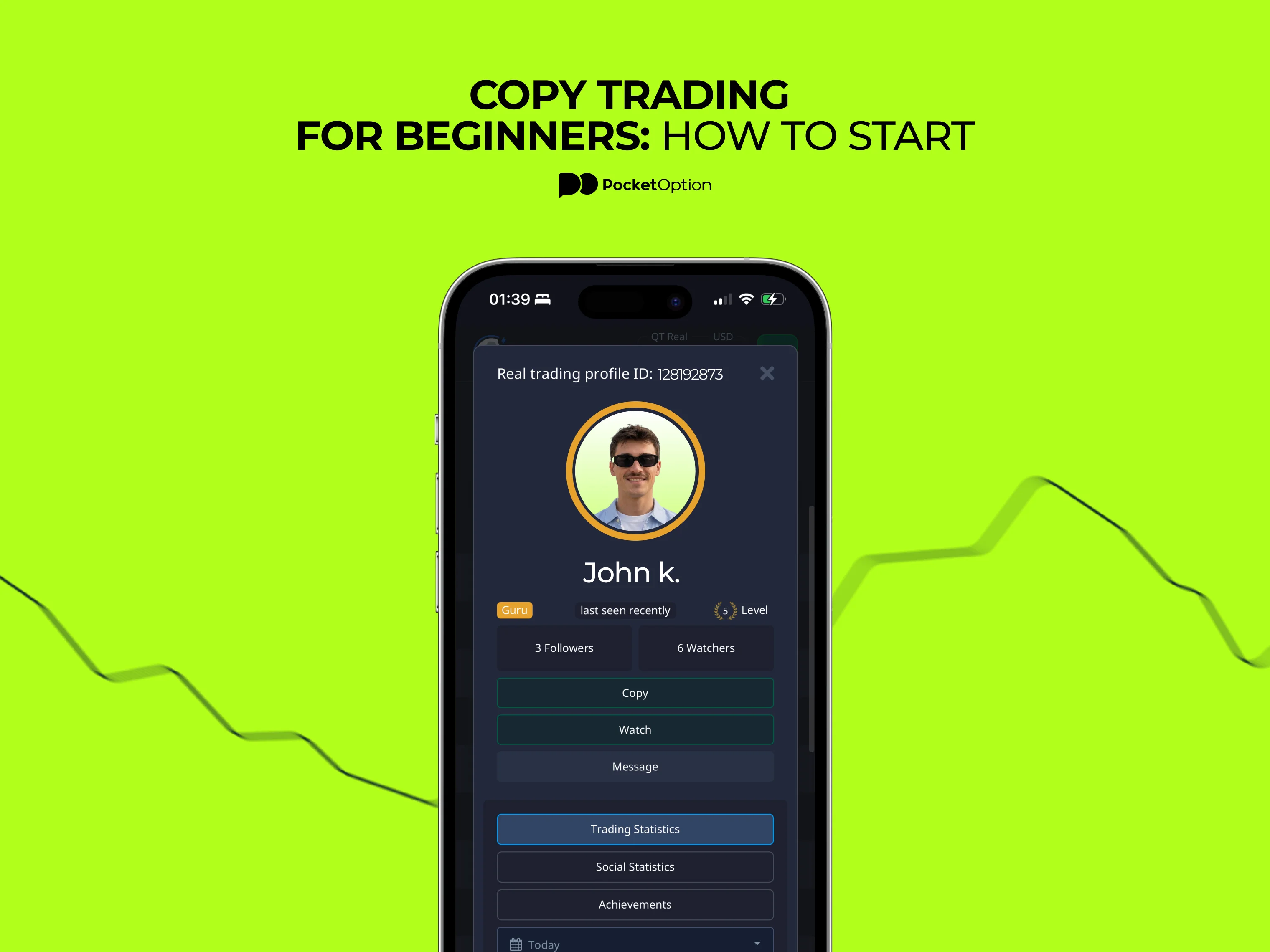
Copy Trading for Beginners: Mastering the Art of Mirroring Successful Traders
The global copy trading market has reached $4.3 billion in 2024 and is expected to reach ~$18.1 billion by 2033. According to industry technology provider Brokeree Solutions, copy trading now generates 6% to 20% of a retail brokerage total trading volume. But how exactly does it work, and how to best employ it?

What Is Copy Trading?
Copy trading lets you automatically mirror another user's (“provider”) live positions in your own account. The trade is usually scaled to your available capital (e.g. if a trader that you’re copying is opening a trade of $100 000, your trade might only be $10 in size). This way of social trading removes any need for technical or fundamental analysis, and is rather popular with beginners.
When you copy a trader, their open positions are replicated in your account in real time, which is different from a signal provider model, where you simply receive a notification about a certain possible trade, and then must act yourself and manually decide whether to open a similar trade, or not. This is why copy trading for beginners is often even better than signals, as it removes that big manual step. Once you've set your parameters, and allocated a certain amount of funds to following a certain trader, the trade executes automatically, whether you are aware of it or not.
A trader that is being copied (provider) receives bonuses from the platform, in the case of Pocket Option copy trading, or a portion of follower’s profits. A follower receives increased returns, if the provider’s trading quality is better than their own (which it usually is, as the beginner traders are usually the ones copying far more experienced ones).
How Copy Trading Actually Works
The specifics of copy trading are pretty consistent across most platforms. To start copying somebody, you typically:
Browse a list of users who've chosen to make their trading activity public. You see their win rate and average loss, performance history, trade frequency, favourite assets, etc. Some platforms also show maximum drawdown and volatility, and track a risk score of profile.
Allocate an amount to the trader(s) you choose to follow. This will be the capital that their trades will be scaled to.
Set your copy parameters, usually as a percentage of your balance per trade.
Trades start to replicate automatically, if the trader you're following opens and closes positions. They might not even be aware you are copying them.
You can stop copying at any time, though the positions that are already open will run their course (or will need to be closed manually, depending on the platform).
Crucially, none of this requires you to understand why the trader entered a given position, and what his strategy is. That's the appeal, but that is also the risk. You're exposed to their decisions without understanding the reasoning behind them.
In the automated Pocket Option copy trade system, the key mechanics stay the same as with other brokers, with the main differences coming from 2 aspects:
Almost anybody can copy trades from almost anybody else, the system is opt-out, rather than opt-in.
Providers don’t earn a portion of users profits, which makes copying far more advantageous. Instead of earning a part of the profit, providers earn some gems to spend at the in-platform shop.
Key Advantages of Copy Trading
Faster market exposure. You can participate in live markets without having to spend months learning TA and fundamental analysis.
Real-time learning. You can see how an experienced trader targets their entries and exits, how he sizes the trades, which assets he chooses, etc. This is as good as the usual signal providers explanations, except you are also following the trades in real time, and earning money from them. One of the best ways to casually learn the craft.
Easy diversification across strategies. Just following multiple traders that trade different assets rapidly spreads your exposure, and makes your portfolio less concentrated and risky. Remember that diversification across traders is rather important.
Reduced impulse trading. The trade works without your emotional input, and it will close when the provider decides to close it (or, in the case of Pocket Option copy trading, it will close automatically after a certain period of time). This removes any impulsive decision-making from the copier side.
How to Evaluate a Trader Worth Copying

This is the most important decision in copy trading, and it's also where a lot of beginners cut corners. Choosing a person to copy shouldn’t rely on their name, country of origin, or a profile picture. There is a mathematical approach to copy trading, which can net higher returns. A few metrics matter above anything else:
Performance track record. A user should be trading for a long time. A trader with six or more months of history on the platform, that has experienced both calm and volatile markets, is usually a better choice than someone with great performance over the last couple days.
Win rate and average loss. These should be counted together, not separately. A trader who wins 75% of trades can still lose money overall. If they ‘hold’ their losses for a while, and let them acquire, or if they put a much higher stake into losing trades. Win rate alone does not tell the full picture: sizing and total profit are equally relevant.
Maximum drawdown. How far did the account size previously fall from its peak before recovering? The lower the total drawdowns, the more attractive a provider’s performance is.
Trade frequency. If a user has made very few trades, this makes their record statistically unreliable. The more trades they had made over all, the more relevant the rest of the information is.
Most platforms that provide copy trading explained for beginners also show such information as the amount of followers, or total trading turnover over time. But those are not as relevant to the actual trade quality.
Trader Evaluation: Quick Reference Sheet
What to Check | Look For | Why It Matters |
|---|---|---|
Track record length | 6+ months, various market conditions | A short, but profitable week or a month can just be a luck streak |
Win rate | Total profits. Win rates and average loss sizes alone don’t tell much | High win rate, but oversized losses can still end up net negative |
Maximum drawdown | Smaller dips, faster recovery, low drawdown and volatility | Signals better risk management |
Trade frequency | Enough for a reliable sample | Too few trades mean unreliable data |
Risk score / profile | Matched to your own tolerance | Low risk score of profile is good for stable returns, but high risk score might signal oversized opportunities |
Diversified strategy | Multiple markets, assets, timeframes | Single-asset focus often means more concentration risk |
Developing an Effective Strategy
To turn copy trading from passive following into a deliberate plan, you have to set your own rules around it. Ideally, those rules should be set in advance, not when you are partway through a drawdown and panic sets in.
Define your monthly/weekly benchmark before you start. It should be realistic, and based on the performance track record of a trader. For example, 5-7% return in a month. If a trader underperforms these metrics, you need to re-evaluate them as part of your portfolio.
Cap your total exposure. How much of your account are you willing to dedicate to copytrading? Is it 20%, 25%, 30%? Decide ahead of time and stick to it. If you have outsized returns, it might be worth withdrawing some of them, to relocate elsewhere.
Weight your allocation toward the better traders. Users with the longer, more consistent track records should get double or triple the amount. ‘Experimental’ signal providers or copytrading users should be a smaller part of your portfolio.
Review results on a fixed schedule. Check the numbers on the same day each week. For example, every Friday or Monday. Decide which traders to cut, and which to keep.
Set your evaluation time window. And later judge a trader against that full window. A single day of underperformance is not a huge issue (if the drawdown isn’t large). But if a trader consistently disappoints for 30 or 50 days, that is a point to completely cut them out of your portfolio.
Remember that following a single trader means your results are entirely tied to them. It is a concentration risk. Spreading your allocation among several providers delivers a more well-balanced social trading strategy, and reduces the impact of any one trader's bad week. Even if somebody underperforms, the rest of your account might do well, and bring you into the profit.
Copy Trading for Beginners Step by Step
Understand basic mechanics first. Start small, and see how allocation, copy percentages, and stopping the copy actually work on the platform you're using. Understand the fees. On Pocket Option copy trade is fully free, but most platforms charge a significant premium, up to 10-30% of trading profit.
Set a budget you're fully prepared to lose. Initially, it should be relatively small. Funds for copying providers should be kept separate from money set for other purposes, like long-term investing or your own trading.
Shortlist a few traders using the criteria outlined above. Track them for at least a few days (preferrable few weeks). See how their win rate changes, and how much profit they can bring you. Don’t just sort for recent returns and invest everything in top trader.
Start small. Allocate a small amount per trader, and increase as you go. There is no rush: markets are not going anywhere.
Set your own risk limits, independent of what is shown on any platform. Set the maximum percentage of funds you can allocate to a trader, and a maximum drawdown you’re prepared for, before you cut them from your portfolio.
Review on a set schedule. Do weekly or monthly check-ins to see which providers should be cut out first. Daily monitoring is usually too much, but ignoring your portfolio completely can also not be ideal.
Platforms that offer copy trading for beginners step by step, including Pocket Option, usually show the best traders first, and you can start copying any of them with the size that you want. You can copy 1% of their trade, or as much as 1000%, or more. It’s advised to set a low percentage first, and size in later on, if you enjoy their performance.
with Pocket Option Social Trading Service
Get StartedDisclaimer: Trading involves risk of capital loss, including when using copy trading. This article is for educational purposes only and does not constitute financial advice. Always do your own research and consider risk tolerance before following any trader.
Daha fazlasını gör:InterestingTrading Strategies