What Is Yield and How Do Yields Show Investment Income?
What does yield mean? Yield is a percentage that measures the income an investment produces relative to its price, separate from any change in the asset's own value. The formula changes slightly across stocks, bonds, and real estate, but the yield meaning stays the same throughout.

What Is Yield: Definition
Yield is the income an investment generates over a year, expressed as a percentage of what the investment costs today. It captures cash returns only, things like dividends, interest, or rental income, and leaves out any gain or loss in the price of the underlying asset.
A precise yield definition therefore always specifies which income stream and which price are being compared, since the same $2 dividend means a different yield on a $40 stock than it does on a $100 stock. The percentage format is what makes yield useful for comparing investments that would otherwise be difficult to line up side by side.
Yield vs Income: Key Difference
Income is a dollar figure: the actual cash a dividend, coupon, or rent check delivers. Yield restates that same dollar figure as a percentage of the price paid, which is what allows a $500 dividend on a $10,000 investment to be compared directly with a $50 dividend on a $1,000 investment, since both work out to a 5 percent yield.
Confusing the two is a common mistake. A rising dividend in dollar terms can still represent a falling yield if the share price rose even faster, and a shrinking yield is not always bad news if it is driven by price appreciation rather than a smaller payout.
Dividend Yield Formula (Stocks)
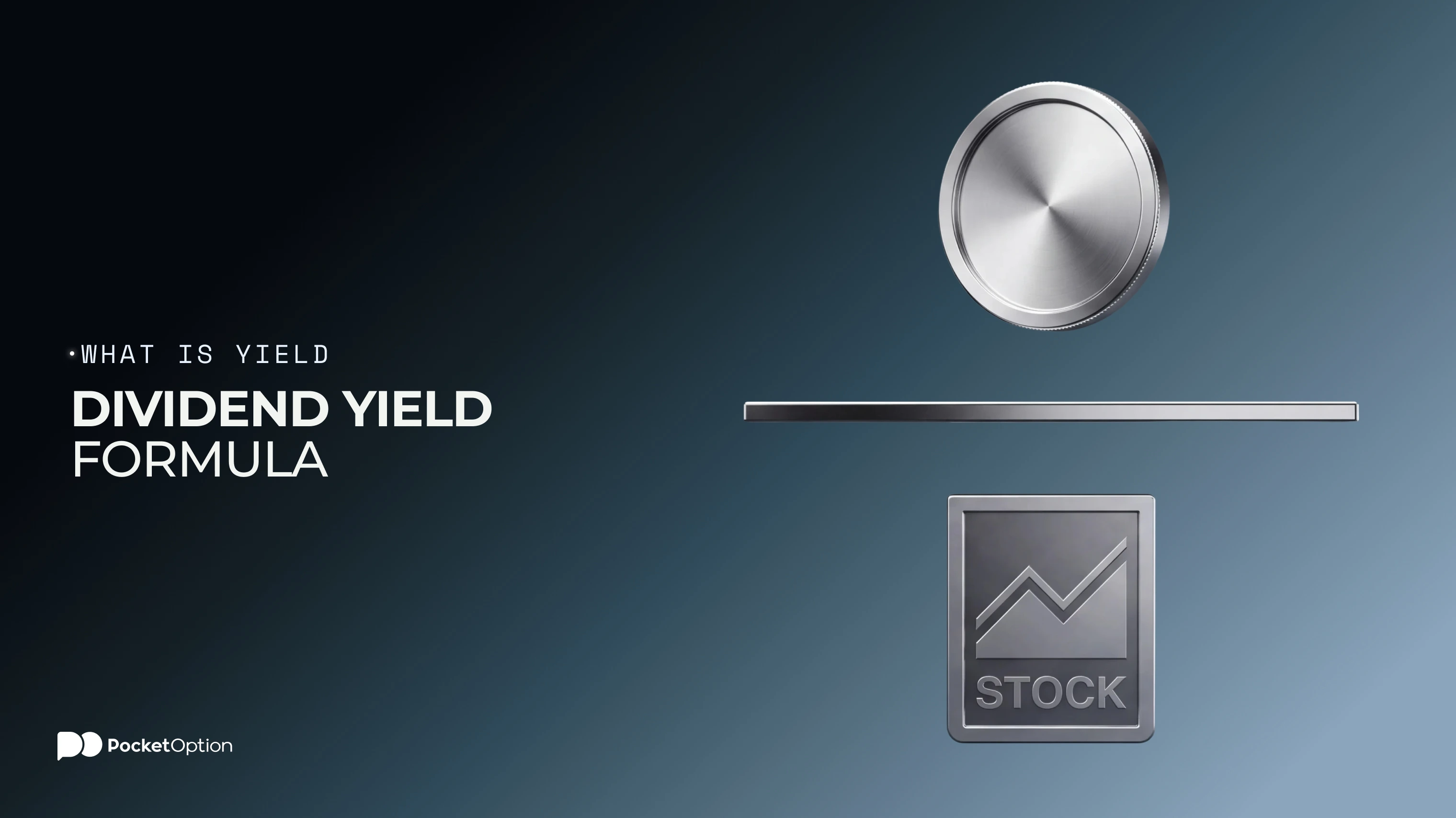
Dividend yield is calculated by dividing the annual dividend per share by the current share price. A stock trading at $50 that pays $2 per year in dividends has a dividend yield of 4 percent.
This guide to buying stocks and receiving dividends walks through how payout schedules actually work, which is often what investors mean when they ask what is a dividend yield in the first place. A high dividend yield can reflect a genuinely generous payout, but it can equally reflect a falling share price, so the number alone rarely tells the whole story.
Current Yield Formula (Bonds)
A bond's current yield is its annual coupon payment divided by its current market price, not its original face value. A bond issued at $1,000 with a 5 percent coupon pays $50 a year regardless of price changes, but if that bond later trades at $900, its current yield rises to about 5.6 percent, since the same $50 payment now represents a larger share of the lower price paid.
This differs from the coupon rate, which never changes once the bond is issued. Investors comparing government bonds against dividend stocks typically use current yield as the common measuring stick between the two asset classes.
Gross Yield Formula (Real Estate)
Gross yield in real estate divides the annual rental income a property generates by its purchase price or current market value, expressed as a percentage. A property bought for $200,000 that brings in $16,000 a year in rent has a gross yield of 8 percent.
The formula deliberately ignores maintenance costs, property taxes, vacancy periods, and mortgage payments, which is why it is treated as a rough screening tool rather than a measure of actual profit. Two properties with identical gross yields can produce very different net returns once running costs are subtracted.
Why Yield Is Useful for Comparing Investments
Because yield strips income down to a single percentage, it lets an investor line up a dividend stock, a government bond, and a rental property on the same scale, something that raw dollar income cannot do on its own.
That comparison only holds up when the timeframes and risk levels being compared are broadly similar, since a high yield on a risky asset is not directly comparable to a lower yield on a stable one without adjusting for that difference in risk. A yield figure is a starting point for further research, not a finished answer by itself.
See the numbers before you commit.
Try Free DemoThe Risk of Distributions Eroding Future Yield
A yield calculated from a distribution that is not sustainable can be misleading. Some funds and companies pay out more than they earn to keep a high yield attractive to investors, which draws down the capital that would otherwise fund future income.
Weighing that risk alongside a separate measure such as a risk to reward ratio gives a fuller picture of what an investor is actually being paid for, rather than judging the payout on yield alone. When a payout gets cut, the yield figure and the underlying share price often fall together, since both were resting on the same unsustainable base.
Conclusion
Yield reduces investment income to a single comparable percentage, which makes it a useful starting point across stocks, bonds, and real estate. It is not a complete picture on its own.
A high yield can be a genuine reward for patience or a warning sign of an unsustainable payout, and only a closer look at the underlying income source tells the difference.
Watch how price and payout interact.
Open Demo AccountDisclaimer: This article is for informational purposes only and does not constitute financial advice. Trading and investing involve risk, and any yield figure can change as prices and payouts change.
See more:Glossary