What Is an Order Book and How Does the Order Book Display Market Interest?
An order book is a live list of the buy and sell orders waiting to be filled for an asset. It shows where buyers and sellers stand and how much they want to trade at each price. This entry explains how to read one, how it changes, and what it can and cannot tell a trader.

What Is an Order Book?
An order book is a real-time record of outstanding buy and sell orders for one instrument on one trading venue. Each exchange keeps its own book, so the same share can have different books in different places. How these venues fit together is covered in this overview of how the stock market works.
Most entries in the book are resting limit orders. These are instructions to buy or sell at a set price that have not yet been matched. They rest in the book until a counterparty arrives, the order is cancelled or it expires.
Order matching is the process by which the venue pairs buy and sell orders. On most exchanges, the best price is matched first, and orders at the same price are filled in the sequence in which they arrived.
What Information Does an Order Book Display?
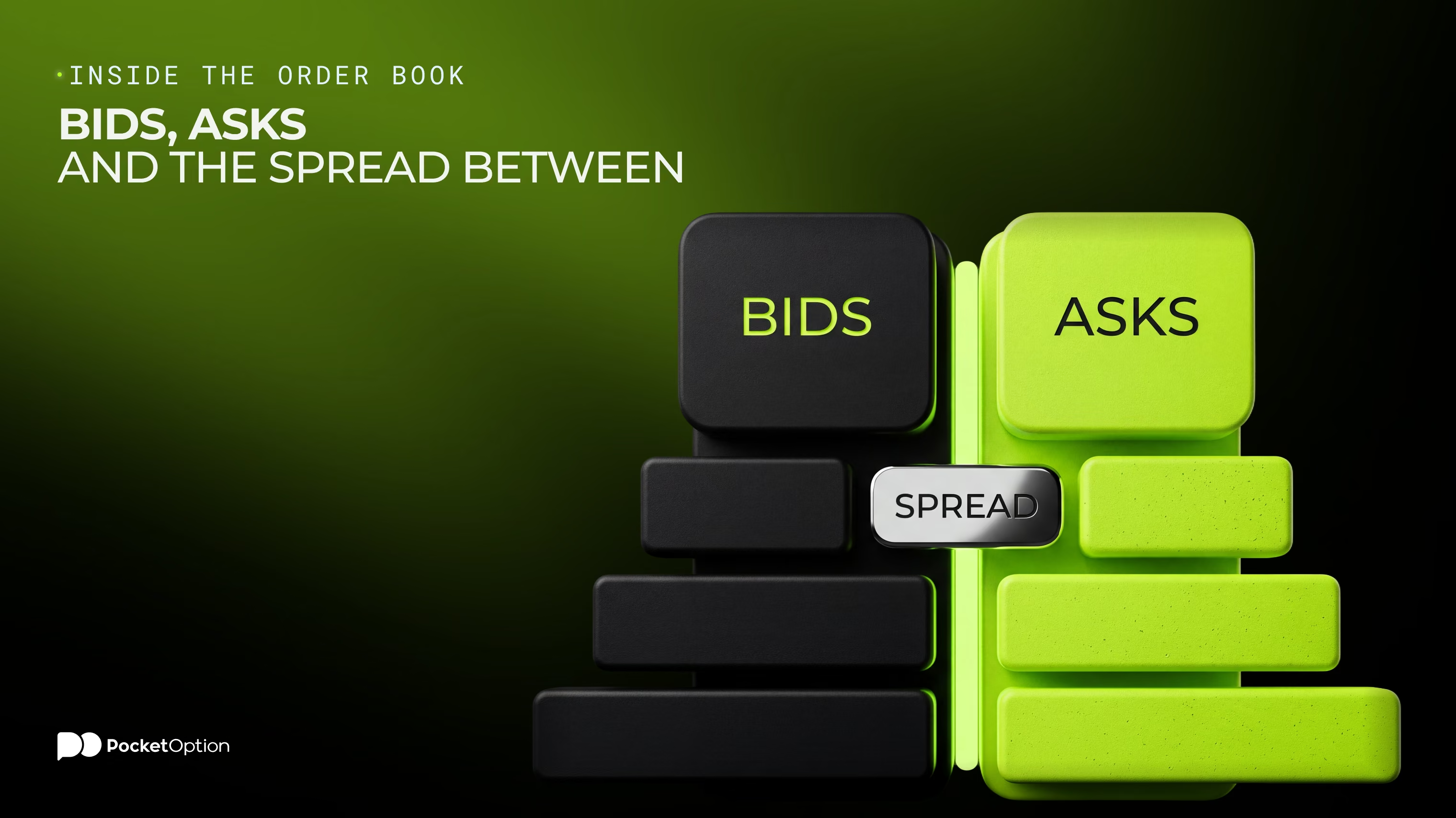
A typical order book is split into two sides:
Bids: buy orders, listed from the highest price down.
Asks, also called offers: sell orders, listed from the lowest price up.
Each row shows a price level and the quantity available there. In many books that quantity is aggregated, meaning several individual orders at the same price are combined into one figure. Some venues also offer a full view in which every order appears separately.
The highest bid is the best bid, and the lowest ask is the best ask. The difference between them is the bid-ask spread. A tight spread usually points to good market liquidity, meaning an asset can be bought or sold quickly without a large change in price.
Neither the best bid nor the best ask is the last traded price. The last price shows where the most recent trade happened, while the book shows where the next trades can happen.
How to Read an Order Book
The table below shows a simplified book for a hypothetical stock.
Bid size | Bid price | Ask price | Ask size |
|---|---|---|---|
400 | $19.98 | $20.02 | 300 |
900 | $19.97 | $20.03 | 700 |
1,500 | $19.96 | $20.04 | 1,200 |
The best bid is $19.98 for 400 shares, and the best ask is $20.02 for 300 shares.
The spread is $0.04.
Cumulative quantity adds up the size at each level and every better level. On the ask side, 1,000 shares are available up to $20.03, and 2,200 up to $20.04.
A buy market order for 1,000 shares would take all 300 at $20.02 and 700 at $20.03.
Market depth, also called depth of market, describes how much volume sits at each level beyond the best prices. A depth chart plots cumulative quantity against price: the bid curve climbs to the left of the midpoint and the ask curve climbs to the right, so thin parts of the book are easy to spot.
How Buy and Sell Orders Change the Order Book
The book changes every time an order is added, filled, amended or cancelled:
A new buy limit order adds quantity at its price level on the bid side. If its price is above the current best bid, it becomes the new best bid.
A market order removes volume. A buy market order takes asks from the lowest price up, and the best ask moves higher once a level is used up.
A cancellation removes an order without any trade. An amended order may lose its place in the queue.
This is why orders can vanish from the book without a single trade being recorded.
How the Order Book Reflects Supply and Demand
The order book is a direct view of supply and demand at a given moment. Bids represent demand, and asks represent supply. When bids are heavy and asks are thin, buyers may need to raise their prices to get filled. The reverse applies when sellers dominate.
Even so, the book cannot predict price direction on its own. Displayed orders can be cancelled in an instant. Large orders may be split into small pieces or partly hidden, so the visible size can understate real interest. Some traders read imbalances alongside other trade signals, but an imbalance shows current interest, not a guaranteed move.
Conclusion
An order book shows the queue of waiting orders at every price and the gap between the best bid and the best ask.
Explore live quotes at your own pace.
Get StartedWhat it records is intention, not commitment. A block of 1,500 shares bid at $19.96 can disappear with one click, which is why the book describes the market as it stands rather than where it is heading.
Disclaimer: Trading involves significant risk of capital loss and may not be suitable for all investors. Past performance does not guarantee future results.
See more:Glossary