What Is a Stop Order and How Do Stop Orders Trigger Trades?
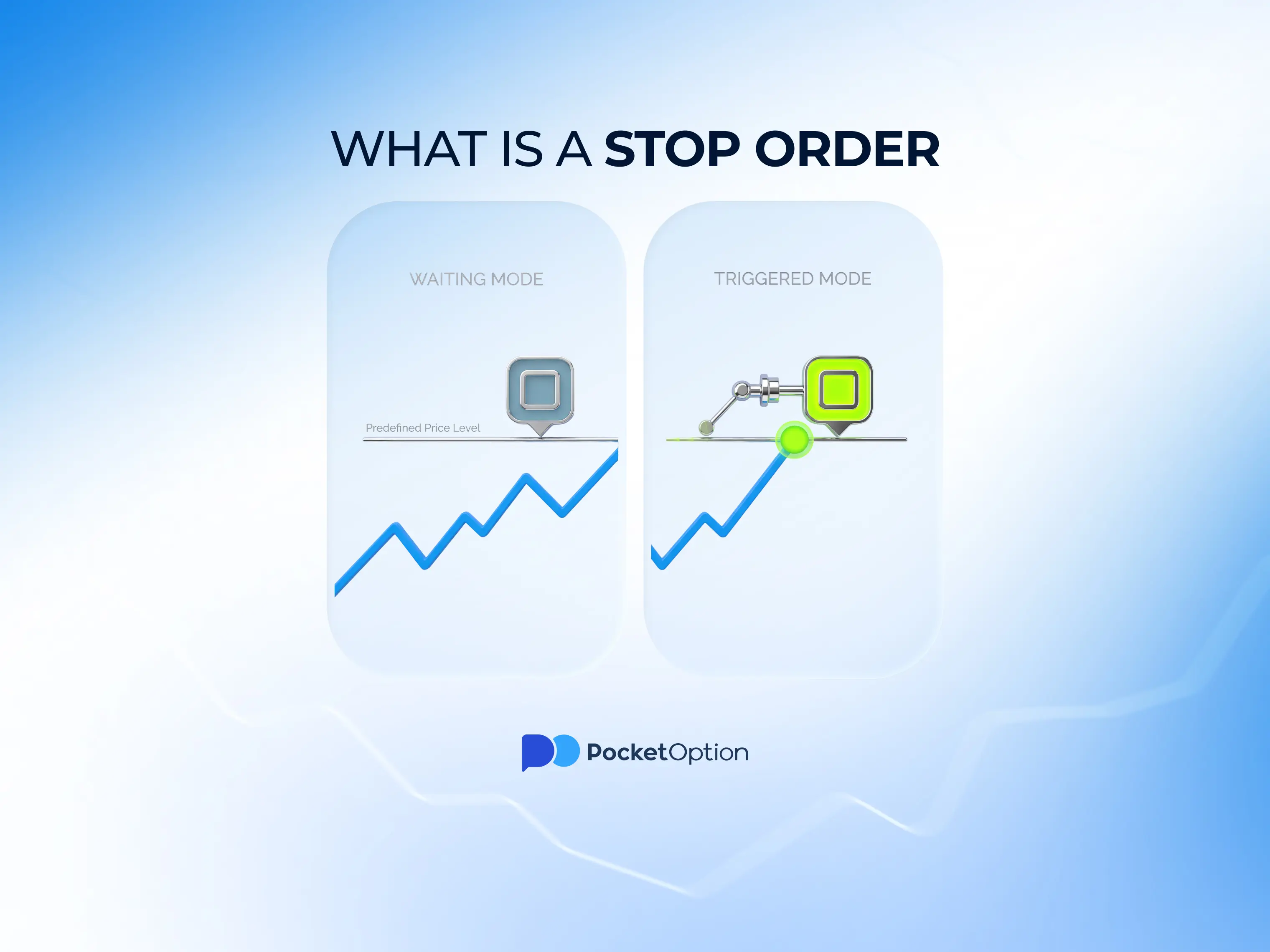
A stop order sits there doing nothing until the market reaches a price picked in advance. Then it turns on. What it does next is buy or sell at whatever happens to be available, which is not always the price that woke it up.

What Is a Stop Order?

The stop order definition runs like this: an instruction that stays dormant until the market touches a set level, at which point it becomes live and goes looking for a fill.
Two prices matter here and they are not the same price. The stop price is the trigger, chosen by the trader. The execution price is whatever the order actually gets filled at once it has turned on. In a calm market those two sit close together. In a fast one they do not, and nothing in the order type promises that they will.
Until it fires, a stop order is a pending trading order. It sits on the platform, costs nothing to leave there, ties up no capital, and is not visible in the market for anyone else to trade against.
How Do Stop Orders Trigger Trades?
Three steps, and only the first of them is under anybody's control.
A stop price is set above or below wherever the market is trading now.
The platform watches. Nothing happens at all while price stays on the near side of that level.
Price touches the level, the order converts to a market order, and it fills at the next available price.
Step three is where stop price and execution price come apart from one another. The order does not fill at the chosen level. It fills at whatever is on offer immediately after that level was reached, and in a thin or fast market that can sit some way off.
Buy-Stop and Sell-Stop Orders
Direction is the only real difference between the two.
Buy stop order | Sell stop order | |
Placed | Above the current price | Below the current price |
Fires when | Price rises to the level | Price falls to the level |
Used to | Enter long on strength, or close a short | Exit a long, or enter short on weakness |
A buy stop order placed above the market is a bet on momentum carrying rather than a hunt for a bargain. A sell stop order below it is the mirror image, and it doubles as the standard way of capping the downside on a position already held.
Both run against the instinct to buy low. That is deliberate. These are continuation orders, and they are meant to act on movement instead of anticipating it.
Stop-Loss Orders for Risk Management
A stop-loss order is a sell stop sat under a long position, or a buy stop sat over a short one. Purpose is to close the trade before a loss grows past whatever was planned for.
What it does reliably is take the decision out of the moment when it would be hardest to make. Watching a position go against you and choosing, right then, to accept the loss is a very different exercise from having chosen a week earlier. Guidance on how to set a stop loss deals with the placement side of that in more depth.
What it does not do is guarantee an exit at the level set. It guarantees an attempt at one. Those are not the same promise, and any description of a stop as protection is better read with that distinction held in mind.
Stop Orders for Entering a Trade
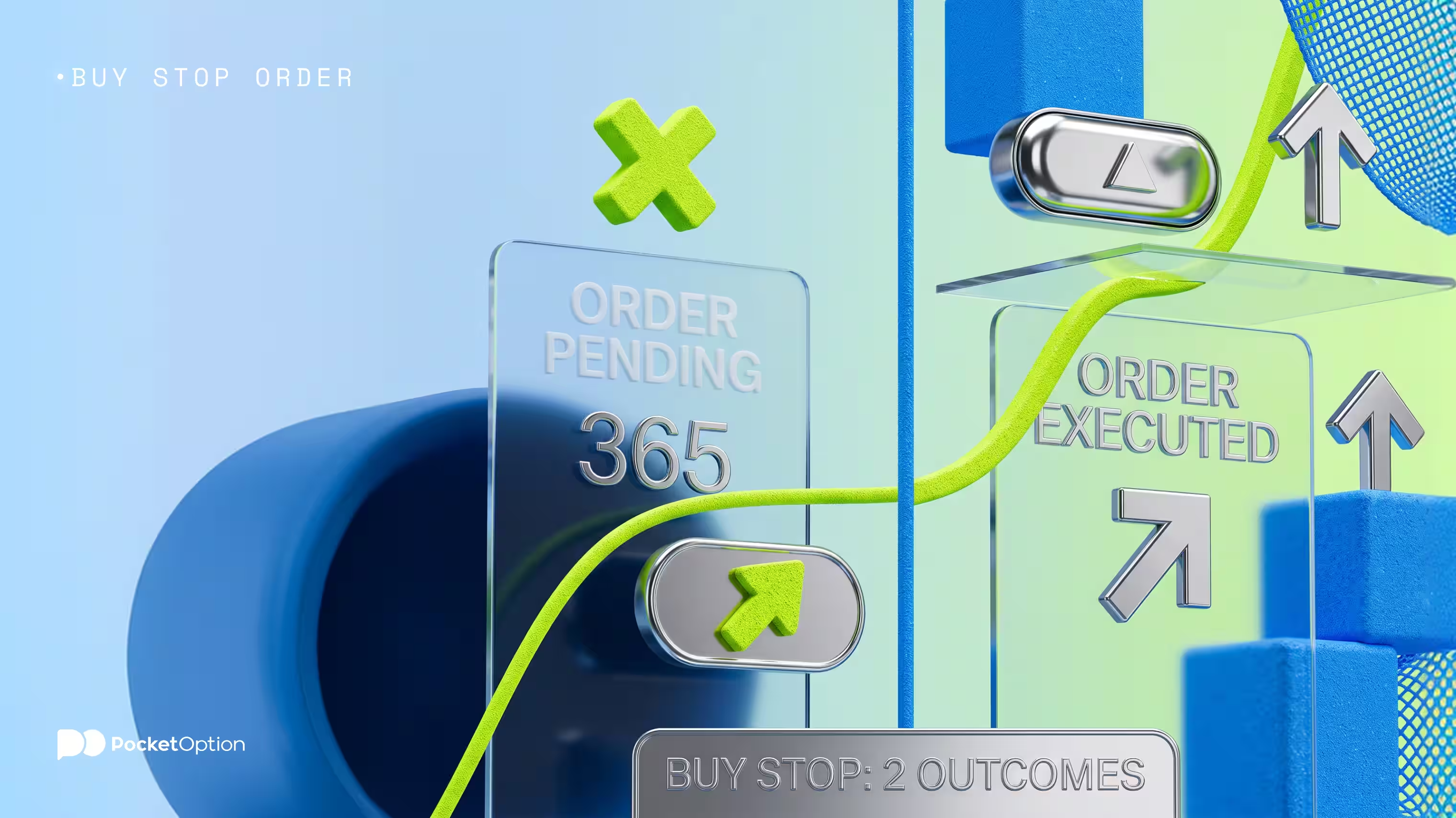
A stop-entry order flips the purpose around. Rather than getting a trader out, it gets them in, and only if the market confirms something first.
Say a price has been stuck under a level for weeks. Instead of buying in advance and hoping, a buy stop goes just above that level. If nothing happens, nothing is bought and the capital was never committed. If price does break through, the order fires and the position opens on the move rather than ahead of it.
Entry only happens on confirmation, so setups that never trigger cost nothing.
No screen watching required. The level does the waiting.
The cost is a worse entry price than buying early would have given, assuming the break holds.
And false breaks fire the order too. Confirmation is not the same thing as being right.
Stop Order vs Market Order and Limit Order
Four order types, sorted by what each one actually promises:
Market order. Fills now, at whatever price is sitting there. Certain execution, uncertain price.
Limit order. Fills at the chosen price or better, or else not at all. Certain price, uncertain execution.
Stop order. Dormant, then behaves like a market order. Certain to try, uncertain on price.
Stop-limit order. Dormant, then behaves like a limit order. Which protects the price and accepts that in a gap it may not fill at all.
Trailing stops are a stop that moves. The level follows price up as a long position gains and stays put when price falls back, so a cushion gets locked in gradually without anyone adjusting it by hand. Trigger behaviour is unchanged. Only the level is.
Slippage, Gaps, and Other Execution Risks
Execution risk is not an edge case with this order type. It is the normal condition.
Slippage. Price moves between the trigger firing and the fill landing. Wider spreads and thinner books make the gap bigger.
Gaps. Markets that close and reopen can jump straight past a stop level, so the first available price sits well beyond it. Weekend and overnight gaps especially.
Volatility spikes. A news release clears several levels in a second, and every stop sitting in that range fills at a price nobody would have chosen.
Ordinary noise. A stop placed too close gets triggered by routine movement and then price goes back to roughly where it started.
Gap behaviour is worth understanding on its own terms, and trading around price gaps covers those mechanics. Platform rules vary as well. Which instruments accept stops, whether they run outside main session hours, how a trigger is defined against bid or last traded price, all of that is set in the platform's own specification rather than in the concept. Placement conventions covered under day trading stop loss are a reasonable place to start from.
Know the risk before you click.
Try a Demo AccountConclusion
A stop is an instruction, not a floor under the price. A market can open eight percent below where the order was sitting and the order will still do exactly what it was told, which is to sell at the first price available to it. Traders who have taken that on board pick their levels rather differently from the ones still treating a stop order as a guarantee.
Disclaimer: Trading involves significant risk of capital loss and may not be suitable for all investors. Stop orders do not guarantee an exit at the specified price.
See more:Glossary