What Is a Hot Wallet and How Does Online Crypto Storage Work?
A hot wallet is a crypto wallet that stays connected to the internet. That connection makes it quick to send, receive and trade, and it is also what exposes the keys to online attacks. The convenience and the risk come from the same feature.

What Is a Hot Wallet
The hot wallet meaning is simple: an online crypto wallet whose private keys sit on an internet-connected phone, computer or browser, or on a service's servers. The coins never sit inside the app. As explained in this guide to how Bitcoin works, they exist as entries on a blockchain, and the wallet holds the keys that can move them. Whoever controls those keys controls the funds.
How a Hot Wallet Works
When a wallet is created, it generates a private key, usually backed up as a seed phrase of 12 or 24 words. To send crypto, the wallet uses that key to sign the transfer on the device and broadcasts it to the network, where it is validated and confirmed like any other on-chain transaction. The seed phrase can rebuild the wallet on any device, which is why anyone who sees it can take the funds.
Who controls the keys depends on the wallet. In a non-custodial wallet, the user holds the keys and the seed phrase. In a custodial wallet, such as an exchange account, the service holds the keys and the user holds a login.
Types of Hot Wallets
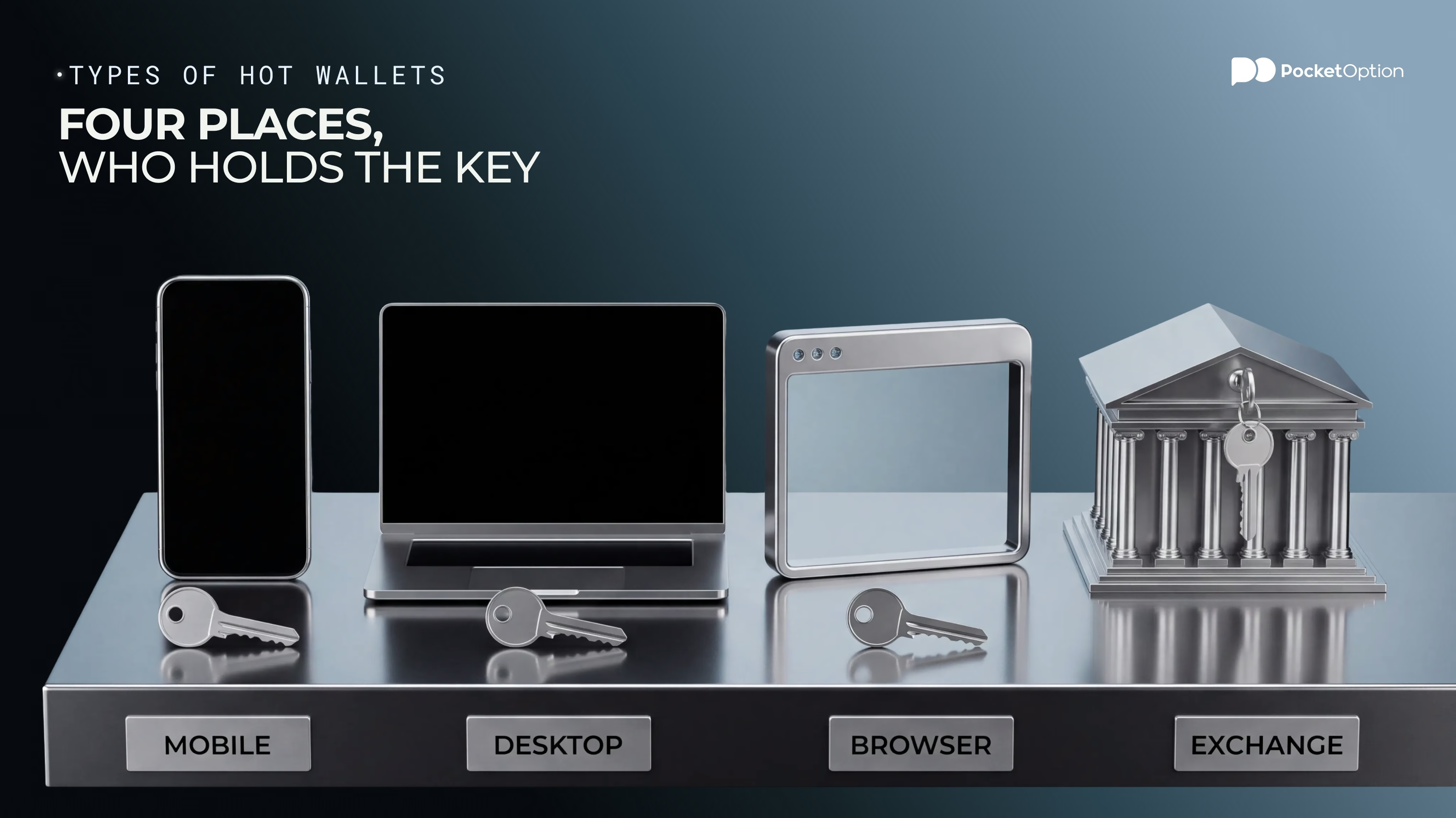
The main types of hot wallets differ in where they run and who holds the keys:
Type | Who holds the keys | Typical use |
|---|---|---|
Mobile wallet | User | Payments and everyday transfers |
Desktop wallet | User | Regular use on one computer |
Web or browser extension wallet | User | Connecting to decentralized apps |
Exchange wallet | Exchange (custodial) | Trading on the platform |
With an exchange wallet, security depends largely on the platform rather than on the user's own device.
Main Risks of Online Crypto Storage
Being online means being reachable. The main threats are:
Malware that records keystrokes or swaps a copied address for the attacker's.
Phishing sites and fake support agents asking for a seed phrase.
Exchange hacks, which can freeze or drain custodial balances.
SIM swapping, where an attacker takes over a phone number to intercept SMS codes.
Risky token approvals, which let a malicious contract spend tokens long after the approval was given.
Most of these attacks target the person rather than the software, so habits matter as much as the choice of wallet.
How to Reduce the Risks
No setup makes a hot wallet fully safe, but several habits lower the risk. Keep only what is needed for near-term use online and the rest in cold storage. Write the seed phrase on paper and never type it into a website or share it, since no genuine support team will ask for it. Use an authenticator app rather than SMS codes, bookmark official sites, keep software updated and revoke token approvals that are no longer needed. The position-sizing logic of crypto risk management applies to storage as well: exposure should match what can be afforded to lose.
Hot Wallet vs Cold Wallet in Brief
A cold wallet keeps the keys offline, typically on a hardware device, and signs transactions without exposing the key to the internet. It is slower to use but much harder to attack remotely. Many people combine the two, with a hot wallet for spending money and a cold wallet for savings. Setting up either kind is covered in this guide on how to get a crypto wallet.
Conclusion
A hot wallet is an online crypto wallet whose keys sit on a connected device or a service's servers, which makes it fast to use and exposed to online attacks. Keep only spending amounts in it, protect the seed phrase offline, avoid SMS codes and unknown links, review token approvals, and know whether you or a platform holds the keys.
Begin on a demo account.
Get StartedDisclaimer: Trading involves significant risk of capital loss and may not be suitable for all investors. Past performance does not guarantee future results.
See more:Glossary