What Does Rekt Mean and How Is This Slang Used in Trading Losses?
In trading chats, one short word sums up a disastrous trade: rekt. It describes a heavy loss, usually one that could have been avoided, and it carries a lesson that the numbers make very clear.

What Does Rekt Mean
Rekt is slang for being badly damaged by a trade or a market move. The rekt meaning goes beyond an ordinary losing trade: it describes a loss large enough to wipe out a big part of an account, often after a risky bet such as heavy leverage or an all-in position. A trader can be rekt by a liquidation, by a coin that collapses or by a series of losing trades taken in anger. The word works as an adjective ("I got rekt") and, less often, as a verb ("the drop rekt the longs").
Where the Word Comes From
Rekt is a phonetic spelling of wrecked. It spread through online gaming culture, where players used it to mock someone who had just been beaten badly, and dictionaries date its first recorded use to the early 2010s. Trading forums and crypto communities picked it up soon after, and it is now one of the best-known terms in crypto slang, alongside HODL and FOMO. The spelling follows a wider online habit of bending words for effect, as gamers did with pwned for owned.
How Rekt Is Used in Trading
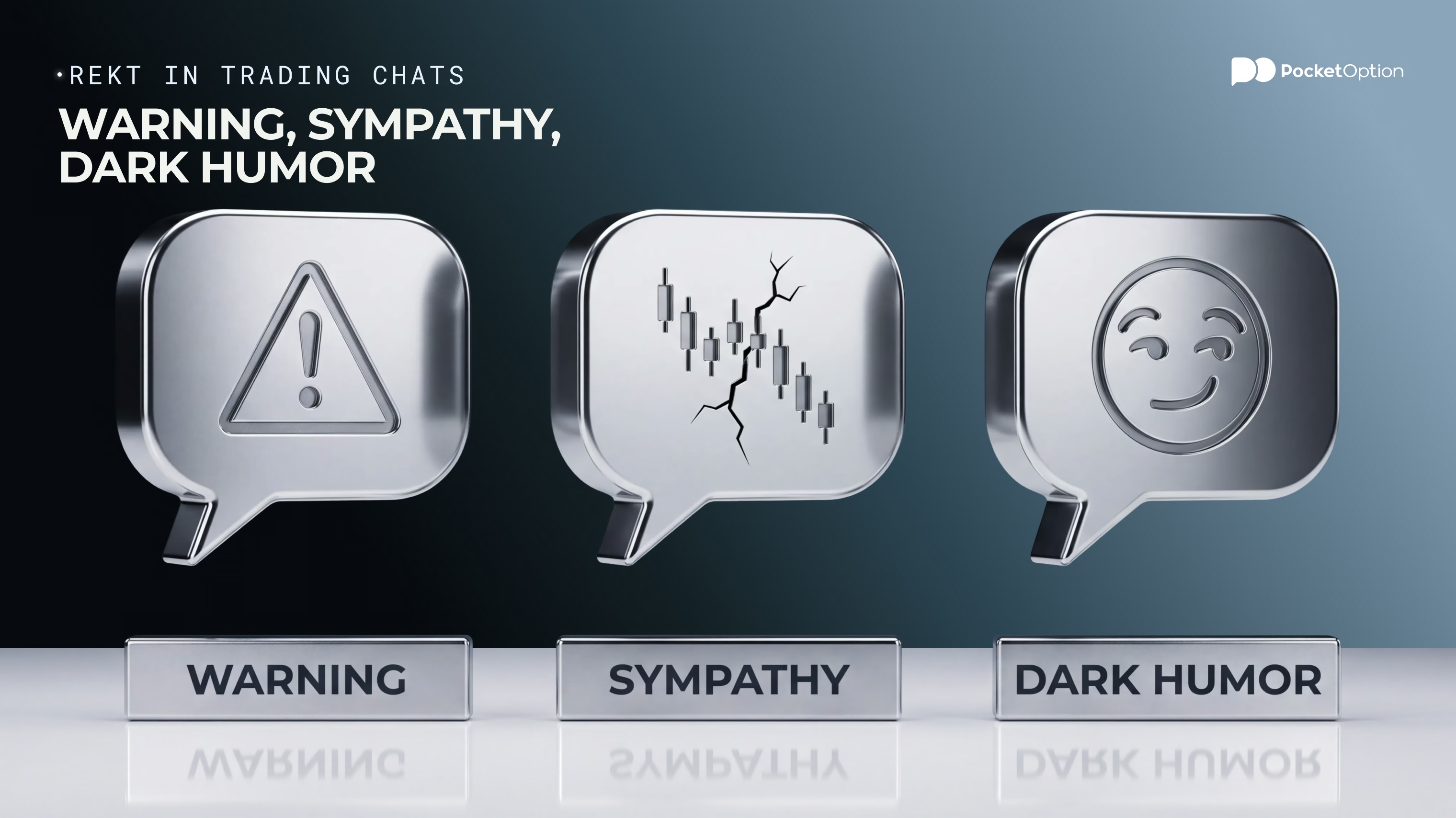
The rekt slang works in three ways:
As a warning: "Don't go 100x on that coin, you'll get rekt."
As commiseration: a trader posts a loss and others reply that they were rekt too.
As dark humor: memes and jokes about blown accounts, which help traders talk about losses openly.
The tone is informal, but the event behind it is real money lost.
Rekt vs an Ordinary Loss
Every trader loses money on some trades. An ordinary loss is planned: the stop-loss is set in advance and the amount at risk is a small share of the account, such as 1% or 2%. Being rekt is uncontrolled: no stop, oversized positions or leverage turn a normal market move into a large hit. Take two traders with $5,000 each. One risks 1% per trade and, after five losses in a row, still has about $4,755. The other puts the whole balance into one leveraged trade, loses 80% in a single move and is left with $1,000. The difference lies less in the market than in the decisions made before the trade, which is why the discipline described in trading psychology for beginners matters as much as analysis.
Why Large Losses Are Hard to Recover From
Losses and gains are not symmetrical. After a loss the account is smaller, so a bigger percentage gain is needed to get back to the start:
Loss | Gain needed to recover |
|---|---|
10% | 11.1% |
25% | 33.3% |
50% | 100% |
75% | 300% |
90% | 900% |
A $10,000 account that falls to $1,000 needs a 900% gain to return to $10,000, and a trader who loses 50% and then gains 50% is still down 25%. That is why careful position sizing matters more than any single winning trade.
Common Ways Traders Get Rekt
The usual routes to getting rekt are well known:
High leverage, which can end in forced liquidation after a small move.
Trading without a stop-loss, or moving the stop further away as the price falls.
Putting most of the account into one trade or one coin.
Revenge trading to win back a loss quickly.
Buying hype near the top or ignoring a project's red flags.
Trading thinly traded coins, where a small sell order can move the price sharply against the position.
Each is covered in more depth elsewhere, including this guide to day trading risk management.
Conclusion
Rekt is trading and crypto slang for a heavy, usually avoidable loss, taken from a phonetic spelling of wrecked. Keep risk per trade small, always set a stop, use leverage sparingly or not at all, avoid putting the account into one position, and remember that a large loss needs a far larger gain to repair.
Practice on virtual funds first.
Try DemoDisclaimer: Trading involves significant risk of capital loss and may not be suitable for all investors. Past performance does not guarantee future results.
See more:Glossary