Opening Auction vs Closing Auction: How Session Prices Are Formed
On most stock exchanges, the first and last prices of the session are set by two separate auctions rather than by ordinary trades. This opening auction closing auction overview explains how each price is formed and why the minutes around them are often the most volatile of the day.

Two Separate Auction Events, Not Continuous Trading
In continuous trading, orders are matched one by one and the price can change with every trade. In an auction, orders are collected for a set period without being executed and are then matched all at once, at the single price where the most shares can change hands.
Most major exchanges run this process at both ends of the session. Nasdaq, for instance, holds its opening cross at 9:30 a.m. and its closing cross at 4:00 p.m. Eastern time.
How the Opening Price Is Formed
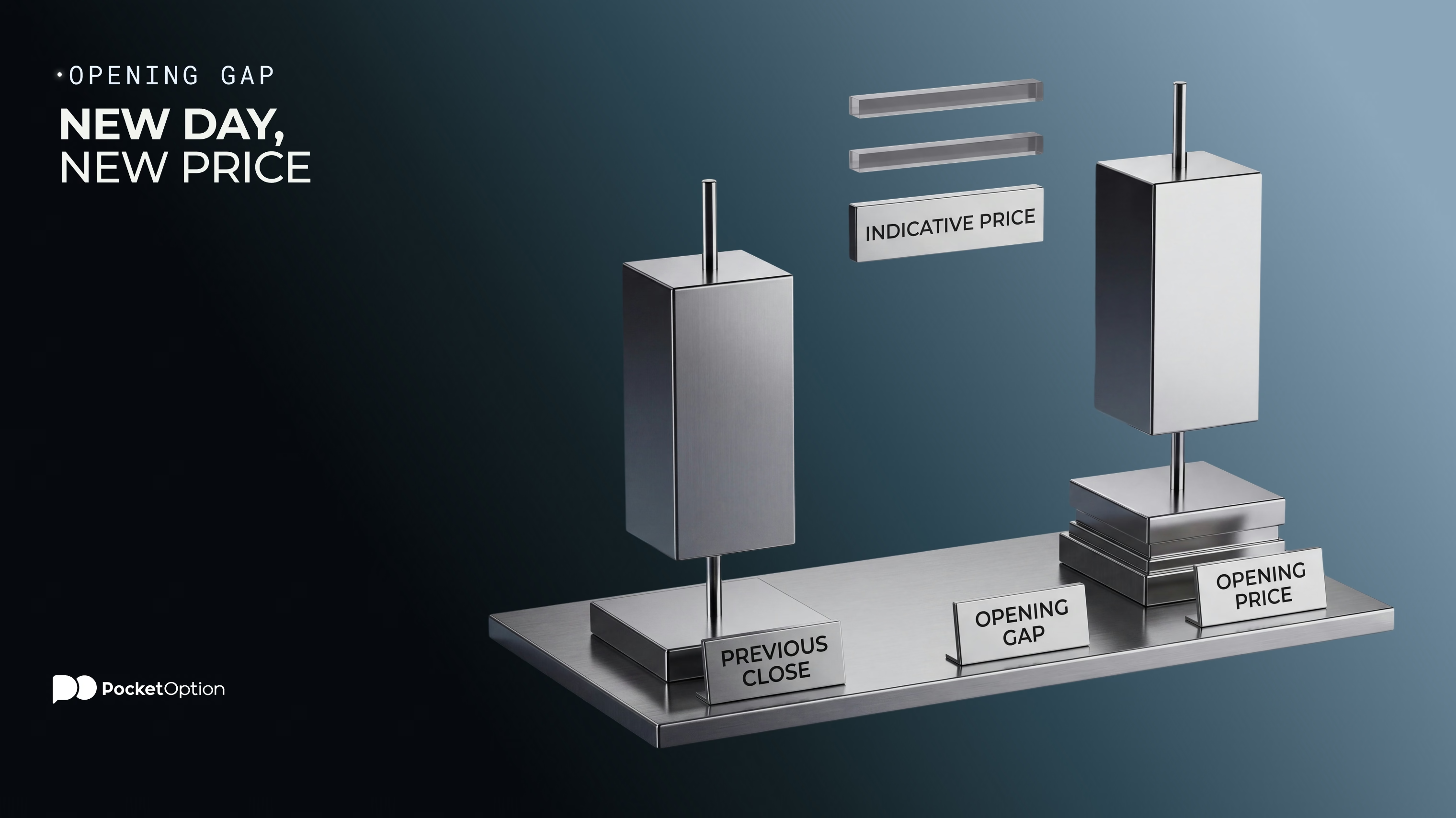
The opening price is not the previous close carried forward. News released after the bell reaches the market while it is shut, and orders placed in response, together with the early price moves before the open seen in pre-market trading, build up in the auction book.
Before the match, an indicative opening price is published: the price at which the orders collected so far would clear. On Nasdaq it is shown from 9:25 a.m. and can shift as orders are added or cancelled.
For example, a stock closes at $50.00 and then reports strong earnings. If the opening auction clears at $52.10, the stock opens 4.2% higher. That difference is the opening gap.
How the Closing Price Is Formed
By the close, a full day of price discovery has already taken place, so the closing auction prices information that has been traded on for hours. Much of its volume comes from index funds, ETFs and mutual funds, which need that exact price to track benchmarks and value their holdings. Nasdaq publishes closing imbalance data from 3:50 p.m.
The auction result becomes the official closing price, used for index levels, fund valuations and some derivative settlements, and as the reference for the next opening gap.
Opening vs Closing Auction: Key Differences
Both auctions use the same matching logic, but they are fed by different orders:
Feature | Opening auction | Closing auction |
|---|---|---|
Main input | Overnight news and pre-market orders | A full session of trading, index and fund flows |
Information | New and largely untested | Absorbed through hours of trading |
Price used for | Start of the session, opening gap | Official closing price, index and fund values |
Typical risk | Price uncertainty | Concentrated volume |
Why Order Imbalance Creates Volatility at the Open and Close
An order imbalance arises when one side of the auction outweighs the other at the current reference price. If 80,000 shares are bid for at the close and 50,000 are offered, the 30,000-share gap is closed only when the price moves far enough to attract new sellers.
The larger the imbalance relative to normal liquidity, the further the price may travel, which is why volatility at the open and close tends to exceed midday levels, the raw material of equity volatility trading. Still, a published imbalance often draws offsetting orders and can shrink before the match, so it signals pressure rather than a guaranteed move.
What This Means for Order Execution
Several practical points follow for orders placed near the auctions:
A market order sent before the open is filled at the auction price, which may sit far from the last trade of the previous evening.
A limit order caps the buy price or floors the sell price, though it may go unfilled if the auction clears beyond the limit.
Liquidity is concentrated at the close, which can help larger orders execute at a single price.
Traders using gap trading strategies usually wait for the opening auction to print, since the indicative price can still change.
Conclusion
The opening and closing prices come from two separate auctions: the first gathers overnight news and pre-market orders, the second a full day of trading and fund flows, and order imbalance drives the sharpest moves around both. Treat an indicative price as provisional until the match, use limit orders when price matters more than a fill, and never read a published imbalance as a promise of direction.
Practice on a demo account first.
Get StartedDisclaimer: Trading involves significant risk of capital loss and may not be suitable for all investors. Past performance does not guarantee future results.
See more:Glossary