
PreMarket Trading: How to Read Early Price Moves Before the Open
Prices may fluctuate drastically prior to the near market's open and usually on relatively light volume. Futures, movers, and the catalysts behind those moves become critical in translating premarket movement into actionable information, rather than a trigger.

What Pre-Market Trading Is
Pre-market trading refers to any transactions that take place prior to the official start of the stock exchanges. In the US, the time period from 4:00 a.m. till 9:30 a.m. Eastern Time is usually considered to be the period of pre-market trading. However, except for the last hour, liquidity in that period is relatively low.
It is important to understand how does pre market trading work to realize that much fewer people are participating in this process compared to the regular sessions. Orders are placed and trades executed as usual, but the fact that there are fewer players on both sides of the transaction leads to the situation where an order of relatively small size could move the stock significantly compared to the middle of the day.
Why Prices Can Move Sharply on Thin Volume
Thin volume means that there are fewer resting orders both on the bid side and the ask side. One big-sized trade order could push the price by several points, and no one besides the participants will realize it. This is a feature of premarket trading and not some kind of glitch.
The common triggers are the releases of news announcements before the opening bell, such as earning reports, guidance updates, and macroeconomic data like inflation figures etc.
Four Things to Check Before the Open
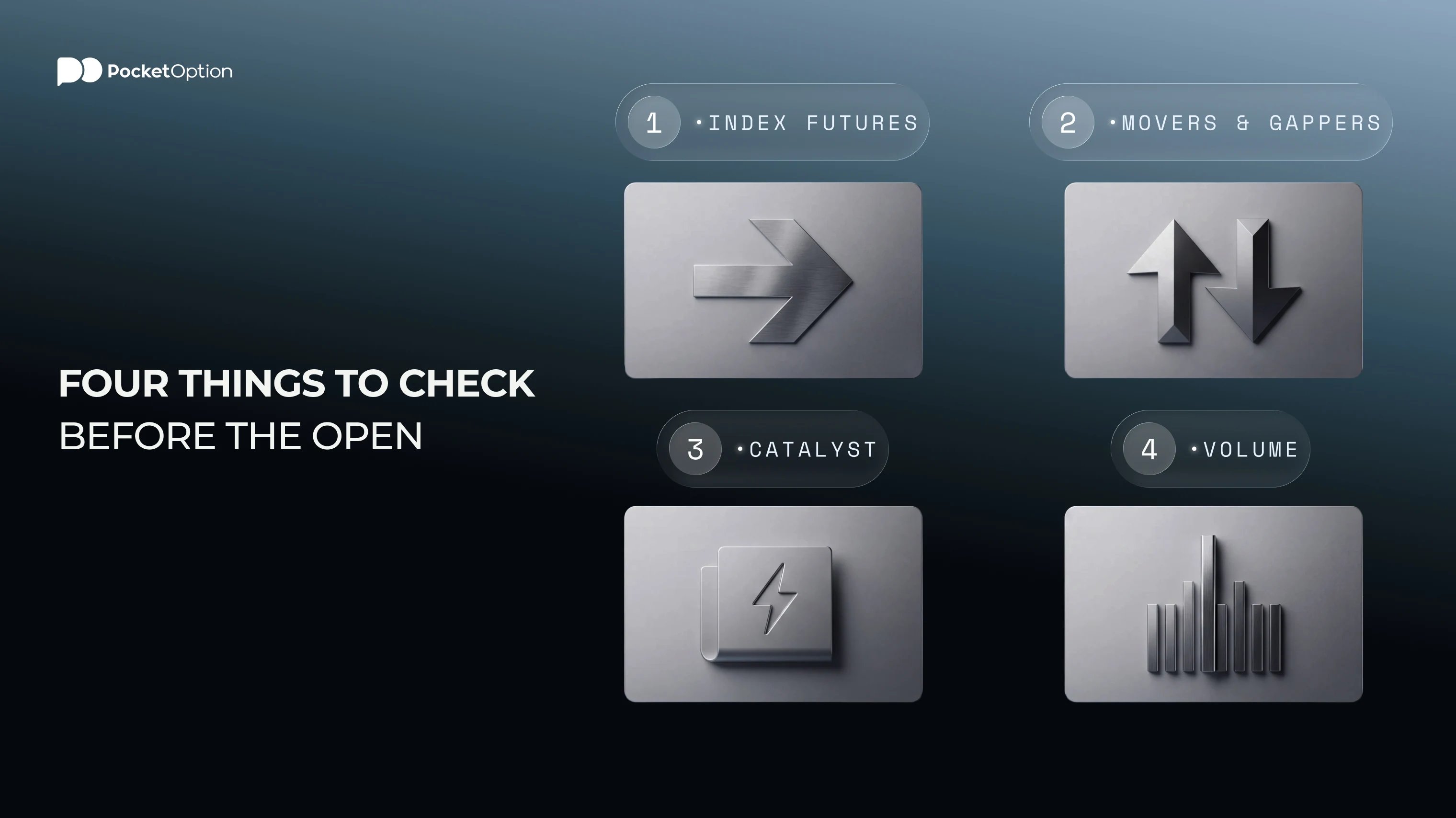
A short but easily repeatable list helps ensure a calm and proactive pre-open review process as opposed to a reactive one.
Index futures: A large range of futures contracts indicate the general direction of the whole stock market as a whole, either upward or downward and provide context to any individual stock movements.
Movers and gappers: The biggest percentage gainers and losers can be found by scanning the market to see how premarket futures activity resulted in actual stock movement.
The catalyst: Each move is caused by something: earnings report, headlines or an analyst downgrade/upgrade. That needs to be considered before planning the move.
Volume as a factor of confirmation: Comparison of the premarket volume to the average of the stock will help in understanding the real interest behind the move.
A Worked Example: Planning the Day Around a Pre-Market Move
Assuming that there is a stock which announced the results of its earnings before the open and now it is quoted seven percent up during the premarket session. The futures indexes are flat so the move can be considered a stock-specific one, not the market-wide one. The fast check shows that the stock is indeed the largest mover on the watchlist and the cause of the move is the earnings beat and not something else.
The volume check shows that just a small part of the usual volume of the stock was traded. This fact completely changes the scenario: instead of considering the move confirmed, one needs to see the development of the situation after normal trading hours.
Why Pre-Market Moves Often Fade or Reverse
With the regular trading session opening, a much bigger and wider variety of market participants get involved, including those who were inactive or were participating in a partial way before, while the markets were sleeping. Their orders have a good chance of completely overpowering the already low volume that set the premarket tradingl, which is the reason why the gaps on the open often close and even reverse direction in the first half-hour of the regular trading session.
It is the common knowledge in gap trading strategies when the post-gap behavior of the market carries more information than the gap's magnitude.
Risk Control: Treating Pre-Market as Preparation, Not a Trigger
The key strategy in this case is rather easy: use premarket data as input into your trading plan but do not enter the market based on your early move before it is verified with proper volume. An early move-based entry without confirmation of the trade volume is the acceptance of uncertainty level, which is hard to be accounted for with standard risk management approaches.
Trade conservative until the regular volume appears, and if you still decide to make an early entry, do not forget about constructing your stop loss in the first order because of the wide spread that exists under thin market conditions.
A Simple Morning Routine for Reading Pre-Market Data
Look into index futures to understand the general mood in the stock market for the day.
Read through the movers and gappers list, sorted by the percentage changes, to find out where the action takes place.
Understand the cause of each big mover before proceeding.
Compare the premarket volume to the normal one of the stock.
Make up your mind on what type of confirmation, if any, would make you trade when the regular session starts.
test your morning routine free
Try DemoConclusion
Pre-market trading gives an idea of sentiment, but thin volume makes it hard to interpret the move as the whole market sentiment. Looking at futures, movers, the catalyst, and volume as a whole, the early move gets more context instead of being viewed as an isolated signal. Viewing the context as preparation rather than a trigger makes risks more consistent with the actual data.
Disclaimer: This article is informational in nature and should not be regarded as any kind of financial advice. Trading involves risk, and you may lose part or all of your initial investment.
See more:Education