
Pocket Option Examines Why Is Meta Stock Down Today
Investors observing recent fluctuations in Meta's stock price are frequently asking: "why did Meta stock drop today?" This detailed analysis explores the multifaceted reasons behind the recent downturn, providing valuable insights for strategic investment decisions amid market volatility.
Analyzing the Recent Drop in Meta Stock
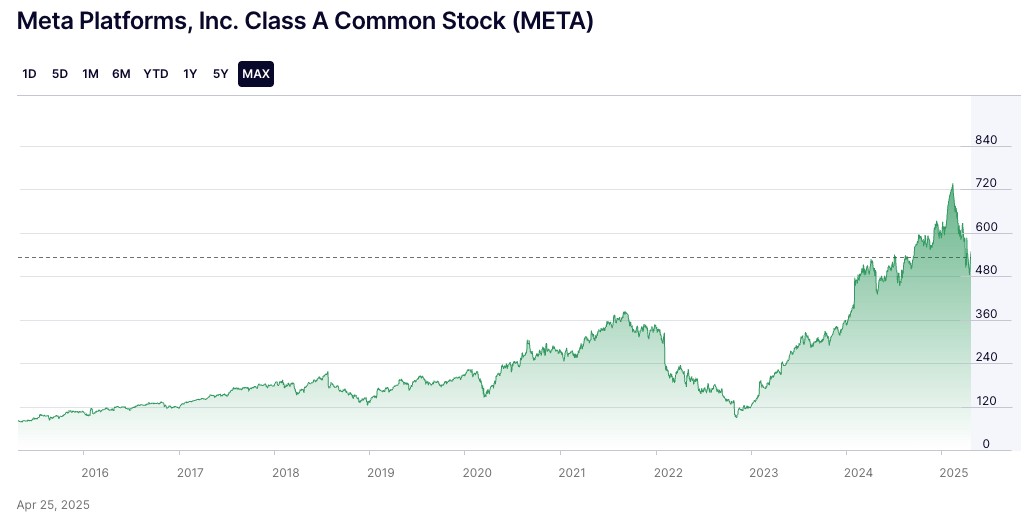
Meta Platforms (NASDAQ: META), previously known as Facebook, has experienced a significant stock decline, dropping over 15% in recent trading sessions, prompting widespread investor inquiries about why Meta stock is down today. The company's vast user base across Facebook (2.9 billion), Instagram (2 billion), WhatsApp (2.7 billion), and metaverse investments have not prevented a $135 billion reduction in market capitalization. Notably, while broader tech sector declines averaged between 7-9%, Meta underperformed significantly by about 12% due to company-specific challenges.
Key Drivers Behind Meta’s Stock Decline
An in-depth examination of why Meta stock is down today identifies five crucial factors responsible for an 18% quarterly decline, alarming both retail and institutional investors:
| Factor | Description | Impact (%) |
|---|---|---|
| Financial Performance | Q1 revenue shortfall of $843 million, a growth deceleration from 25% to 17%, and a 13.2% drop in advertising returns | 31% |
| Competitive Landscape | TikTok's rising popularity and Apple’s privacy updates reducing ad targeting effectiveness | 27% |
| Regulatory Concerns | Potential fines of $3.7 billion and antitrust investigations | 15% |
| Metaverse Investments | Reality Labs' continuous losses and delayed profitability | 22% |
| Macroeconomic Pressures | High interest rates, inflation, and tech capital outflows | 5% |
Earnings Miss and Revenue Challenges
One of the key reasons for Meta's stock drop today in 2025 is the lingering impact of the company’s disappointing financial results for the first quarter of the year. Although the challenges began back in 2024—when earnings per share missed analyst forecasts by $0.37, causing an immediate 8.4% after-hours decline—the situation has continued to deteriorate in 2025.
The main concerns weighing on investors this year include:
- Daily Active User (DAU) growth reached only 1.8%, falling short of the expected 2.7%.
- Average Revenue Per User (ARPU) dropped significantly in key regions: by 6.3% in North America and 4.1% in Europe.
- The company’s operating margin shrank from 31.7% to 28.2% due to rising personnel expenses.
- Q2 2025 revenue guidance of $31.5–34 billion remains below market expectations of $34.8 billion.
These indicators continue to exert pressure on Meta’s stock, fueling the current downward trend.

Competitive Threats and Market Positioning
Meta’s competitive challenges significantly explain why Meta stock is down today:
- TikTok dominates the Gen Z demographic, redirecting $4.3 billion in ad budgets.
- YouTube and Snapchat also gained substantial market share, intensifying competition.
- Apple’s ATT policy reduced Meta’s ad effectiveness, increasing customer acquisition costs by 155% and causing a $12.8 billion revenue shortfall annually.
Metaverse Investments: Strategic Risks and Financial Strain
Meta's ambitious metaverse strategy, led by Reality Labs, faces significant criticism due to substantial financial losses ($4.3 billion in Q1 2024 alone). Investors remain skeptical given extended profitability timelines and disappointing consumer adoption rates (3.5 million Quest units sold vs. 6.8 million projected).
Regulatory and Legal Challenges
Regulatory headwinds, including antitrust investigations and substantial privacy-related fines, significantly burden Meta. Recent cases and compliance have added roughly $14.3 billion in costs since 2019, creating further downside pressure on Meta stock.
Technical Analysis Insights
Technical Overview of Meta Platforms as of April 2025
In April 2025, Meta Platforms (NASDAQ: META) continues to exhibit signs of technical weakness despite recent attempts at recovery. After peaking in February, the stock has declined by approximately 25%, raising investor concerns about its short- to medium-term momentum.
Current Technical Signals
- Moving Averages: As of April 29, 2025, Meta’s 50-day simple moving average (SMA) stands at $594.85, while the 200-day SMA is at $577.46. The current share price of $549.74 is trading below both levels, signaling a sustained bearish trend.
- Relative Strength Index (RSI): The RSI is currently at 49.79, indicating neutral market sentiment with no immediate signs of overbought or oversold conditions.
- MACD: The MACD indicator remains negative at -18.07, reflecting continued bearish momentum in the price action.
- Volume: Trading volume remains moderate, with no significant spikes that might suggest strong institutional accumulation or a trend reversal.
Meta’s technical indicators in April 2025 point to a weakening outlook. The stock is trading below key moving averages, and the negative MACD suggests persistent selling pressure. However, the neutral RSI and lack of high-volume selloffs may imply a consolidation phase or a slowdown in the downward momentum. All eyes now turn to the upcoming Q1 2025 earnings report on April 30, which could serve as a major catalyst for a directional move.
Investor Sentiment and Psychological Factors
Investor psychology has also significantly influenced Meta’s recent downturn:
- Analyst downgrades rose 375% in April, significantly lowering price targets.
- Negative sentiment increased dramatically across social media platforms and retail investor forums.
- Institutional narratives have shifted negatively, reinforcing pessimism in the market.
Comparative Analysis with Tech Sector Peers
Meta's year-to-date stock decline of 27.4% starkly contrasts its tech peers, such as Apple (-6.8%), Microsoft (+2.7%), and Amazon (-1.8%), highlighting company-specific vulnerabilities rather than sector-wide issues.
Pocket Option: Practice Trading Meta Price Movements in Real Time
Understanding why Meta stock is down today is essential for making informed investment decisions. Pocket Option is a trading platform that enables users to capitalize on market volatility — without actually buying or owning shares. Instead of purchasing the asset, traders predict whether the price of Meta (or another listed asset) will go up or down within a selected time frame.
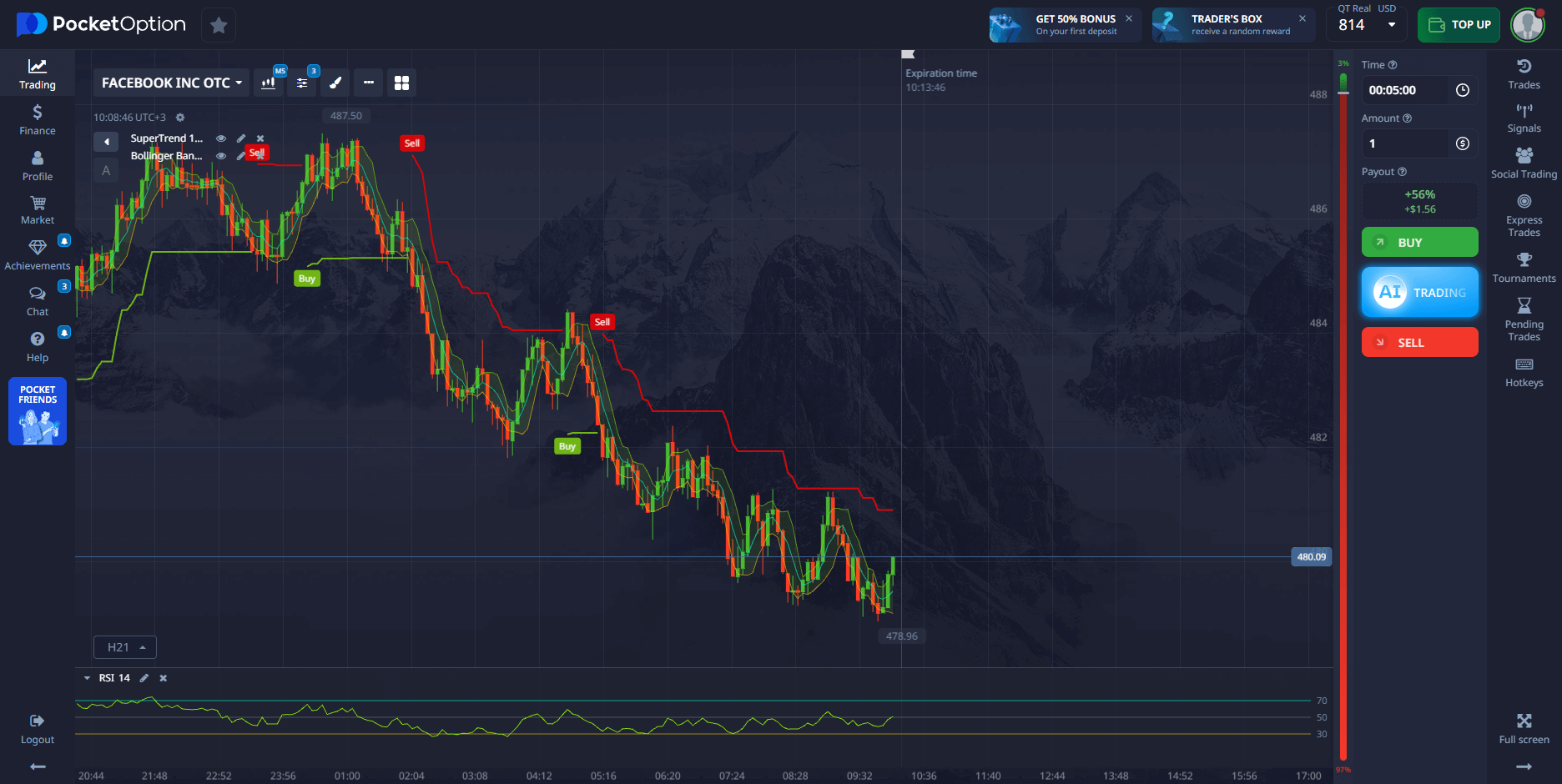
For example, you can open a short-term prediction that asset price will fall within the next 5 minutes. If the forecast is correct, you receive a fixed profit. This model is particularly useful during high volatility periods — such as after disappointing earnings reports or breaking news.
Demo: to support beginner traders, Pocket Option provides a free demo account with virtual funds. This allows users to safely test strategies, analyze price behavior, and become familiar with the platform before trading with real money.
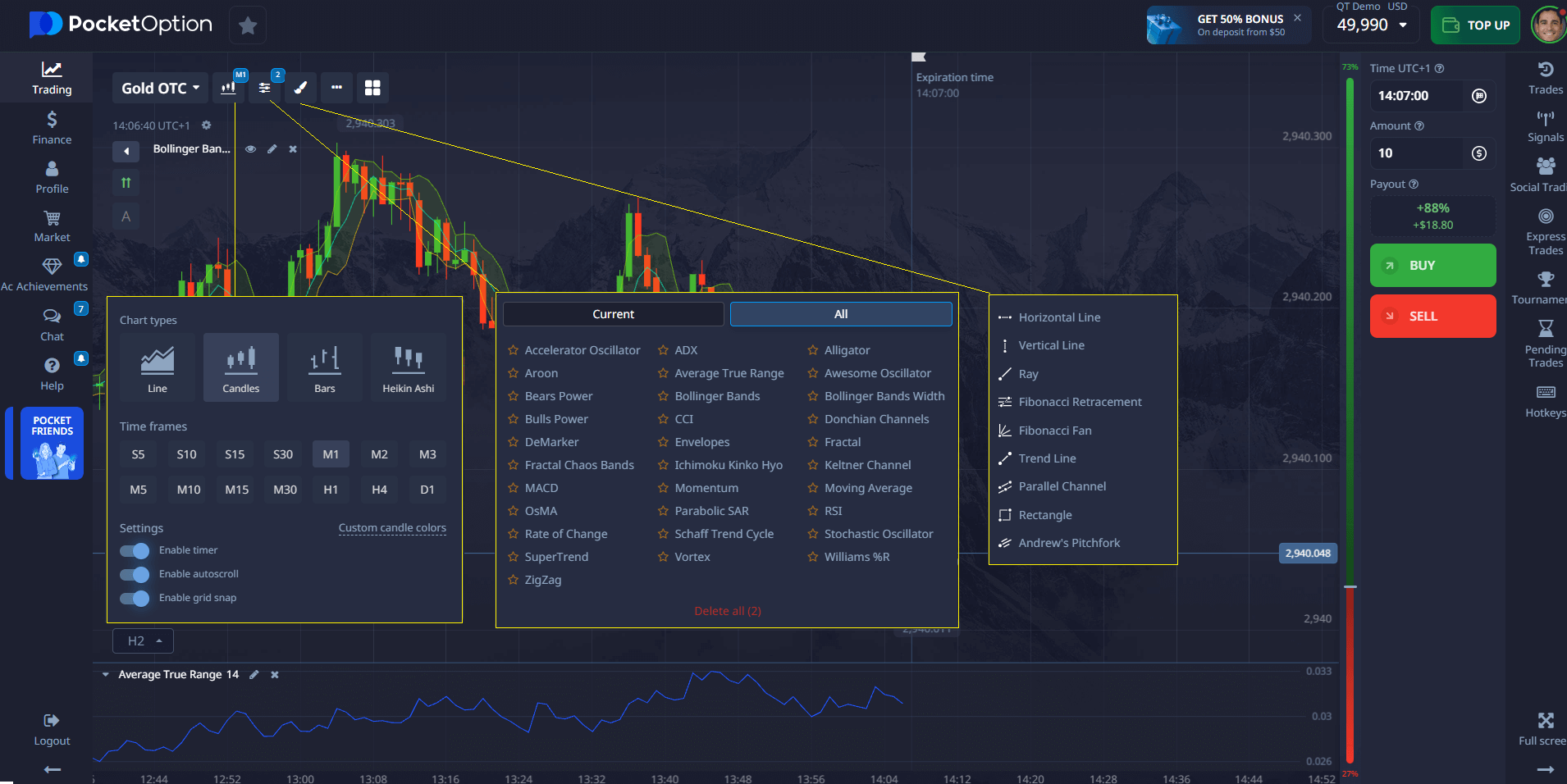
Technical analysis: the platform also offers a comprehensive technical analysis toolkit, including moving averages, RSI, MACD, and others. In the “Technical Analysis” section, these indicators can be applied directly on the trading chart.
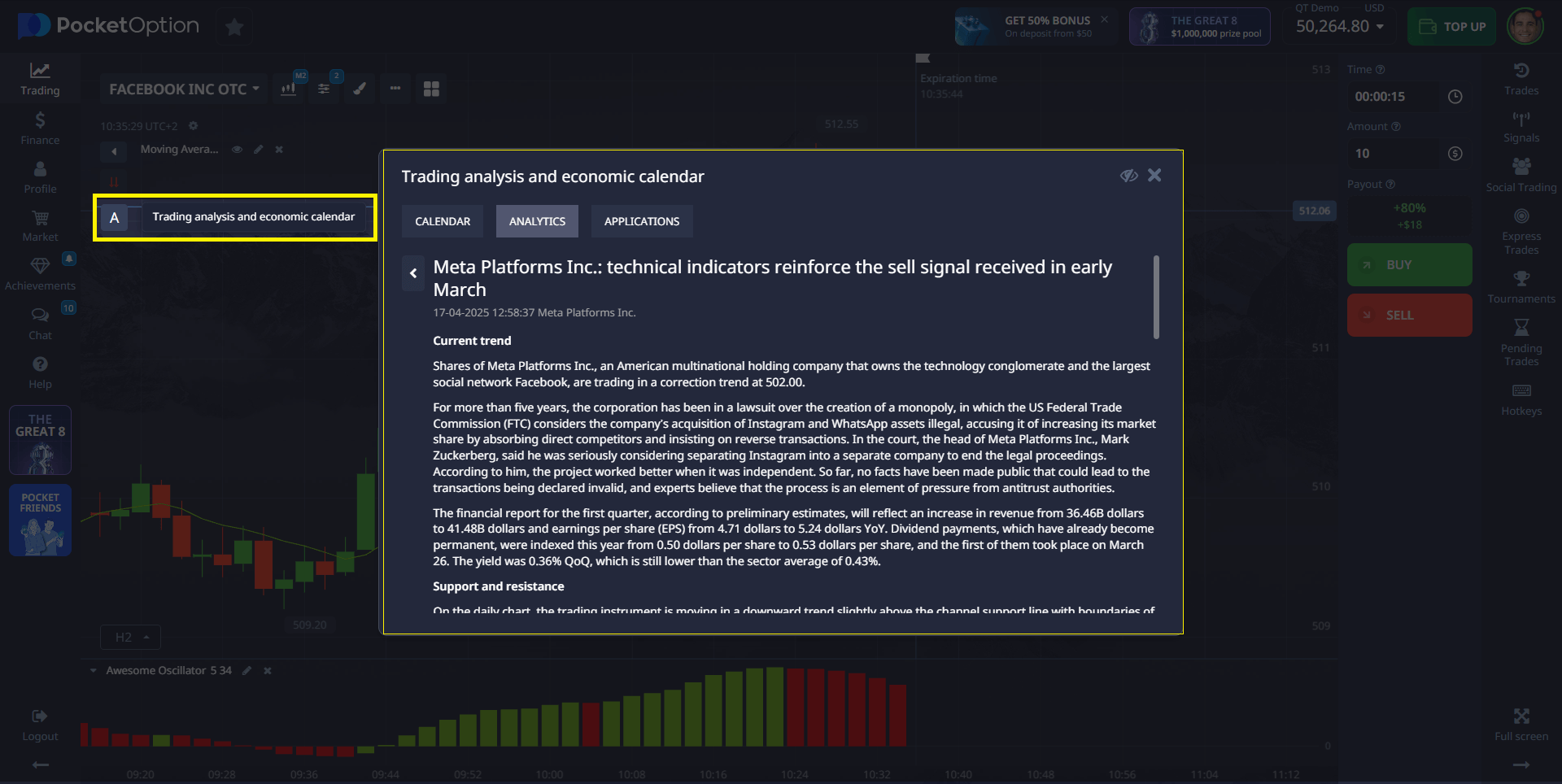
Economic calendar: in addition, Pocket Option features a built-in economic calendar that displays upcoming market events and corporate earnings. Even if there are no Meta-specific announcements at the moment, traders can monitor macroeconomic indicators and tech sector reports to understand why stocks like Meta are falling today — and respond accordingly.
These tools make Pocket Option a powerful resource not only for practicing but also for simulating real-world trading scenarios. Without owning any stock, traders can forecast price direction and improve their decision-making skills in a live market environment.
Conclusion: Navigating Volatility with Strategic Insight
Meta’s recent stock decline reflects complex internal and external challenges, from earnings misses and competitive pressures to regulatory headwinds and technical breakdowns. However, its solid fundamentals (large user base, robust cash flows) suggest potential undervaluation amidst current market pessimism. Platforms like Pocket Option empower investors with tools and practice environments to effectively navigate volatility and capitalize on strategic market opportunities.
See more:strategyinvestmentstockplatformKnowledge baseTrading