
Understanding Forex Trading Fees and Their Impact on Trading Results
When entering the forex market, traders often focus on strategies and market analysis, overlooking the impact of forex trading fees. These costs can significantly affect your bottom line. Understanding the different types of fees and how they work is essential for profitable trading.

Common Types of Forex Trading Fees
Trading in the foreign exchange market involves several types of costs. Before opening an account with any broker, it's important to understand what forex trading costs you might encounter:
- Spread fees (the difference between buy and sell prices)
- Commission fees (fixed or percentage-based charges per trade)
- Overnight financing fees (swap rates)
- Inactivity fees
- Currency conversion fees
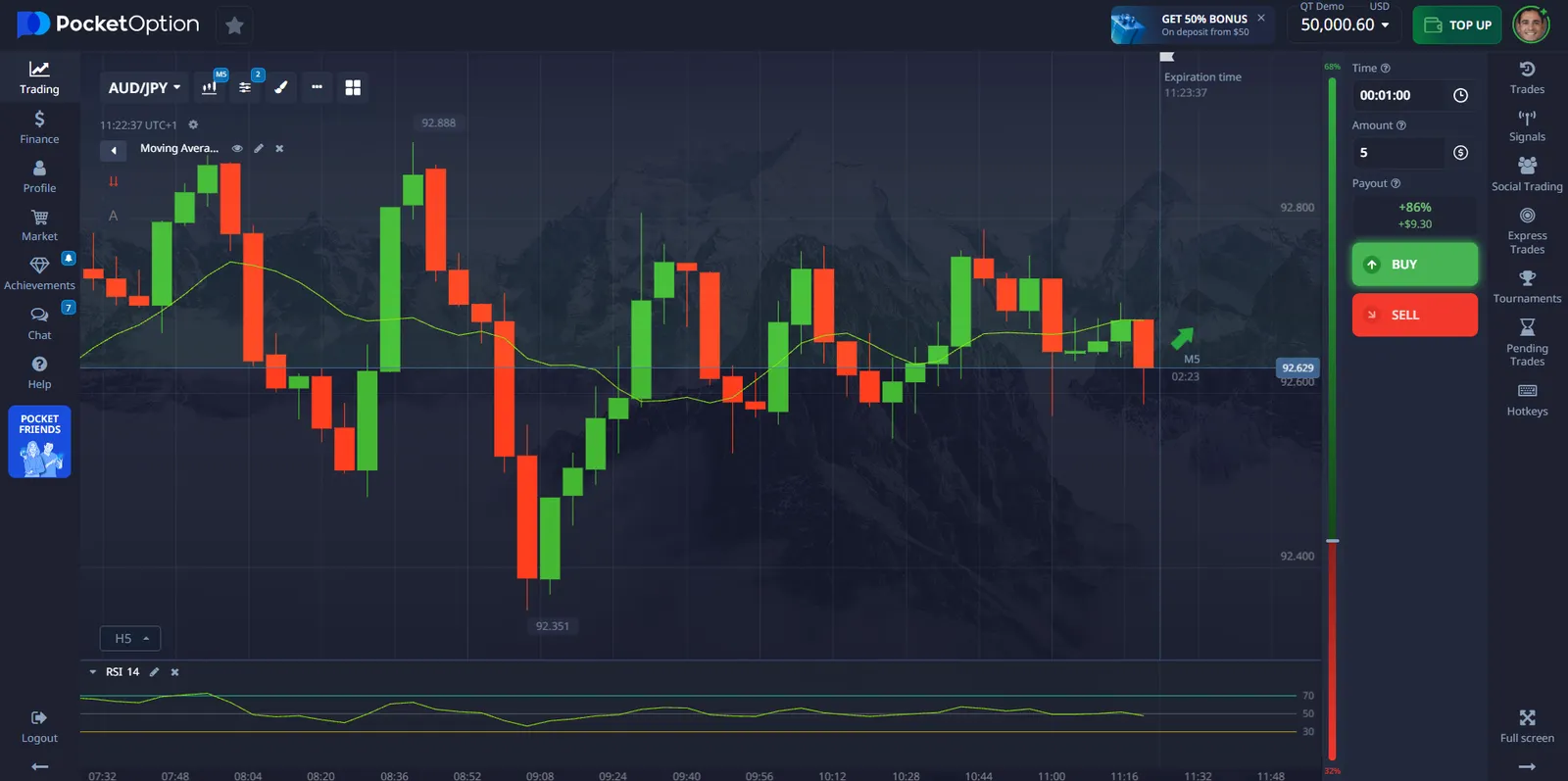
Pocket Option does not charge any account usage fees, commissions, deposit fees, or currency conversion fees for forex trading, making it a highly cost-effective option for traders. With Pocket Option, you only need to make a forecast about whether the price will go up or down. If your forecast is correct, you can earn up to 92% profit on your investment.
Understanding Spreads in Forex
The spread is the most common fee in forex trading. It represents the difference between the bid (sell) and ask (buy) price of a currency pair.
| Currency Pair | Average Spread (in pips) | Cost per $100,000 trade |
|---|---|---|
| EUR/USD | 1.0 | $10 |
| GBP/USD | 1.5 | $15 |
| USD/JPY | 1.3 | $13 |
| USD/CHF | 1.8 | $18 |
Brokers like Pocket Option offer competitive spreads that can help reduce your overall trading costs. When comparing brokers, always check the typical spread for the currency pairs you plan to trade most frequently.
Commission-Based vs. Spread-Only Models
Forex brokers typically use one of two pricing models:
| Fee Model | Advantages | Disadvantages |
|---|---|---|
| Spread-Only | Simple fee structure, no separate commission | Spreads may be wider |
| Commission + Spread | Usually tighter spreads | Additional commission per trade |
Many traders overlook how forex trading fee structures impact profitability, especially for high-frequency traders. The appropriate model depends on your trading style and volume.
Overnight Financing and Swap Rates
When positions are held overnight, swap fees apply. These fees are based on the interest rate differential between the two currencies in the pair.
| Position Type | Interest Rate Scenario | Result |
|---|---|---|
| Buy (Long) | Base currency has higher interest rate | You receive payment |
| Buy (Long) | Base currency has lower interest rate | You pay swap fee |
| Sell (Short) | Base currency has higher interest rate | You pay swap fee |
| Sell (Short) | Base currency has lower interest rate | You receive payment |
Deposit and Withdrawal Fees
Forex trading withdrawal fees can vary significantly between brokers and payment methods:
- Bank transfers: Usually $20-50 per withdrawal
- Credit/debit cards: Typically 1-3% of the withdrawal amount
- E-wallets: Often $1-20 per transaction
- Cryptocurrency: Varies widely, from free to fixed fees
Pocket Option stands out by not charging any forex trading withdrawal fees. This can significantly lower your overall costs, especially for traders who frequently make deposits and withdrawals. Always check the fee schedule before choosing a deposit or withdrawal method. Some brokers offer one free withdrawal per month, which can help reduce fx trading fees over time.
Additional Fees to Consider
| Fee Type | Typical Range | How to Avoid |
|---|---|---|
| Inactivity Fee | $10-50 per month | Make at least one trade monthly |
| Account Maintenance | $0-25 per month | Choose brokers without this fee |
| Data Fees | $0-100 per month | Use free data sources |
Some brokers may charge for premium features like advanced charting tools or research materials. These costs should be factored into your overall forex trading costs assessment.
How to Minimize Forex Trading Fees
- Compare multiple brokers before opening an account
- Consider your trading style when choosing a fee structure
- Be aware of overnight financing costs for swing trades
- Use fee-free deposit and withdrawal methods when available
- Maintain sufficient activity to avoid inactivity fees
Many traders focus solely on spread costs while ignoring other forex trading fees that can accumulate over time. A holistic approach to cost management is essential for long-term profitability.
Comparing Broker Fee Structures
| Broker Type | Typical Spread | Commission | Best For |
|---|---|---|---|
| Market Maker | 1.5-3 pips | None | Beginners, casual traders |
| ECN | 0.1-1 pips | $2-10 per lot | High-volume traders |
| STP | 0.5-2 pips | $0-5 per lot | Intermediate traders |
Conclusion
Forex trading fees can significantly impact your profitability. By understanding the different types of fees—spreads, commissions, swap rates, and withdrawal costs—you can make more informed decisions about which broker to use. Always read the fee schedule carefully before opening an account and consider how your trading style aligns with the fee structure. Minimizing costs while maintaining access to the tools and markets you need is key to successful forex trading.