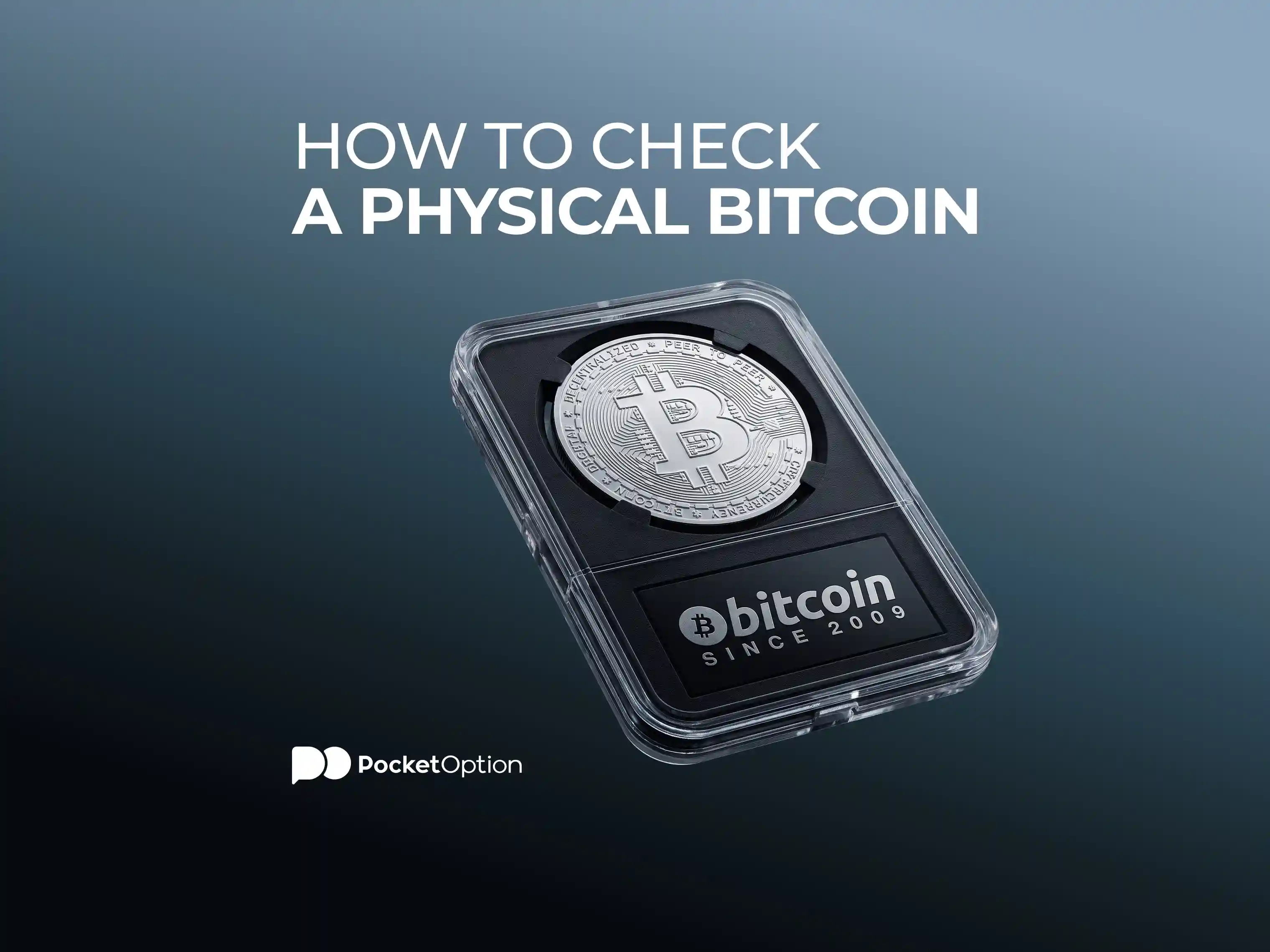
How to Check a Physical Bitcoin: Ensuring Authenticity and Top Value
A physical Bitcoin coin can be a great collectible, akin to postmarks of olden days, or a convincing fake that instantly loses you money. We explain how to check a physical Bitcoin coin for being real or fake: seals, keys, weight, producer, and other important details.

What Is a Physical Bitcoin
Many people think that BTC can only ever exist on a blockchain. And to be fair, they are right. However, the key to that blockchain can be stored in a physical form. That is how a physical Bitcoin appears. It can be a collectable metal coin or a beautiful bar, engraved on which (or inside of which) lies a private key to real BTC balance. This can be bought as a gift to a crypto collector, or exchanged between traders.
Important to note that there’s usually a seal protecting the key, and it is tamper proof. This is why only one user can access the coins on the blockchain, and if anybody else tried to access the key, they would know.
Again, to reiterate: the coin itself is not the money. Instead, it’s just protecting the key to a real Bitcoin coin stored on-chain. So for physical BTC, the real vs fake Bitcoin question is always down to the key and its seal. If the key is real, and there’s nobody else who has/had access to it, then everything is genuine. However, checking this is often quite hard.
Interest in physical Bitcoin memorabilia is universal and global. There are crypto enthusiasts on every continent. There are thousands of searches for criptomonedas from Spanish speaking collectors curious about it, and even some people in China looking for a way to store their keys more discretely.
Whatever the language and location, the underlying question for physical BTC is usually the same: how to tell if a Bitcoin coin is real before paying for it. It’s a very complex question that is mostly tied to the identity and status of the seller. Some phrase it more simply as how to know if a Bitcoin is real once they already hold a physical coin in hand. And the answer is always the same: verify the seller, and the fact that there are coins on-chain under that address. Those are 2 ways on how to tell if Bitcoin is real. Otherwise, it’s much easier to buy on-chain coins, as you can create your own wallet and key at any moment, for free, and store the newly bought coins there.
Why Production of Physical Bitcoins Slowed After 2013
The physical Bitcoin coins were most popular before 2014, most notably from the Casascius series, which ended on Nov 27, 2013. These were produced when BTC prices were smaller, and regulatory attention on cryptocurrency was minimal. After that, financial regulators began treating physical coins pre-loaded with redeemable balance as real money transmissions (in some jurisdictions). Which complicated things for sellers a great deal. Our explainer on the early history of Bitcoin adoption covers this period in more detail.
In later years, manufacturers adapted to these regulations by selling empty physical BTC coins that a buyer has to load themselves, or by selling coins as pure novelty items, with no place to put the key and completely no funds attached. Items with actual balance on them became a lot more rare. That is why older funded coins now carry a collector premium even slightly beyond their Bitcoin value.
Step-by-Step: How to Check a Physical Bitcoin
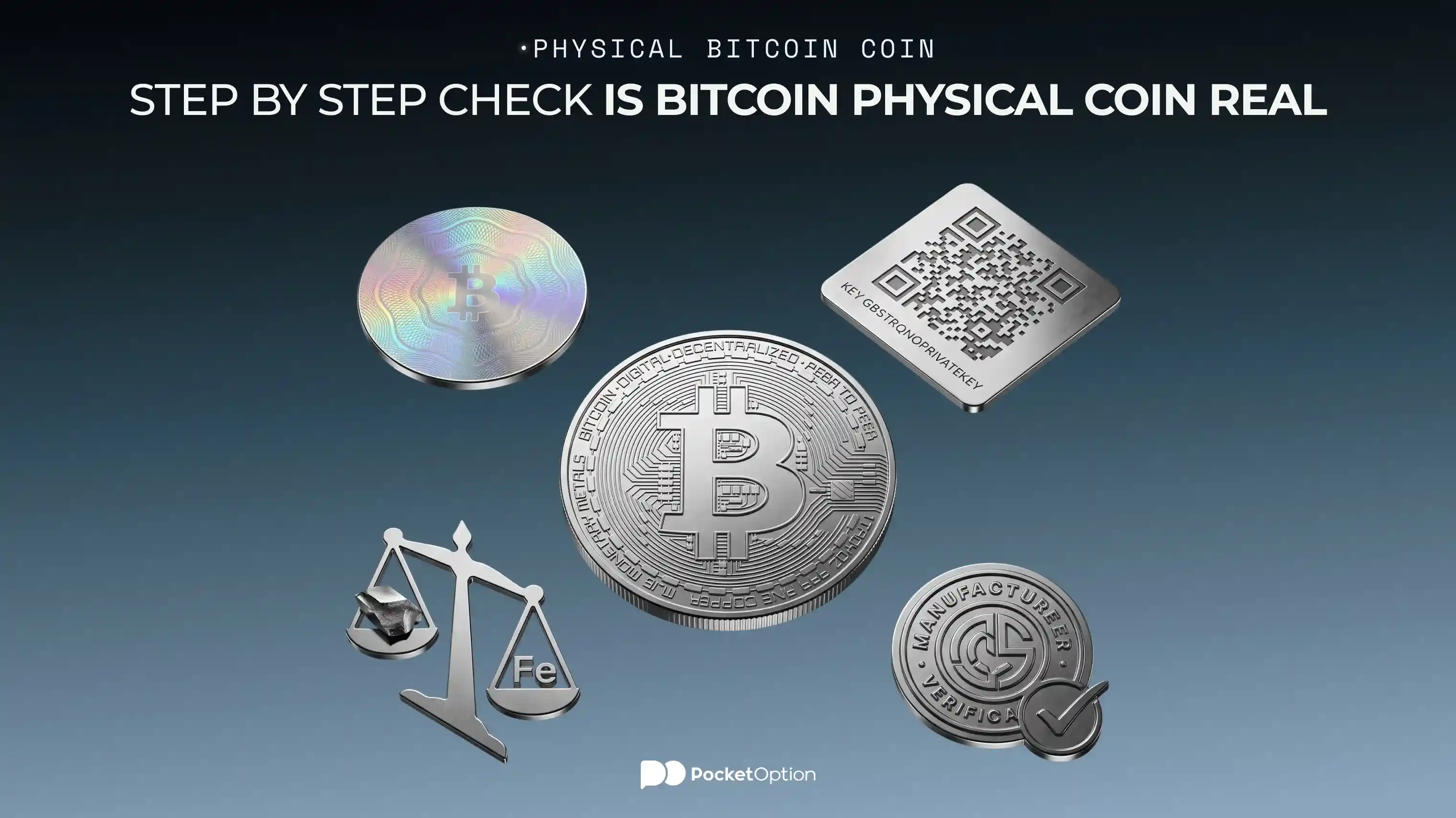
This is not an easy task for crypto newcomers, but in general if you want to know how to tell if a Bitcoin is real, it comes down to four checks, performed in order:
Inspect the Seal
It should be tamper-proof, and never tampered with. Usually it's a hologram or foil, which didn’t break as of now. If a seal has marks on it, is peeling off, or is misaligned, this is a possible flag of a fake Bitcoin coin that doesn’t have any funds attached any longer.
Verify the Private Key or QR Code
If a seal is tamper-proof and still standing, behind it should be a private key (often a QR code) to a BTC wallet. It should only be scanned/entered once you bought the coin. If there’s a way to scan it otherwise, this means it could’ve already happened multiple times, and as soon as you buy this physical BTC, the funds from the wallet might get drained.
Check the Coin's Weight and Materials
Sometimes physical Bitcoin is made from real gold. If a manufacturer claims it, it should publish the weight and metal composition of it online. If a coin is heavier than specified, or the alloy doesn’t match, this is a strong sign of a fake Bitcoin coin, regardless of how convincing everything else looks.
Confirm the Manufacturer
This is the ultimate test. Proper companies have checks in place, and value their reputation enough to not sell you a fake Bitcoin physical coin. Buying it second-hand is strongly advised against. If you really want to purchase it from a re-seller, at least check the manufacturer, and contact them online (if possible). Also check the BTC wallet attached for the amount of coins there, and see the transaction history of the wallet you’re about to purchase the key to.
with demo trading at Pocket Option
Try DemoTrusted Manufacturers: Casascius, Denarium, Lealana, and More
There are only a handful of manufacturers worth buying physical Bitcoin from. Some of them are no longer working today. Casascius produced some of the earliest and most collected, most popular coins, before halting sales completely.
Denarium, based in Finland, was producing both pre-funded and empty coins till 2020, and has had an established verification process. Lealana is known for physical Bitcoin and Litecoin tokens, with, again, publicly documented series and details you can check (to see if they match exactly to the coin you buy).
Buy only from a series from a known manufacturer, with a documented history, and published mintage numbers. Otherwise, it’s safer to purchase a physical replica, and a real Bitcoin to some new wallet, and print the key to the wallet on a replica. This process is often safer than giving a key to anybody else.
Red Flags That Signal a Fake Bitcoin Coin
A seller that doesn’t show sealed coin on camera, before payment.
A price that is below what the BTC balance on a wallet would be worth alone.
A hologram or seal pattern that are broken, or do not match the official photos from manufacturer 1 to 1.
Any pressure to pay quickly, or the ‘deal will be lost’.
No serial number on a physical Bitcoin, or a serial number that does not match the manufacturer's format.
How to Redeem a Physical Bitcoin Safely
Confirm the coin's authenticity, using the checks above.
Set up a secure wallet for BTC that is ready to receive the funds.
Break the seal on the physical coin, and scan the QR-code or enter the private key to access the wallet with a balance.
Transfer a portion or the full balance to your own wallet, which is guaranteed to not have been exposed.
Store the emptied coin somewhere for nostalgia or collecting purposes, or discard it completely, if you’ve exposed the key on it to anybody.
Verifying the Underlying BTC on the Blockchain
Fortunately, every cryptocurrency is using a public blockchain, so you can verify any wallet or transaction before having a key or real access to them. The address to the wallet associated with physical Bitcoin is public, and you can find it online to see how much coins there is on it. It doesn’t expose anything, and is completely safe. Our guide to on-chain analysis walks through this process in more detail. Use on-chain explorer, or any other free public tool, to complete the verification.
A balance showing zero does not guarantee that the coin is fake. It may simply have been claimed already by the previous owner. This is why verifying the seal is so important before any purchase.
Is a Physical Bitcoin Worth Anything: Collectible vs BTC Value
So is a physical Bitcoin worth anything beyond its BTC balance? Usually, yes. Collector coins from 2013 are often more expensive than the underlying tokens, among the enthusiasts. Some low mintage objects have a collector premium attached to them.
However, that premium is non-existent for a generic, unsealed, or unbranded coin. A coin like that is usually worth close to its Bitcoin value, and doesn’t offer much resell value either. You are buying a novelty item and an interesting ‘toy’, with some money attached to it, but not much more.
Physical Bitcoin vs Digital Bitcoin: Key Differences
A physical coin and a digital wallet hold the same exact asset. But there exist some real, practical differences:
Aspect | Physical Bitcoin | Digital Bitcoin |
|---|---|---|
Authenticity check | Done through seal, weight, and manufacturer | Wallet software and blockchain info |
Collector value | Sometimes exceeds embedded BTC | Exact BTC balance |
Redemption | One time, seal must be broken | Ongoing, at any time |
Storage risk | Physical loss, theft, damage | Hacking, losing keys |
Storing and Insuring a Physical Bitcoin
Once a physical Bitcoin is verified, storing it safely requires top consideration. A fireproof and waterproof safe is one option. Ideal if you’re the only one who knows where it is. A bank safety deposit box works well too, particularly for a Bitcoin coin with a high collector value.
Insurance for a physical Bitcoin is not as standardized as for jewelry or other collectables. There are a few special companies that offer this service for cryptocurrency related items, but it’s unlikely to cover the wallet balance if the keys or the seed phrase is stolen. Insuring Bitcoin is still a nascent industry.
How This Connects to Trading Bitcoin on Pocket Option
A physical coin = fixed BTC balance that is not being used (till it’s redeemed). It’s essentially an even colder storage that completely takes those coins out of regular turnover. You cannot trade physical BTC before redeeming it, but those coins still have effect on the trading environment, although it is getting more muted past 2013.
If you’re someone drawn to physical coins out of curiosity about BTC and how Bitcoin value moves, opening a free demo position on Pocket Option is a much simpler way to engage with cryptocurrency prices. There is no need to own the underlying asset; you can simply trade its price, and understand it directly.
at one of the best trading platforms for retail
Get StartedConclusion
Verifying a physical Bitcoin is an arduous process, and the chance of loss is high. A seal might be broken, a key might be stolen, tokens might get moved out of the wallet in the last possible second. Physical BTC should be treated as collectable items, not as guaranteed ways to store tokens long-term. Engaging with BTC directly through trading it on Pocket Option is a simpler and safer alternative.
Disclaimer: Cryptocurrency prices are volatile, and trading on real account carries a risk of capital loss. Nothing in this article is financial advice, and you should verify any claims independently before doing anything.