
How stock investing works
Understanding how investing in stocks in the Brazilian market works can transform your financial situation and create opportunities for wealth growth. This comprehensive article will explain the process, present practical strategies and show you how to start your investment journey with confidence and knowledge.

The basics: how stock investing works
Investing in stocks means acquiring a small part (fraction) of companies traded on the stock exchange. By buying stocks, you effectively become one of the owners of the company, being entitled to a portion of the distributed profits (dividends) and benefiting from the appreciation of the stock price.
How does stock investment work in practice?
When a company grows, increases its revenue, or expands its operations, the value of its shares tends to rise, generating capital gains for investors. Additionally, profitable companies generally distribute part of their profits in the form of dividends, offering passive income to shareholders.
How does stock investment work for beginners?
For those who are starting, the process can be simplified into practical steps:
- Financial education: Before investing, understand basic concepts such as liquidity, volatility, and diversification.
- Choosing a broker: A common mistake among beginners is selecting the first broker they find on Google without evaluating crucial aspects, such as hidden fees, available analysis tools, Portuguese support, or access to the US market.
- Company analysis: Evaluate indicators such as P/E (Price/Earnings), dividend yield, and company debt.
- Diversification: How does successful stock investment work? Distribute your resources among different sectors to reduce risks.
- Monitoring: Regularly monitor the performance of the company and the market with analytical tools.
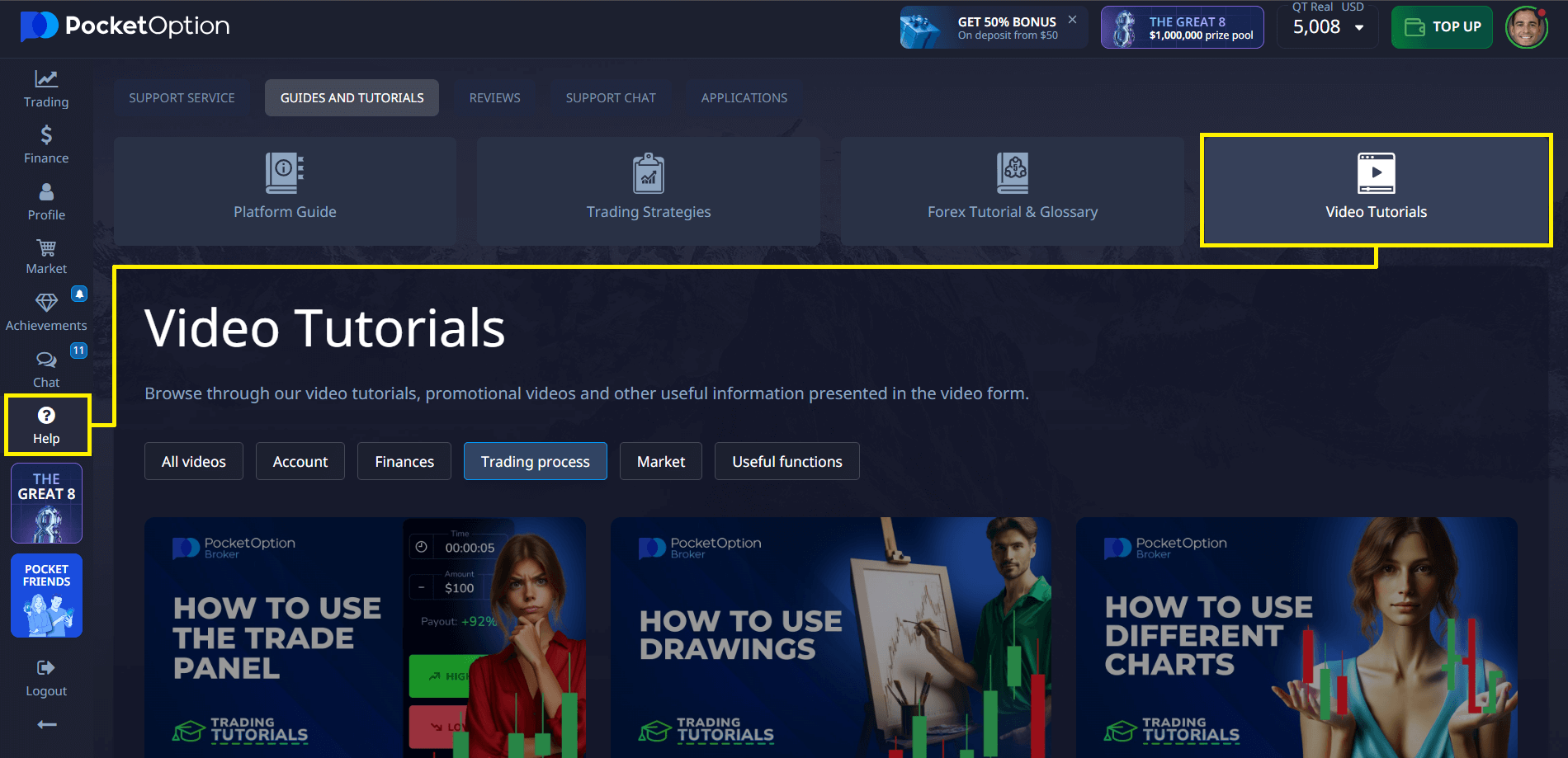
Pocket Option provides comprehensive tools and a free training section to help you prepare for trading stocks. All materials will be available right after registration!
Real examples of how buying stocks works
Imagine that you invested R$5,000 in stocks of companies in the financial sector in 2020. With the post-pandemic market recovery, this investment could have generated a return of approximately 30% by 2022, resulting in R$6,500. However, if you had invested in the technology sector, the return could have exceeded 45% in the same period.
The importance of understanding risks
How does stock investment work in relation to risks? The stock market presents volatility, and there may be periods of significant decline. Factors such as economic crises, regulatory changes, and specific company problems can negatively impact the value of stocks.
What to consider before starting to invest?
Before starting your investments in stocks, establish:
- Clear and measurable financial goals
- Time horizon (short, medium, or long term)
- Risk profile and tolerance to volatility
- Percentage of assets to be allocated to stocks
- Strategy for diversification between sectors and regions
How to trade stocks on Pocket Option?
Through quick trades, the Pocket Option platform simplifies the stock investment process in five steps:
1. Sign up: 100% digital process that takes less than 10 minutes.
2. Deposit funds: 50+ payment options with instant processing.
3. Select stocks: Intuitive interface with more than 100 assets from different sectors and countries, 30+ stocks of global companies.
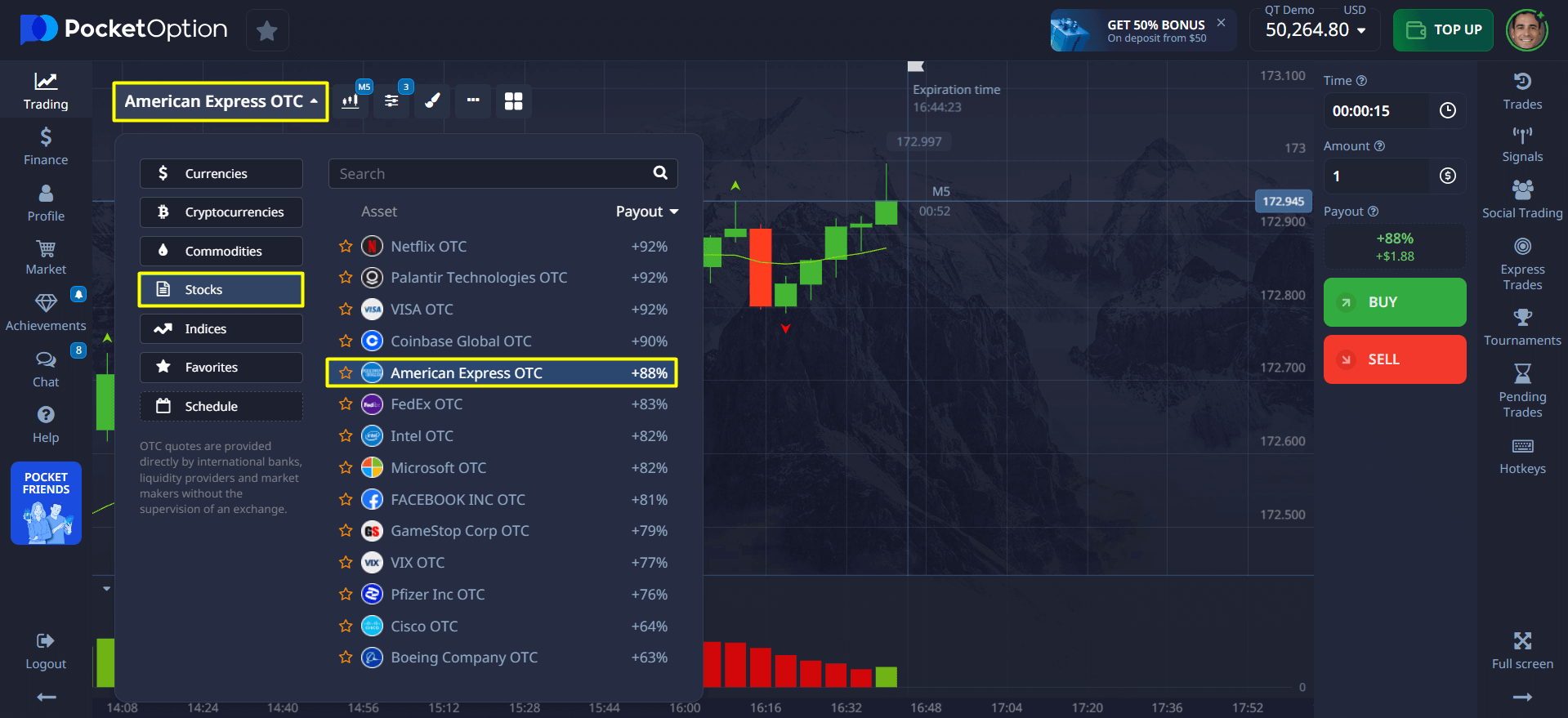
4. Make a forecast: if the price will go up or down, choose the forecast time.
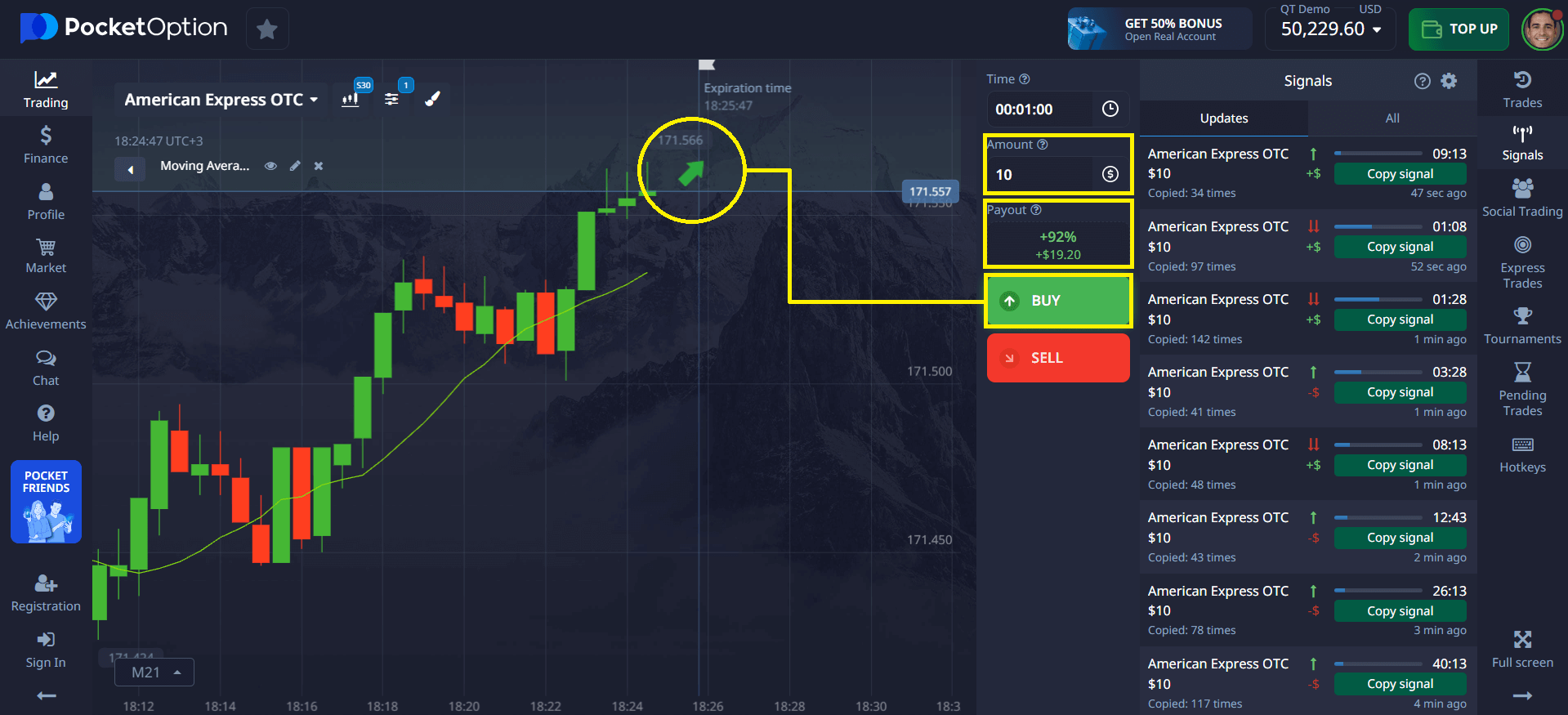
5. Wait for the forecast expiration time: if your forecast is correct, get up to 92% profit!
Quick trading will allow you to trade even with small capital, starting from $5 (the exact minimum deposit amount depends on the payment method).
Conclusion
Understanding how stock investing works is the first step to building solid wealth in the long term. With Pocket Option, you have access to all the necessary tools to start this journey safely and efficiently. The platform combines advanced technology with ease of use, making the stock market accessible to both beginners and experienced investors.