Panic Selling: Why Traders Dump Positions at the Worst Possible Moment
When people are panic selling, it means they are closing positions out of fear, rather than for any logical reason. This kind of selling can sometimes coincide with a local bottom and the rebound that follows, but there's no way to know that while it's happening, and the decline can just as easily continue. We break down how this works, psychologically and mathematically, and how a disciplined stop-loss might save your account.

What Is Panic Selling
The act of closing a position out of fear is panic selling. People fear losses will deepen, and exit at their peak fear, because of emotion, rather than because of their strategy or any rule they set in advance.
On the outset, the trade may look similar to a planned exit, but the decision behind it is reactive and emotional, rather than cold and deliberate. This is the panic selling definition: when emotions dictate your trades. How you arrive at the decision to sell (or buy) at that critical juncture is what often determines if you'll be profitable long-term.
Why Fear Peaks Right at the Local Bottom
Fear is usually strongest at the point price has already fallen a lot. This can sometimes coincide with a local bottom, though there's no reliable way to know that while it's happening. But then, the news event or some other trigger pushes things even further into a bad direction. People rush for the exit, afraid that the only way for the asset is down. Traders extrapolate the recent trend forward, and assume that a decline is inevitable. There's no conviction left from the market participants. This is when the so-called 'final capitulation' happens.
Once this kind of forced, fear-driven selling has run its course, a rebound can follow, since fewer sellers remain willing to exit at depressed prices. But this isn't guaranteed: new sellers can still step in, fresh negative news can arrive, and the decline can continue well past the point where it already felt unbearable. There's no reliable way to confirm in real time whether a given sell-off is capitulation near a bottom, or simply one leg of a longer decline.
This pattern is not unique to crypto or metals; panic selling stocks during a market selloff is commonplace, and follows same psychological path. In fact, most capitulation events happen by the same pattern.
The Psychological Triggers Behind Panic Selling
There are three triggers that happen to determine what is panic selling, and they are:
Fear of further losses. This is the driver that overtakes the market. Trades happen to avoid any more emotional pain, not because of any mathematical reasons.
Herd behavior. Seeing that other traders are seemingly selling or have sold already, people rush for the exits. This is the exact reverse of the pattern called FOMO in trading: social pressure alone is a powerful force that can push a crowd out of a position.
News overexposure. Constant negative headlines during a long decline amplify any worries, and create a feeling that everything will just keep getting worse, no matter what.
Recognizing if all three of these are active at the moment is one of the practical skills you can use to determine whether you're going through a panic selling event right now. If you are, our guide on managing emotions in trading can help at that moment, in the second of the strongest fear.
Stop-Loss Exit vs Panic Exit: What's the Real Difference
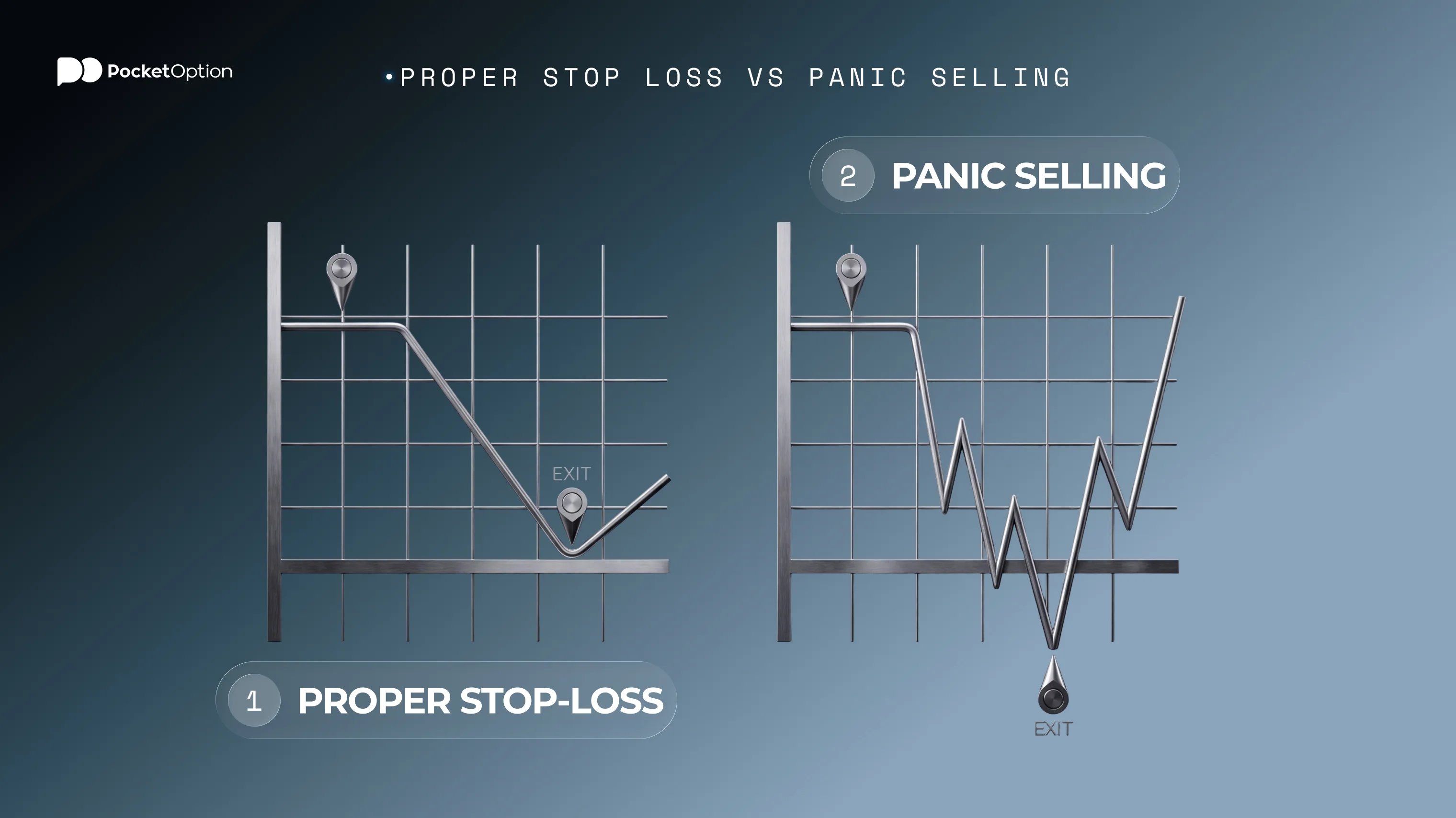
A stop-loss is decided before the trade is even opened: the exact price, reasons for entering and exiting. All of this needs to be set in advance, as a part of a broad day trading stop loss plan. The exit then executes no matter which way you feel about the situation. This is the proper way of exiting the trade, or an investment.
On the other hand, panic selling stocks or crypto occurs after a trade is already ongoing, and what's more, losing. It is executed simply because of how this loss feels rather than in reference to any prior plan. It's not done in response to the chart, or any shifting news/environments.
If a trade is not closed because it lines up with what technicals are suggesting, such as a tested support and resistance level, and not done because of predetermined settings, but instead is picked in the moment, that means a panic sell has occurred, and the likelihood that it was the wrong decision is high.
A Worked Example: Planned Exit vs Panic Exit
Let's say a trader bought an asset at $100. They had a stop-loss placed at 92, because it was the support level they saw before entry. Price falls to 94, then continues to 92, thus triggering the stop. A position is exited calmly. A trader takes a defined, expected loss. It may be painful, but it's part of trading, and it's fine. This is a planned exit.
Now consider a 2nd trader, having the same entry at 100. They have no predefined stop, they just 'feel' like the trade is right.
Price falls to 94. The trader is watching their loss grow with bated breath. They are panicked, and unhappy. They see 92, 90, 88. They read a headline that this thing can fall to 50 in the future. They exit, because they can't stand this thing falling further. They exit (on average) later than the trader who set a predetermined stop-loss, and they feel worse about it.
Then price then recovers to 96 within the same session. A trader took a larger loss at the point of maximum fear, so they realize they were panic selling the asset. Trying to recover their losses, they enter the position again, trying to offset their emotional pain… This is how a blowout of an entire account can happen over one emotionally-driven trading session.
How to Avoid Panic Selling
Have a written plan, and a rule of where you put your stop-losses, before you even think about entering a position. Don't change your stop loss on a whim, when emotions are high. Or trade in a mode with a predetermined exit window, where a sell happens on time, and you can't change it in the moment. For example, Quick Trading mode at Pocket Option, where the trade ends automatically, and not based on a willpower of the user.
Limiting exposure to news and price checking when investing long-term can also be wise. This can reduce the volume of fear-induced overload, which can lead to trading on emotions, rather than on logic.
The last step is to review exit plans afterward, and see how you performed in each one. Which exit plan brings the highest profit for you, on average? Which exits were panic-driven, which were planned, what were the rules you set for each? Having such stats about yourself will help making the next correct decision easier.
Conclusion
The panic selling definition is to act on emotions, and not plans. It can look similar to a planned stop-loss exit, but the decision came for entirely different reason, spurred by nothing but fear. So what is panic selling it's simply an exit made under pressure rather than under plan. That is why it should be avoided as much as possible.
use proper risk-control with Pocket Option
Start TradingDisclaimer: Trading involves risks of capital loss, so it may not be suitable for all investors. Past performance is not indicative of future results. Consult professional guidance, if possible, before making any financial decisions.
See more:InterestingTrading Strategies