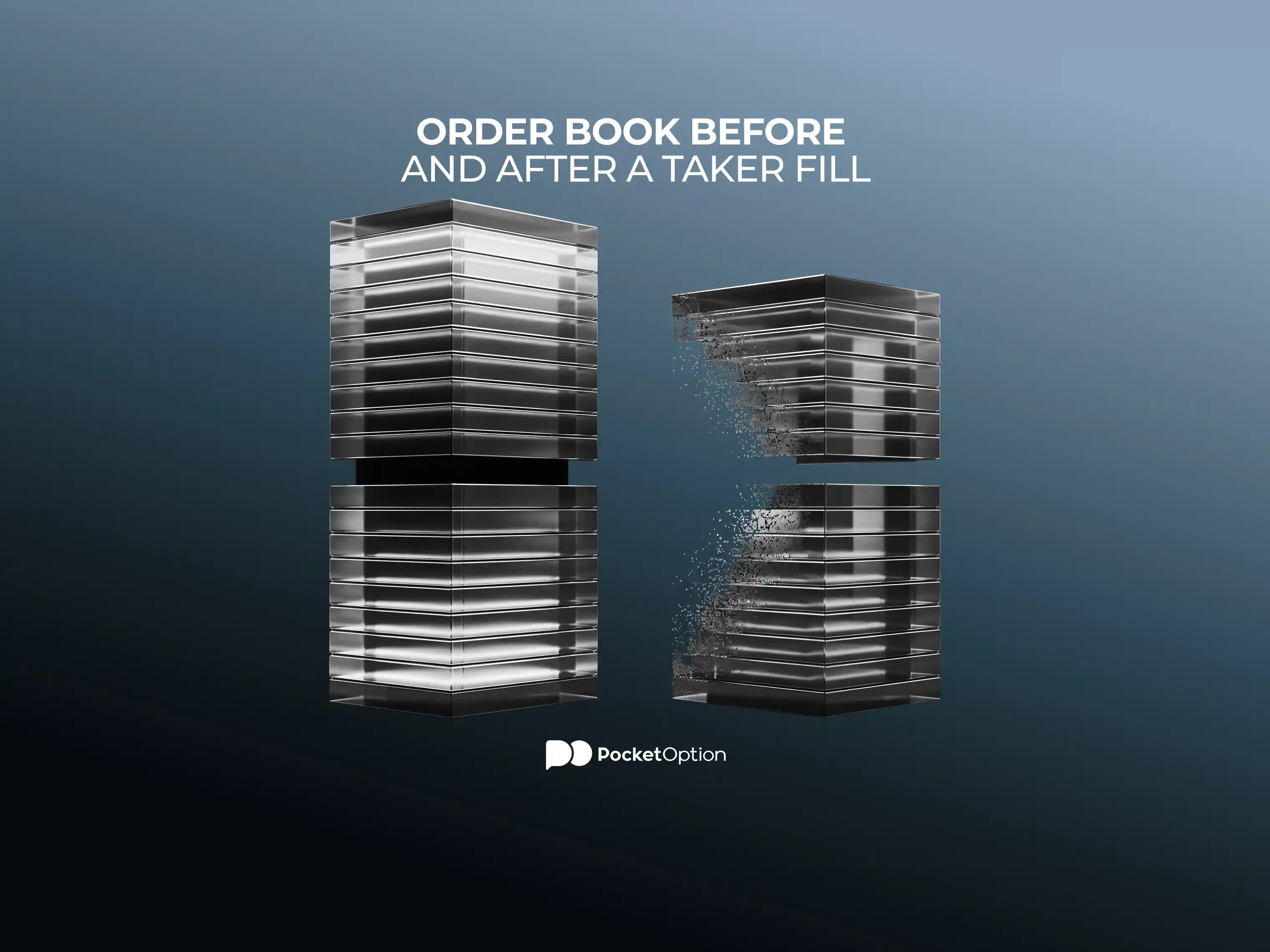
Who a Taker Is and How Takers Remove Liquidity from the Order Book
Every time you place a trade on an exchange, you are either adding liquidity to the market or taking it away, and this distinction matters for your trading costs. If your fees seem higher than expected, the answer often lies in one question: are you a maker or a taker? This guide explains who a taker is, how taker orders remove liquidity, and why takers generally pay higher fees.

Who Is a Taker: Definition
A taker is a trader who places an order that is immediately executed against an existing order in the order book, taking what is already there rather than waiting. Takers demand instant execution and are matched with resting limit orders already placed by other traders, taking liquidity from the market. Taker orders are typically market orders, or aggressive limit orders priced at or beyond the current best bid or ask.
How a Taker Order Removes Liquidity
Liquidity is the measure of how many buy and sell orders sit in the order book waiting to be filled. When you place an order demanding immediate execution, the exchange matches it against existing orders, which are filled and removed. Think of the order book as a shelf of offers: a maker places items on the shelf, and a taker buys one, leaving one less item.
As one exchange puts it: Taker orders result in the removal of liquidity from the exchange's order book.
Taker vs Maker: Key Difference
The maker-taker model is a two-sided system where every trade has one of each. Makers place limit orders that wait to be matched and generally pay lower fees; takers use market orders or aggressive limit orders that execute instantly and pay higher fees. Both roles are essential to a functioning market.
Why Taker Fees Are Usually Higher
Takers pay higher fees because they consume a resource exchanges need: deep order books, which attract traders and tighten spreads. To encourage makers, exchanges typically subsidise them with lower fees and charge takers more, and a modest fee gap adds up meaningfully across many trades.
When You End Up as a Taker Without Realising It
Many traders assume only market orders make you a taker, but a limit order can too. A buy limit placed at or above the current best ask fills immediately against a matching sell order, making you a taker. Partial fills add a wrinkle: part of a large order can cross the spread and fill instantly while the rest rests in the book, splitting a single order into both roles. Any order filling instantly, market or limit, makes you a taker. Many exchanges offer a post-only option that cancels an order rather than letting it fill immediately, useful for avoiding taker fees.
Conclusion
A taker is any trader whose order removes liquidity from the order book by filling immediately against an existing order, typically via market orders or aggressive limit orders, and generally pays higher fees than a maker. The model rewards those who provide liquidity and charges a premium to those who consume it; both roles are necessary, but the cost difference is real. Before placing a trade, it is worth asking whether immediate execution is necessary, since waiting as a maker can save on fees.
Risk Disclaimer: Trading crypto carries a high level of risk and may not be suitable for everyone. Never trade with money you cannot afford to lose. This content is provided for educational and informational purposes only. It does not constitute financial, investment, or trading advice, nor a recommendation to buy or sell any instrument. Do your own research before acting.
Test limit and market orders in real market conditions, see how maker vs taker fees affect your results before trading live.
Open Demo AccountSee more:Glossary