What Is Token Burn and How Does Burning Tokens Reduce Supply?
Tokens cannot really be destroyed on a blockchain, because nothing gets deleted there. What a burn does instead is send them somewhere nobody can ever spend from again. The effect is the same, and it is permanent.

What Is a Token Burn?
A token burn is the deliberate, permanent removal of tokens from circulation. Somebody holding the tokens chooses to make them unusable, and the record of that choice sits on the chain for anyone to check afterwards.
Two mechanisms do this in practice. Tokens can be sent to a burn address, which is a wallet with no known private key, so anything arriving there is stuck for good. Or the token's own contract can include a burn function that lowers the recorded total supply directly. Burn address crypto transfers are the older and simpler route; contract-level burning is tidier, since the supply figure updates itself. Either way the tokens stop being spendable and the transaction is public.
How Burning Tokens Reduces Supply
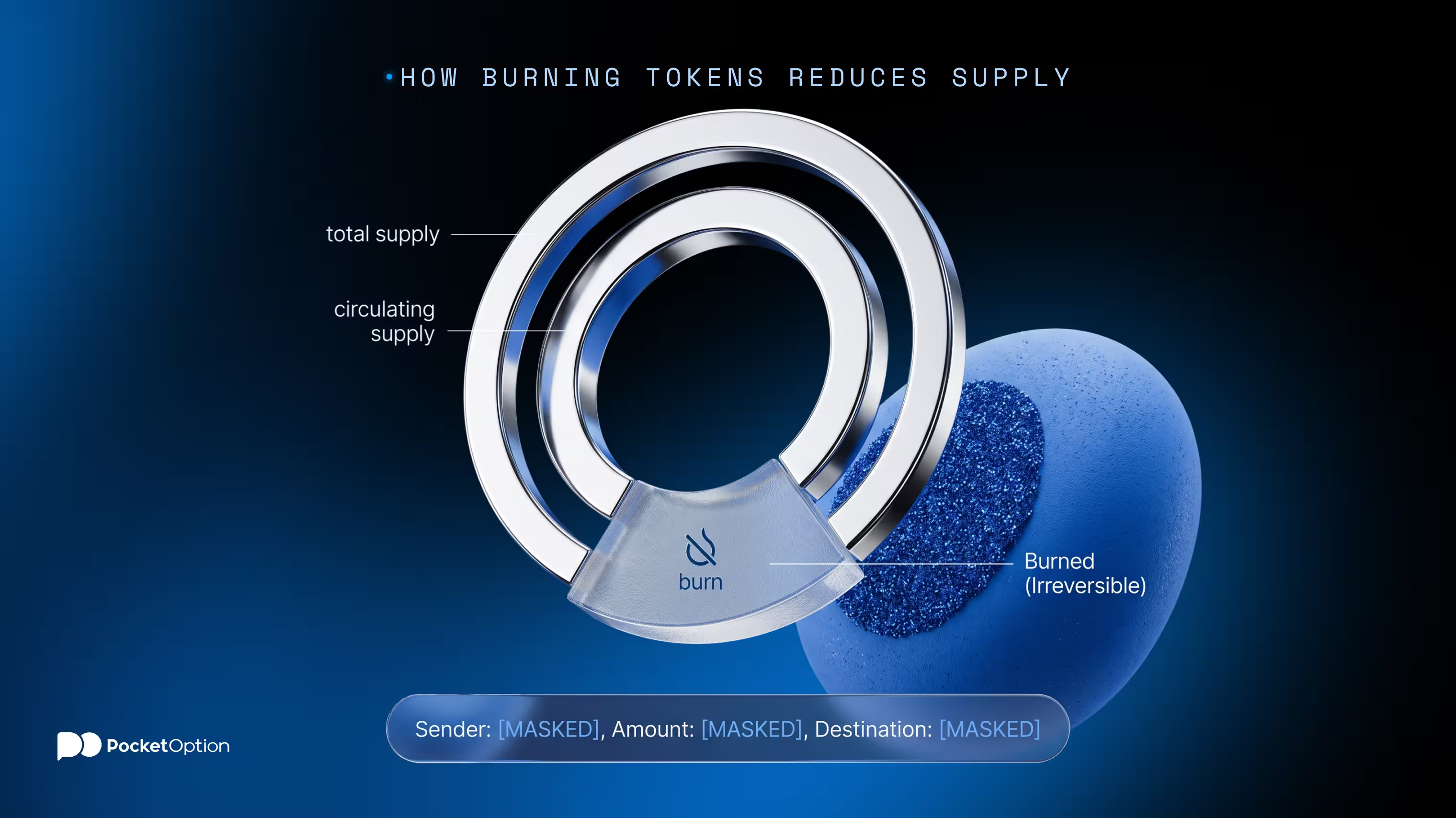
The circulating supply vs total supply distinction is where this gets clearer. Total supply is every token that exists. Circulating supply is the part actually available to trade, leaving out anything locked or vested. A burn cuts both, though the circulating figure is the one people watch, since that is what market capitalization is worked out from.
The reduction gets recorded on chain. Every burn is a transaction with a sender, an amount and a destination, so the arithmetic can be checked instead of taken on trust. Comparing how supply figures differ between major tokens shows how much variation there is here.
One thing worth being clear about. Burning does not create value out of nowhere. It changes the denominator. Whether anything happens to the price depends entirely on what demand is doing at the same time.
Common Token Burn Mechanisms
Fee burns. A fee burn mechanism destroys part of every transaction fee automatically, so supply shrinks whenever the network is busy.
Buyback and burn. The project uses revenue to buy tokens on the open market and burn them, roughly the way a company might buy back shares.
Transaction tax burns. A percentage of every transfer gets burned by the contract itself, without anyone choosing to do it.
One-off scheduled burns. A treasury or team wallet is burned in a single announced event, often to shrink an allocation the market thought was too large.
Proof-of-burn. Tokens are destroyed in order to earn something else, such as the right to mint on another chain.
The automatic ones tell you more than the announced ones, because they keep happening whether or not anybody is paying attention. A one-off burn usually arrives with marketing attached to it.
Why Projects Burn Tokens
Crypto token supply management is the honest answer for most of it. A project that issues rewards continuously is inflating its own supply, and burning gives it a lever pushing the other way. Deflationary tokenomics, where burns run faster than issuance, is the version of this that gets advertised hardest.
There are softer reasons too. Burning a large unsold allocation removes an overhang the market was already nervous about. Burning fees ties supply to actual network use, which is a story investors tend to like. Some burns are mainly a signal of commitment, nothing more. Projects with burn mechanics written into every transfer lean on that framing as part of the pitch.
Does Burning Tokens Increase Price?
Not automatically, and the claim that it does deserves some resistance. Price comes out of supply and demand together. Cutting supply while demand holds steady can support a price. Cutting supply while demand falls away does very little.
Scale matters as well. Burning a tenth of a percent of supply is a rounding error, however it gets announced. Burning a fifth of it changes the token's economics. The two get described in the same language surprisingly often. It is also worth checking whether new tokens are being issued at the same time, since a project can burn and mint at once and finish up net inflationary. Nothing about how any of this trades in practice is guaranteed by a burn schedule.
How to Verify a Token Burn On-Chain
Find the announcement and note the amount, the date and the wallet involved.
Open a block explorer for the relevant chain and search the transaction hash or the address.
Check the destination. An on-chain burn transaction should point at a recognized burn address or a contract burn function, not at another wallet the team controls.
Compare the total supply figure before and after. Where the contract tracks supply, the drop should be visible there.
Repeat the check over a few months if the burn is supposed to be recurring.
Step three is the one that catches problems. Tokens moved to a wallet the project still holds keys to have not been burned at all. They have been parked.
Limitations and Risks of Relying on Burns
A burn schedule is not a business model. Plenty of projects with aggressive burning have gone nowhere, because there was never much demand for the token to begin with. Supply mechanics can only amplify whatever demand is already doing, in either direction.
Two other cautions are worth carrying. Announced burns can be quietly cancelled or reduced, and unless somebody checks the chain, nobody notices. Burning can also be used as a distraction, arriving conveniently close to bad news elsewhere. The habit worth keeping is to treat any burn as a fact to verify rather than a reason to buy.
Practice first, deposit later.
Quick StartConclusion
The single most useful check on any burn is the destination address, and it takes about a minute. If the tokens went to an address with no known private key, they are gone. If they went anywhere else, the announcement and the reality do not match, whatever the release said. Everything else about token burn economics can be argued over. That part cannot.
Disclaimer: This article is for informational purposes only and does not constitute financial advice. Digital asset prices are highly volatile and losses can be substantial.
See more:Glossary