What Is Smart Order Routing and How Does It Improve Trade Execution?
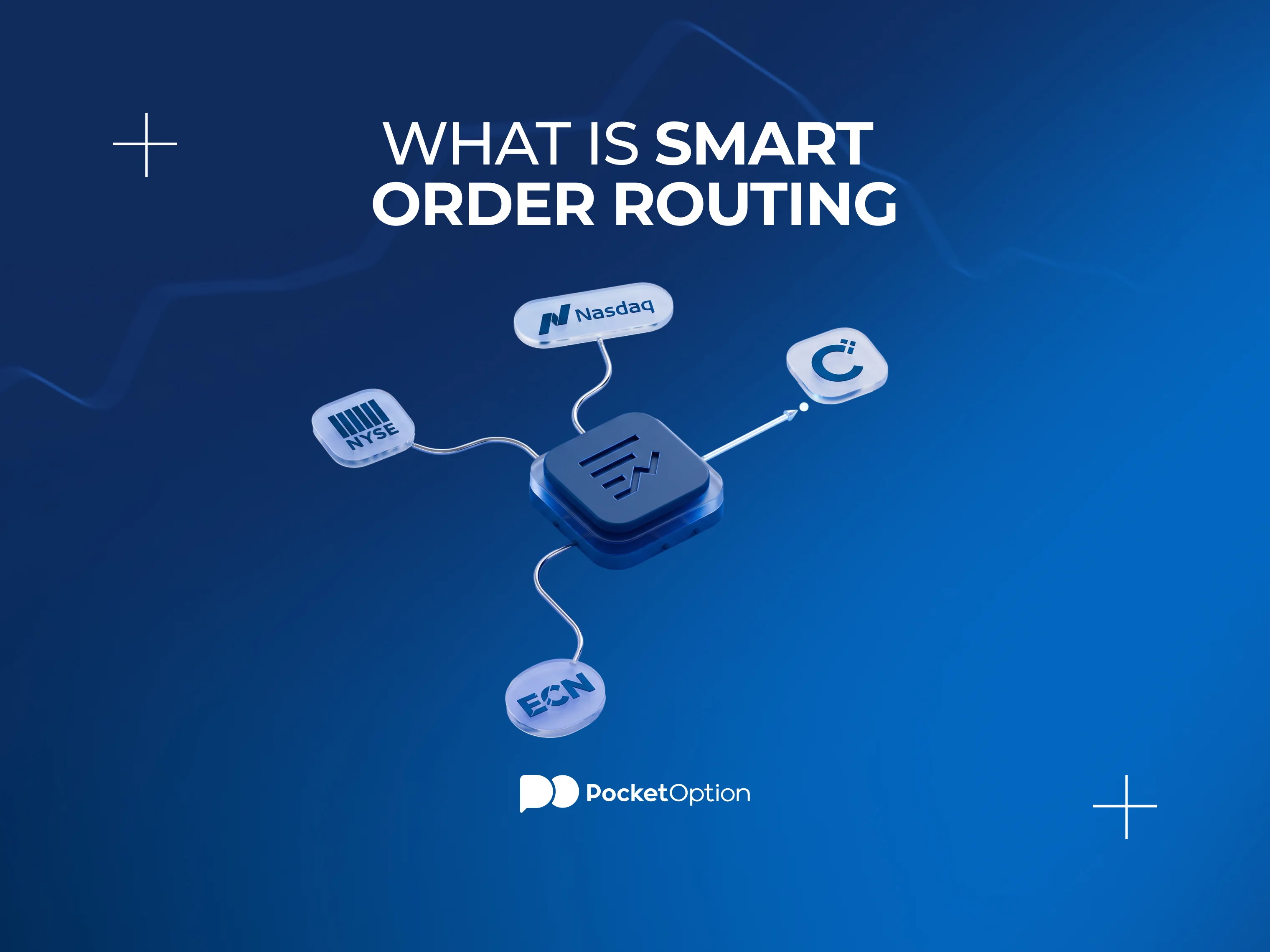
Smart order routing is the automated system, often called a smart order router, that scans multiple trading venues and sends an order to whichever one offers the best net execution at that moment. It exists because a single stock or currency pair can trade on dozens of venues at once, each with its own price and available size.

What Is Smart Order Routing: Definition
Smart order routing works behind the scenes of most retail and institutional trading platforms, evaluating price, cost, and available size across every connected venue before an order is sent anywhere.
Rather than routing every order to a single default exchange, a smart order routing system continuously compares conditions across venues in real time and splits or redirects orders as those conditions shift. The goal is straightforward: get the order filled at the best achievable net price, factoring in fees as well as the quoted price itself, without requiring the trader to manually check every venue.
Why Smart Order Routing Exists: Market Fragmentation
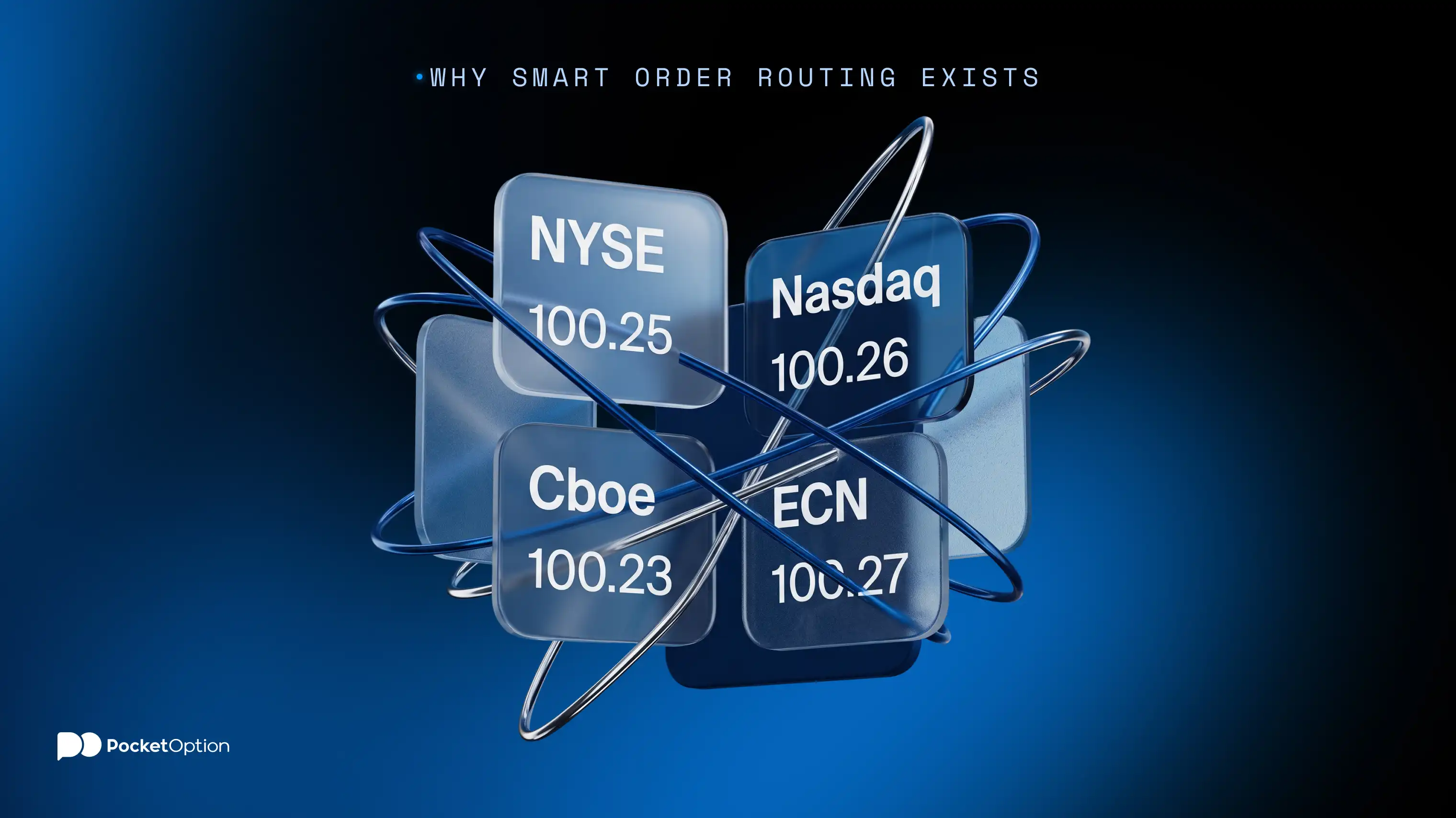
Modern markets are fragmented across many competing exchanges and alternative venues, rather than concentrated on a single exchange the way they once were. A single stock can have live quotes on a dozen or more venues simultaneously, each showing a slightly different price and size.
A human trader working in real time cannot realistically compare order flow across so many venues by hand, which is exactly the gap smart order routing was built to close. Without it, an order sent to just one venue could miss a better price sitting unseen on another.
Key Factors an SOR Evaluates
An order router typically weighs several factors before deciding where to send each order:
Price and net cost: the quoted price at each venue, adjusted for any fee or rebate that applies
Fees and rebates: maker and taker fees vary by venue and can change which quote is actually cheapest
Fill probability: how likely an order is to actually execute at a given venue, a factor covered further in this look at stock liquidity
Latency: how quickly an order reaches a venue and how quickly it gets confirmed, which matters most in fast moving markets
Smart Order Routing vs Execution Algorithms (VWAP, TWAP)
Smart order routing and execution algorithms solve two different problems that often get confused. An order routing system decides where an order should go, choosing between competing venues for a single slice of a trade.
An execution algorithm like VWAP or TWAP decides when and how much to trade, breaking a large order into smaller pieces released over time to reduce the market impact of trading all at once. In practice, the two work together: an execution algorithm decides the size and timing of each slice, and smart order routing decides which venue that slice gets sent to.
Does SOR Guarantee the Best Price
Smart order routing improves the odds of a good execution, but it does not guarantee the single best price available anywhere in the market at that instant. Prices and available size change within fractions of a second, and hidden liquidity on some venues is invisible until an order actually reaches it.
A market order sent through a smart order router will usually get a better result than one sent blindly to a single exchange, but usually better is not the same as always optimal, particularly in fast moving or thinly traded markets.
How Retail Traders Benefit from SOR
Most retail brokers and trading platforms route orders through some version of a smart order routing system automatically, without the trader ever seeing the process happen. This matters because retail traders rarely have the tools or time to manually check prices across a dozen venues before placing a single trade.
The practical benefit is a small but consistent improvement in execution quality across many trades over time, rather than a dramatic difference on any single order. For active traders placing frequent orders, that small consistent edge can add up over the course of a trading year.
See order execution in action.
Try Free DemoConclusion
Smart order routing solves a problem that market fragmentation created: too many venues for a human to compare manually, in far too little time to matter.
An order routing system does not promise a perfect price on every trade, but it consistently narrows the gap between the price a trader gets and the best price genuinely available at that moment, across whichever venues are actually showing liquidity.
Disclaimer: Trading involves significant risk of capital loss and may not be suitable for all investors. Execution quality can vary by venue and market condition, and no routing system eliminates that risk.
See more:Glossary