What Is Profit and Loss and How Do Traders Track P&L?
Every open position generates a number that changes with every tick: the profit and loss figure. Understanding what P&L means, how it is calculated, and the critical difference between realized and unrealized P&L is essential for managing any trading account.

What Is Profit and Loss (P&L): Definition
Profit and loss, abbreviated P&L, is the net financial result of a trade or set of trades. In corporate accounting, the profit and loss statement (income statement) summarises revenues and costs over a period. In trading, P&L is tracked in real time for every position.
The P&L Formula
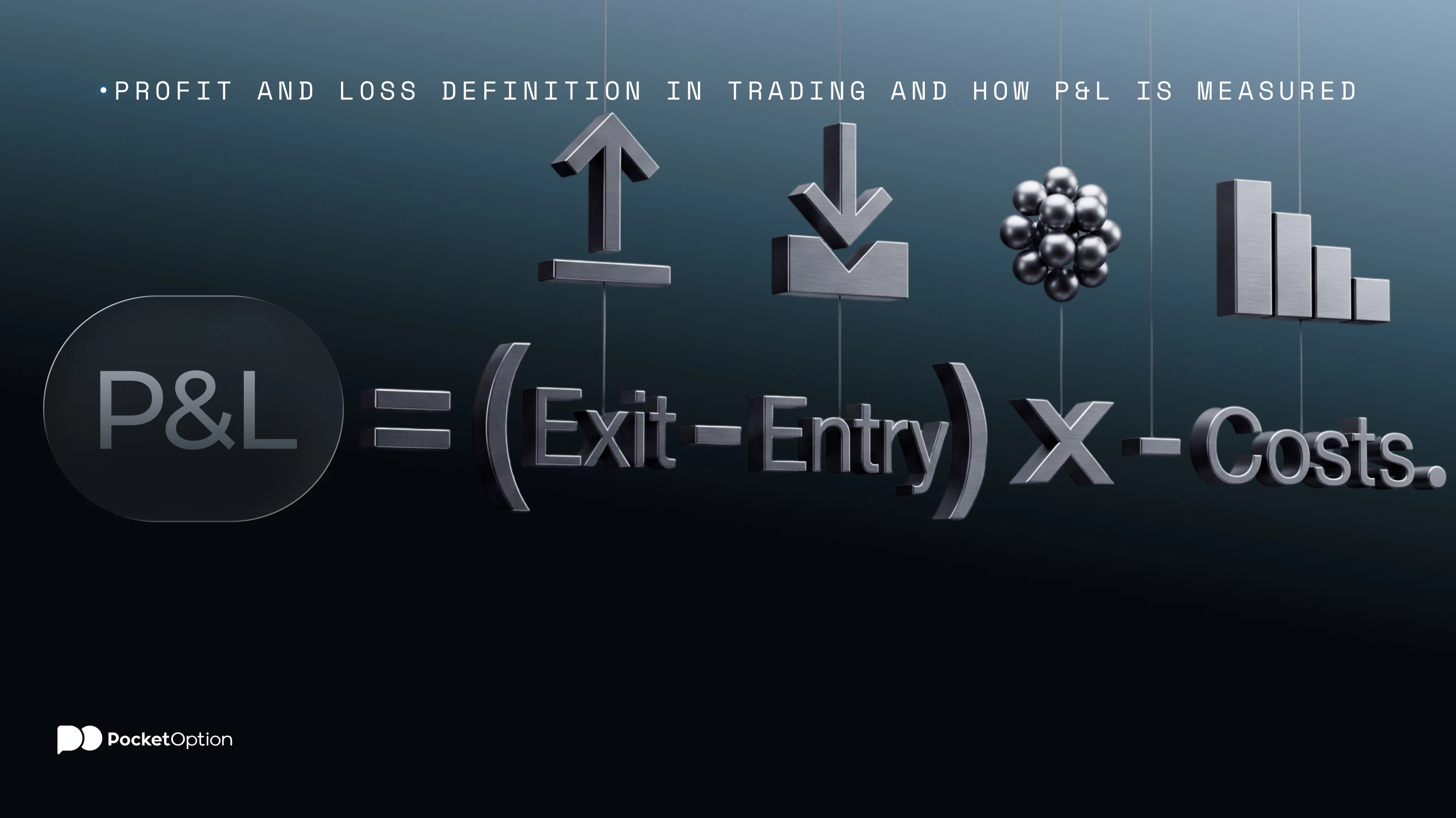
For a single trade, the formula is:
P&L = (Exit Price - Entry Price) x Position Size - Costs
For a long position, a higher exit price produces a profit. For a short position, a lower exit price produces a profit. Costs include spreads, commissions, swap fees, and any other charges. A guide to how equity positions are valued and tracked covers how these components are reflected in equity valuations.
Realized vs Unrealized P&L
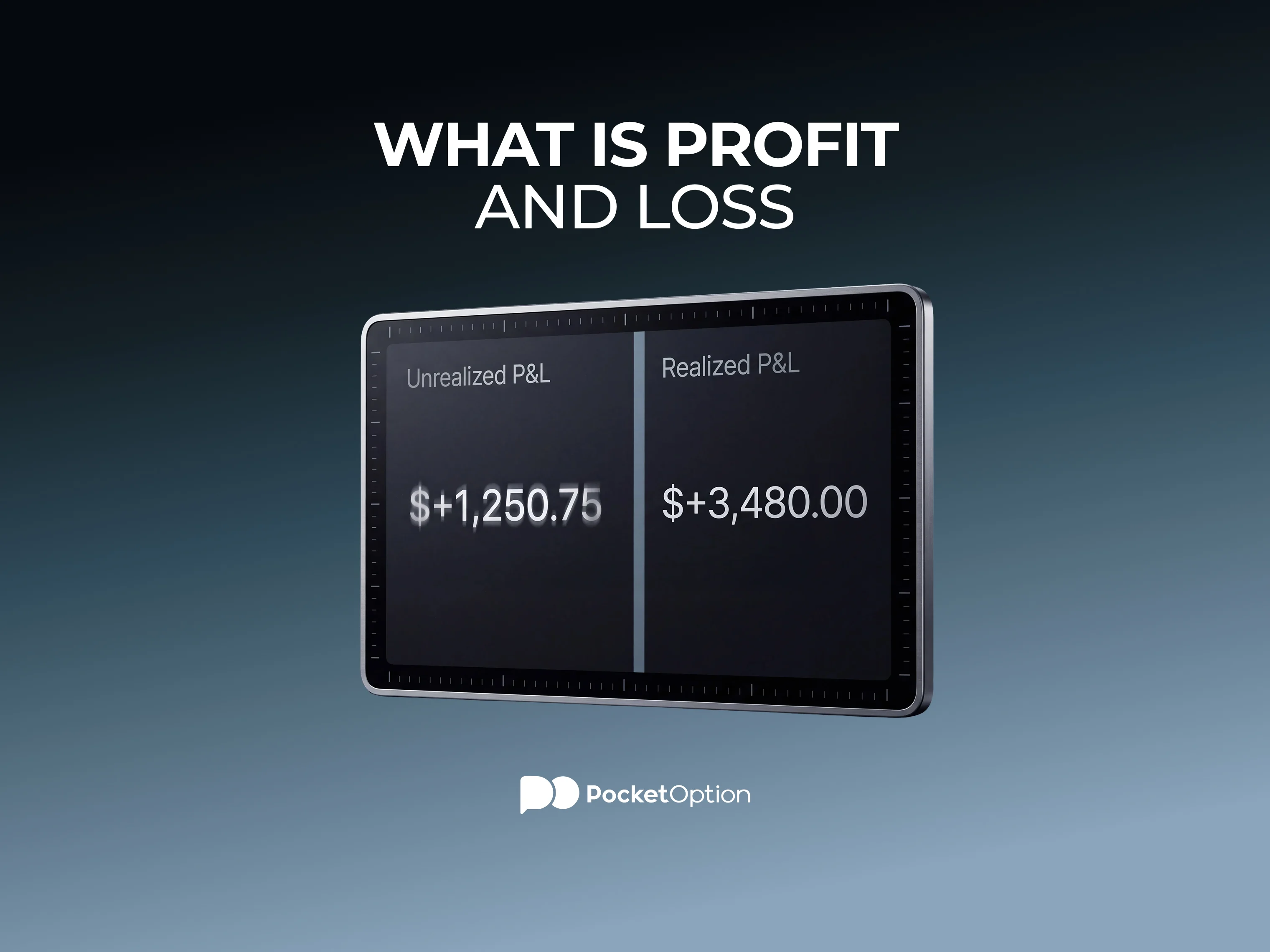
Unrealized P&L (also called floating P&L) is the profit and loss on positions that are still open. It changes with every price movement. Unrealized P&L does not affect the withdrawable balance until the position is closed.
Realized P&L is the result of closed trades. Once a position is exited, the profit or loss is locked in and added to or subtracted from the account balance. Only realized P&L changes the actual equity.
A Worked Example: From Unrealized to Realized
A trader buys 100 shares at $50. The price rises to $55. The unrealized P&L is ($55 - $50) x 100 = $500. The trader has not sold, so this is floating profit. If the price then drops to $52 and the trader sells, the realized P&L is ($52 - $50) x 100 = $200, minus any costs. The $500 was never locked in because the position was not closed at that level.
with all the necessary tools at hand
Open DemoWhy P&L Can Be Negative Even When Price Rises
This commonly confuses beginners. If the position is short, a rising price creates a loss. If costs (spread, swap, commission) exceed the price gain on a long, the net P&L is still negative. Understanding profit and loss requires accounting for direction and all costs. A guide to practical risk management strategies for traders explains how cost awareness fits into a broader risk framework.
Tracking P&L Across Multiple Positions
When multiple positions are open, total P&L is the sum of each position's individual result. Platforms like Pocket Option display both per-position and aggregate P&L in real time. A review of tracking performance on a demo account shows how demo accounts provide the same P&L tracking as live environments. Keeping a journal of realized P&L by strategy, instrument, and time period is one of the most effective ways to identify what is working. Understanding managing positions during volatile conditions helps when P&L swings sharply during news events.
Conclusion
Profit and loss is the net financial result of trading activity. Unrealized P&L reflects open positions; realized P&L reflects closed ones. Only realized P&L changes the account balance. Accurate tracking and regular review of both figures are fundamental to disciplined trading.
in 5 minutes with 0 costs!
Register NowDisclaimer: Trading involves significant risk of capital loss. Past performance does not indicate future results. This article is for educational purposes only and should not be treated as financial advice.
See more:Glossary