What Is OPEC and How Does This Oil Cartel Influence Markets?
Few meetings move the oil market like those of OPEC. The group of oil-exporting countries coordinates how much crude its members pump, and its decisions shape expectations for supply, prices and the markets tied to them.

What Is OPEC
OPEC, the Organization of the Petroleum Exporting Countries, is an intergovernmental group of oil-producing states. It was founded in Baghdad in September 1960 by Iran, Iraq, Kuwait, Saudi Arabia and Venezuela, and has been based in Vienna since 1965. Its stated aim is to coordinate the petroleum policies of its members and keep oil markets stable, and because it coordinates output, it is often described as an oil cartel.
Who Belongs to OPEC and OPEC+
As of October 2026, OPEC formally has 12 members, though only 11 of them still take part in its output decisions: Algeria, the Republic of the Congo, Equatorial Guinea, Gabon, Iran, Iraq, Kuwait, Libya, Nigeria, Saudi Arabia and Venezuela. The twelfth, the United Arab Emirates, a member since 1967, stopped participating in OPEC+ agreements on May 1, 2026, after years of disagreement over its output quota, and announced it was leaving OPEC as well. Under the OPEC Statute a withdrawal takes effect only at the start of the next calendar year, and according to Reuters the UAE's formal membership runs until the end of 2026, which would bring the group down to 11 members from 2027. Angola left in 2024, Ecuador in 2020 and Qatar in 2019.
OPEC+ is a wider alliance formed in 2016 that adds other producers: Azerbaijan, Bahrain, Brunei, Kazakhstan, Malaysia, Mexico, Oman, Russia, Sudan and South Sudan, with Russia the largest of them. Brazil takes part in the alliance's cooperation charter without production targets.
How OPEC Decisions Work
Decisions are taken at the OPEC Conference, where each member has one vote and decisions are normally unanimous. OPEC+ ministers meet regularly to set oil production quotas, the output targets each country agrees to, and a joint committee monitors compliance. A smaller group of OPEC+ members has also announced voluntary cuts or increases, often month by month. The targets are political agreements rather than enforceable contracts, and some members produce above them.
How OPEC Influences Oil Prices
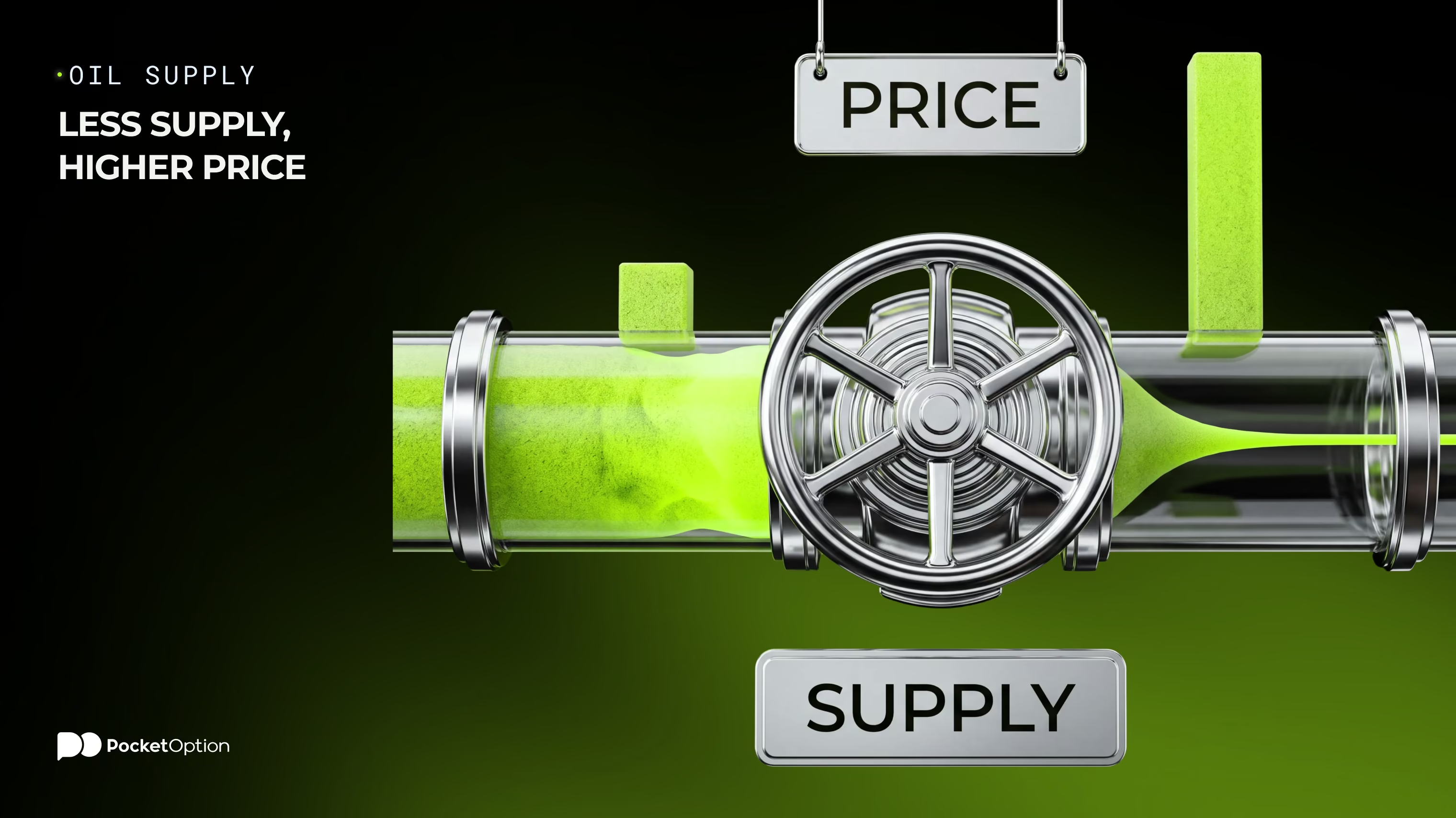
OPEC works through supply expectations. World oil demand is a little over 100 million barrels a day, so a cut of 1 million barrels a day removes about 1% of supply, enough to tighten the market if demand holds. The reaction depends on three things:
Expectations: a cut that traders already expected may barely move prices.
Spare capacity: only members that can quickly raise or lower output give a decision real weight.
Demand: if the economy slows, a cut may only soften a fall in prices.
Oil prices then feed into transport and energy costs, which is why traders watch CPI data after large moves in crude.
Is OPEC Really a Cartel?
Views differ. Those who use the cartel label point to coordinated oil production quotas meant to influence prices. Critics argue that the group's grip is weaker than it looks: members often exceed their targets, compliance tends to match what countries would do anyway, and US shale and other non-OPEC supply limit how far prices can be pushed. Both sides accept that OPEC can shift expectations, and neither claims it sets prices alone.
Key Moments in OPEC History
Year | Event |
|---|---|
1960 | OPEC is founded in Baghdad. |
1973 to 1974 | An embargo by Arab oil producers helps quadruple oil prices. |
1986 | Higher Saudi output contributes to a price collapse. |
2014 to 2016 | OPEC keeps pumping to defend market share, and Brent falls from above $100 to below $30. |
2016 | OPEC+ is formed through the Declaration of Cooperation. |
2020 | OPEC+ agrees a record cut of 9.7 million barrels a day during the pandemic. |
2026 | The UAE quits OPEC+ agreements and announces its exit from OPEC, with its formal membership running to the end of the year, while disruption to shipping through the Strait of Hormuz limits members' ability to raise output. |
The price swings in this table are usually measured on Brent crude, the main international benchmark.
How OPEC News Affects Markets
OPEC meetings and monthly reports can move several markets at once. Crude benchmarks react first, and the basics of trading WTI crude oil explain how that contract is quoted. Energy company shares tend to follow, as do the currencies of oil exporters such as the Canadian dollar and the Norwegian krone. The reaction is often sharpest when a decision surprises: a larger cut than expected, a delay or signs of disagreement among members.
Conclusion
OPEC is a group of oil-exporting countries, 12 on paper in 2026 and 11 once the UAE's exit takes formal effect, working with other producers in OPEC+ to coordinate output and influence supply and prices. Follow its meetings for what changes against expectations, check how much spare capacity stands behind a decision, watch demand as closely as supply, and treat OPEC news as one driver of oil prices rather than the only one.
Test oil trades without real money.
Try DemoDisclaimer: This article is for informational purposes only and does not constitute financial advice. Trading involves risk, and losses can exceed initial deposits.
See more:Glossary