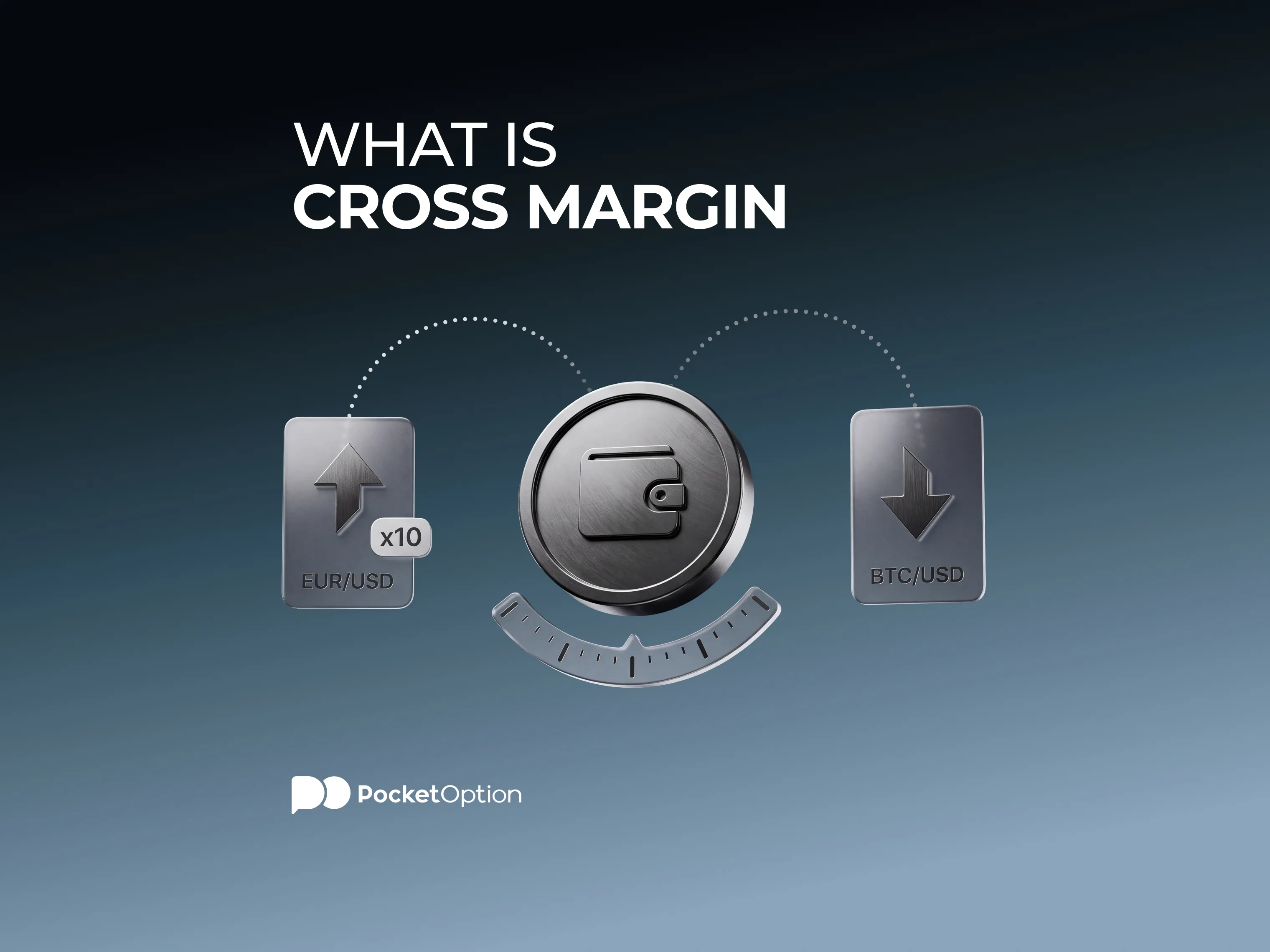
What Is Cross Margin and How Does It Work in Leveraged Trading?
Cross margin is a setting that pools the collateral behind every open position into one shared balance. Instead of each trade standing on its own funds, the whole account absorbs gains and losses together. That pooling can rescue a losing position, but it can also let one bad trade draw down funds meant for the rest of the account.

What Is Cross Margin: Definition
In leveraged trading, a broker holds collateral against the risk on every open position. Under cross margin, that collateral is not separated by trade. The account's full balance, plus unrealized profit on other open positions, stands behind each trade at once. A position that needs extra room to survive a swing can draw on funds tied up elsewhere in the account, as long as the margin requirements a broker sets are still met across the total balance.
How Cross Margin Pools Collateral
A cross margin account treats several inputs as one shared pool rather than several separate wallets:
Cash sitting free in the account, not tied to any open position
Unrealized profit on positions that are currently in the black
Unused margin from positions that need less collateral than they were allocated
Any bonus or credit balance the broker counts toward total equity
Whenever the platform checks whether a position can stay open, it looks at this combined figure rather than the funds set aside for that single trade alone.
A Worked Example: How Cross Margin Prevents a Single Liquidation

Picture an account holding $10,000 in equity across two open positions. Position A loses $3,000, more than its own allocated collateral can absorb on its own. Position B is up $4,000 at the same time. Under isolated margin, Position A closes once its own funds run out. Under cross margin, the account checks combined equity instead, counts the unrealized profit on Position B, and keeps Position A open. The loss has not disappeared. It has been covered by gains sitting elsewhere in the account, and forced liquidation of a leveraged position was avoided for now.
The Tradeoff: Account-Wide Contagion Risk
The same pooling that saved Position A removes a firebreak. Under isolated margin, a bad trade can only lose what was allocated to it. Under cross margin, a large enough loss on one position can eat into the collateral that other, otherwise healthy, positions depend on. In a fast moving market, several positions can be pushed toward a margin call together, and choosing between margin modes becomes less about any single trade and more about how much of the account a trader is willing to expose at once.
Cross Margin vs Isolated Margin
Aspect | Cross Margin | Isolated Margin |
|---|---|---|
Collateral | Shared across the whole account | Fixed to one position only |
Liquidation risk | Lower per position, higher account wide | Higher per position, contained |
Capital efficiency | Higher, unused margin is reused | Lower, funds sit locked per trade |
Best suited for | Correlated or hedged positions | Independent, higher risk trades |
The choice comes down to where a trader wants a loss to be contained: to one position, or shared across the account as a whole.
Test margin strategies before it counts.
Start Free DemoConclusion
Cross margin turns a group of separate trades into one connected account. That connection can absorb a loss that would otherwise close a position, which is the appeal. It also means a single bad trade is never fully isolated from the rest of the balance, which is the cost. Neither mode is safer in every case. The right setting depends on how much a trader wants one position's risk to spread to the rest of the account.
Disclaimer: CFDs and other leveraged products carry a high risk of losing money rapidly. Consider whether you understand how this product works before trading.
See more:Glossary