What Is Convexity and How Does It Measure Bond Price Sensitivity?
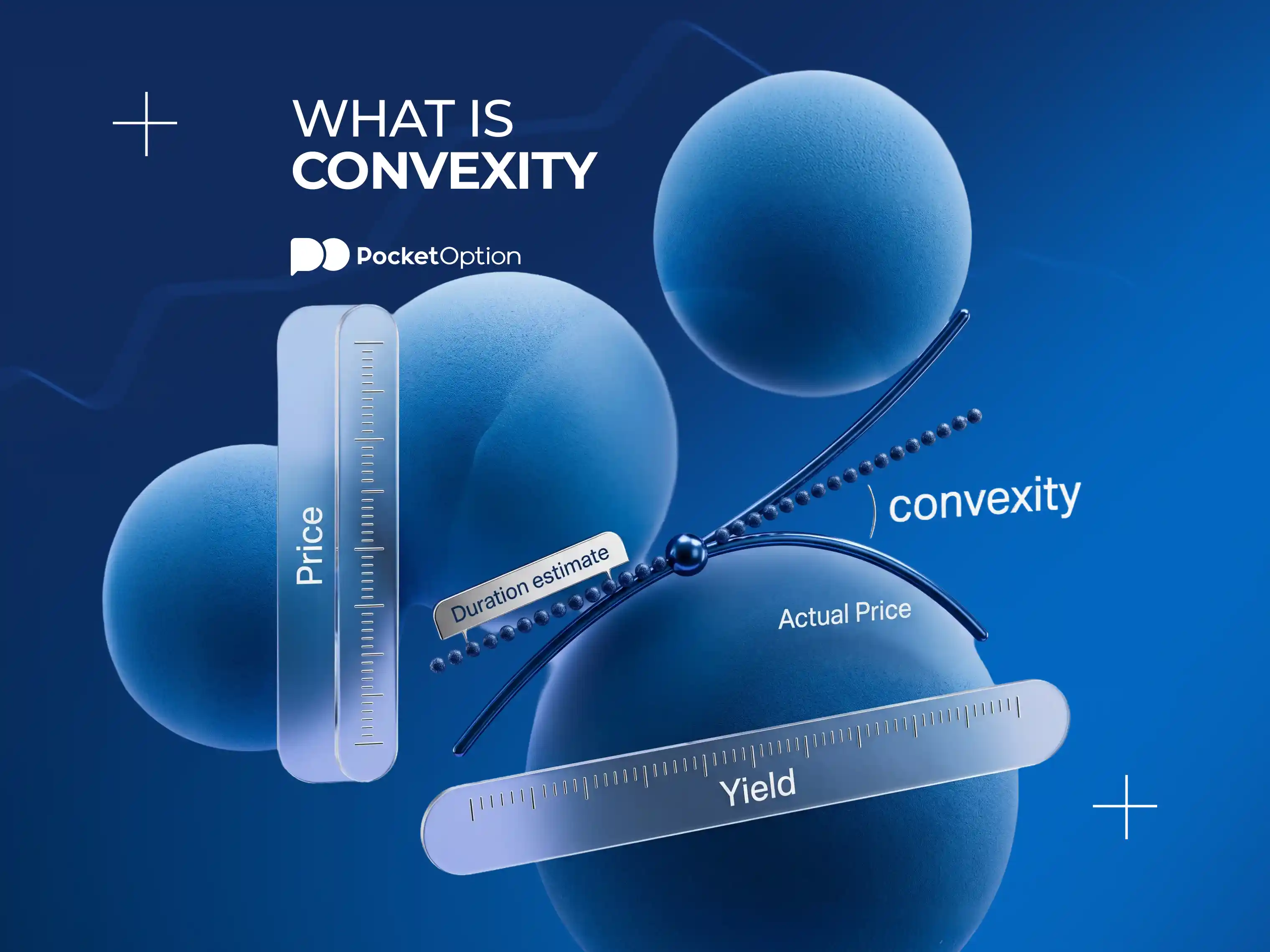
Convexity is a measure of how much a bond's price sensitivity itself changes as yields move. Duration alone assumes that sensitivity stays constant, which works for small yield changes but breaks down for larger ones. Convexity fills that gap, and it explains why bond prices trace a curve rather than a straight line.

What Is Convexity: Definition
A bond's price and its yield move in opposite directions, but not at a constant rate, a fact that shapes most strategies used in the bond market. Duration estimates the slope of that relationship at a single point, as if it were a straight line. Convexity measures the curvature around that point, the part of a price move duration's straight line estimate cannot see. That is the plain convexity meaning behind the term. Bond convexity is one of the core inputs in fixed income analysis, and it is the natural next question once an investor has asked what is convexity in the first place.
How Convexity Complements Duration
Duration on its own assumes a bond's price falls by a fixed percentage for every percentage point rise in yield, and rises by the same percentage in reverse. That assumption holds well for small moves. For larger moves, actual prices fall by slightly less than duration predicts when yields rise, and rise by slightly more when yields fall. Convexity is the correction term that captures this gap. Adding it to a modified duration estimate produces a second order approximation that tracks the true price curve far more closely than duration alone.
Positive vs Negative Convexity
Feature | Positive Convexity | Negative Convexity |
|---|---|---|
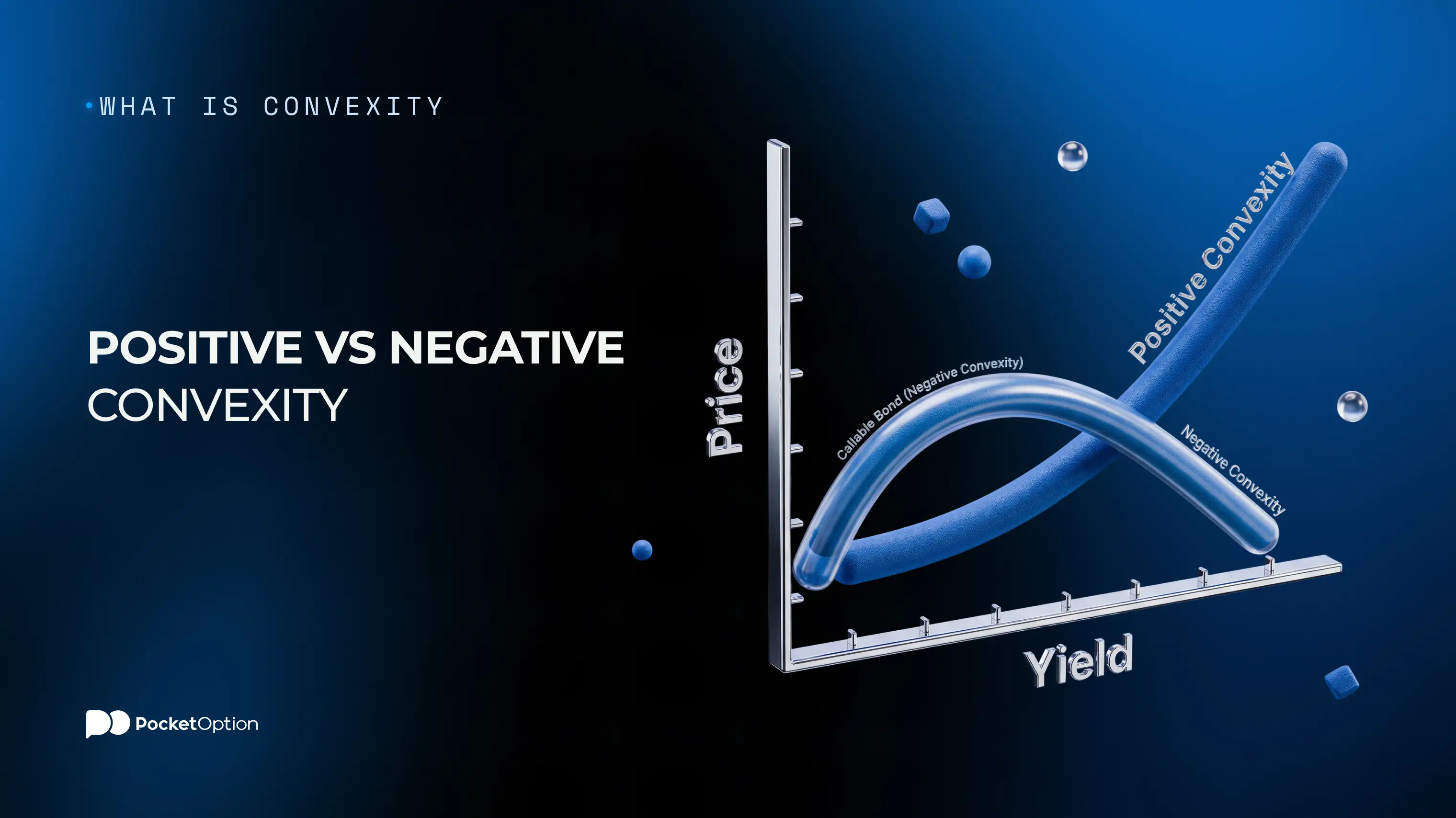
As yields fall | Price gains accelerate | Price gains slow or reverse |
As yields rise | Price losses slow down | Price losses accelerate |
Typical bonds | Plain vanilla government and investment grade bonds | Callable bonds, mortgage backed securities |
Holder experience | Curvature works in the holder's favor | Curvature works against the holder |
Most conventional bonds carry positive convexity. Callable bonds and mortgage backed securities often show negative convexity instead, because the issuer's option to call the bond, or a homeowner's option to refinance, caps how much the price can rise once yields fall.
Factors That Influence a Bond's Convexity
Three features of a bond largely determine how much convexity it carries:
Time to maturity: longer dated bonds generally carry higher convexity
Coupon rate: lower and zero coupon bonds carry higher convexity than high coupon bonds of the same maturity
Embedded features: call options and prepayment options can flip convexity from positive to negative
A portfolio manager weighing these factors is really deciding how much curvature to accept in exchange for yield, since higher convexity often comes bundled with a lower coupon.
Why Convexity Matters for Investors
Two bonds can share the same duration and still behave differently once rates move sharply, simply because they carry different convexity. Ignoring that difference understates the upside from falling rates and the downside from rising rates on a negative convexity bond. For anyone doing quantitative analysis of fixed income markets, convexity is not optional. It is the difference between a price estimate that holds up in calm markets and one that holds up once rates actually move.
Conclusion
Convexity does not replace duration, it refines it. Duration estimates how a bond's price will react to a change in yield, and convexity corrects that estimate for the fact that the reaction itself changes as yields move further. A bond with high positive convexity rewards a holder more than duration alone would suggest when rates fall, and protects them more when rates rise. That asymmetry has a cost, usually a lower coupon, which is why convexity is a factor to weigh rather than a feature to chase blindly.
See price sensitivity play out live.
Create Free AccountDisclaimer: Trading involves significant risk of capital loss and may not be suitable for all investors. Past performance does not guarantee future results.
See more:Glossary