What Is Buyback of Shares and How Do Companies Repurchase Stock?
When a company uses its own cash to purchase its shares from the open market, the total number of shares outstanding falls. That single action ripples through earnings per share, ownership concentration, and stock price. This glossary entry explains what a buyback of shares is, the methods companies use, and how to judge whether it genuinely benefits shareholders.

What Is a Buyback of Shares: Definition
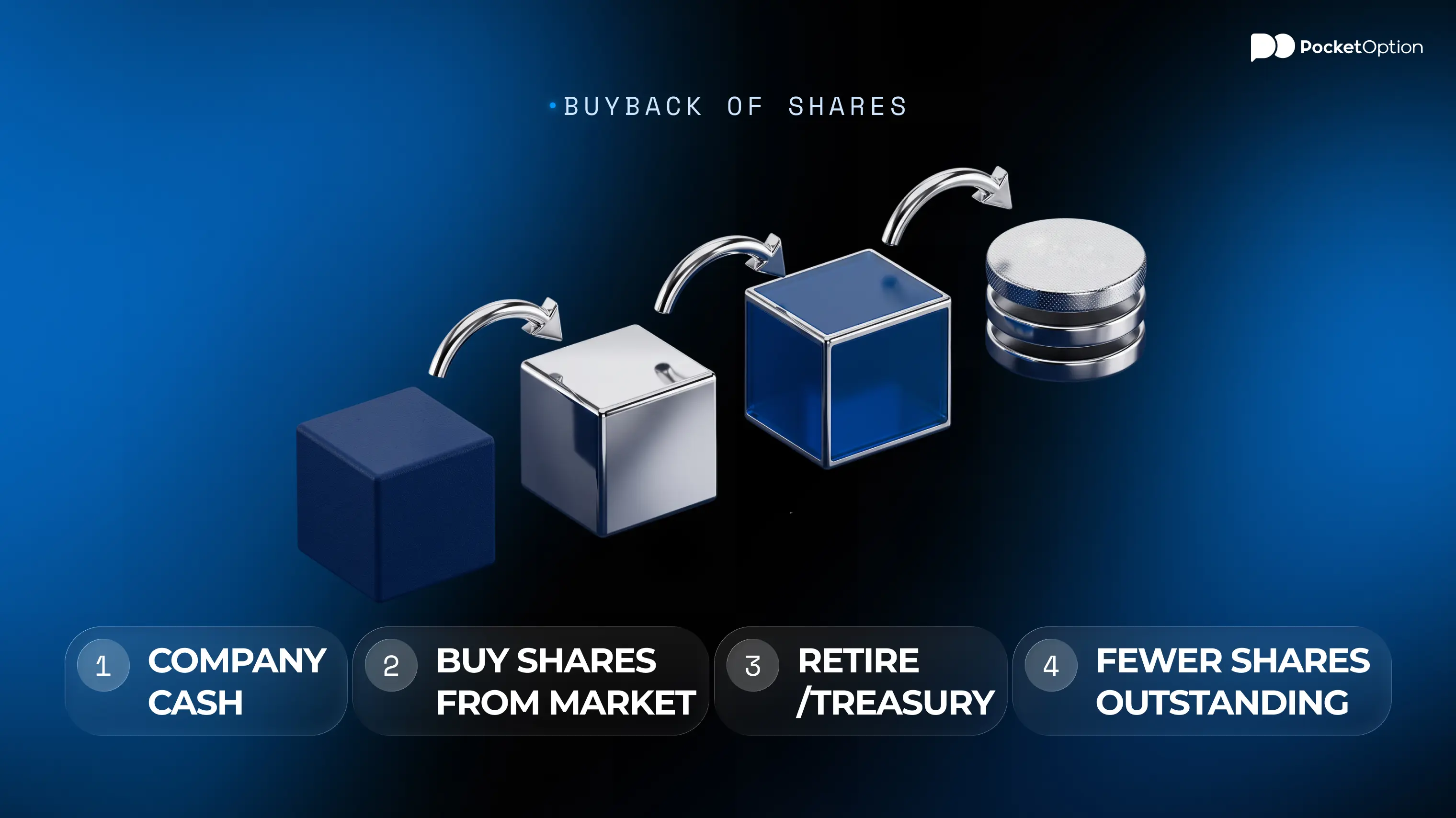
A buyback of shares, also called a stock buyback or share buyback, occurs when a company purchases its own outstanding shares from the market. The repurchased shares are either retired or held as treasury stock, reducing the number available to public investors. Understanding equity metrics used to evaluate stocks provides context on how this metric interacts with broader equity valuation.
How Buybacks Affect EPS and Buyback Yield
When shares are retired, the same net income is divided across fewer shares, raising EPS mechanically. Buyback yield measures the percentage of market capitalisation returned to shareholders through repurchases over a given period. Combined with dividend yield, it gives a fuller picture of total return.
Why Companies Repurchase Their Own Stock
The most common reasons include:
Returning surplus cash when the company sees no better use for the capital
Signalling management's belief that the stock is undervalued at the current price
Offsetting dilution from employee stock option programmes
Improving financial ratios (EPS, return on equity) by shrinking the share count
Providing a tax-efficient alternative to dividends in jurisdictions with lower capital gains tax rates
A comparison with dividend-based returns is covered in how dividend policies affect stock valuations.
Main Buyback Methods
Companies typically use one of four approaches:
Open-market repurchase: the company buys shares on the public exchange over time
Fixed-price tender offer: shareholders are invited to sell at a premium within a deadline
Dutch auction tender: the company specifies a price range; shareholders bid within it, and the lowest clearing price is used
Direct negotiation: privately agreed purchase from a specific large shareholder
on Pocket Option Quick Trading mode
Get StartedHow to Judge Whether a Buyback Benefits Shareholders
Not every stock buyback creates value. A repurchase at inflated prices destroys capital. Traders and investors can apply a few practical filters:
Is the company buying back stock below intrinsic value, or is it repurchasing at all-time highs to boost EPS optically?
Is the buyback funded by operating cash flow, or by taking on debt?
Is the share count actually declining over time, or are new shares issued through options at the same rate?
A deeper look at fundamental analysis of company financials helps evaluate whether the company's cash generation supports the repurchase programme sustainably. Strategies for trading around price-moving corporate events can also help traders position around buyback announcements.
Conclusion
A buyback of shares reduces outstanding shares, raising EPS and concentrating ownership. Whether a share buyback benefits shareholders depends on the price paid, the funding source, and whether it genuinely returns value rather than masking flat earnings.
to trade shares and other markets
Open DemoDisclaimer: Trading involves significant risk of capital loss. Past performance does not indicate future results. This article is for educational purposes only and should not be treated as financial advice.
See more:Glossary