What Is an Asset Class? Definition and Main Types
Group things that behave alike and you can say something useful about the group. That is all a class is, really. The interesting part is what happens to the instruments that refuse to sit neatly inside any one of them.

What Is an Asset Class?
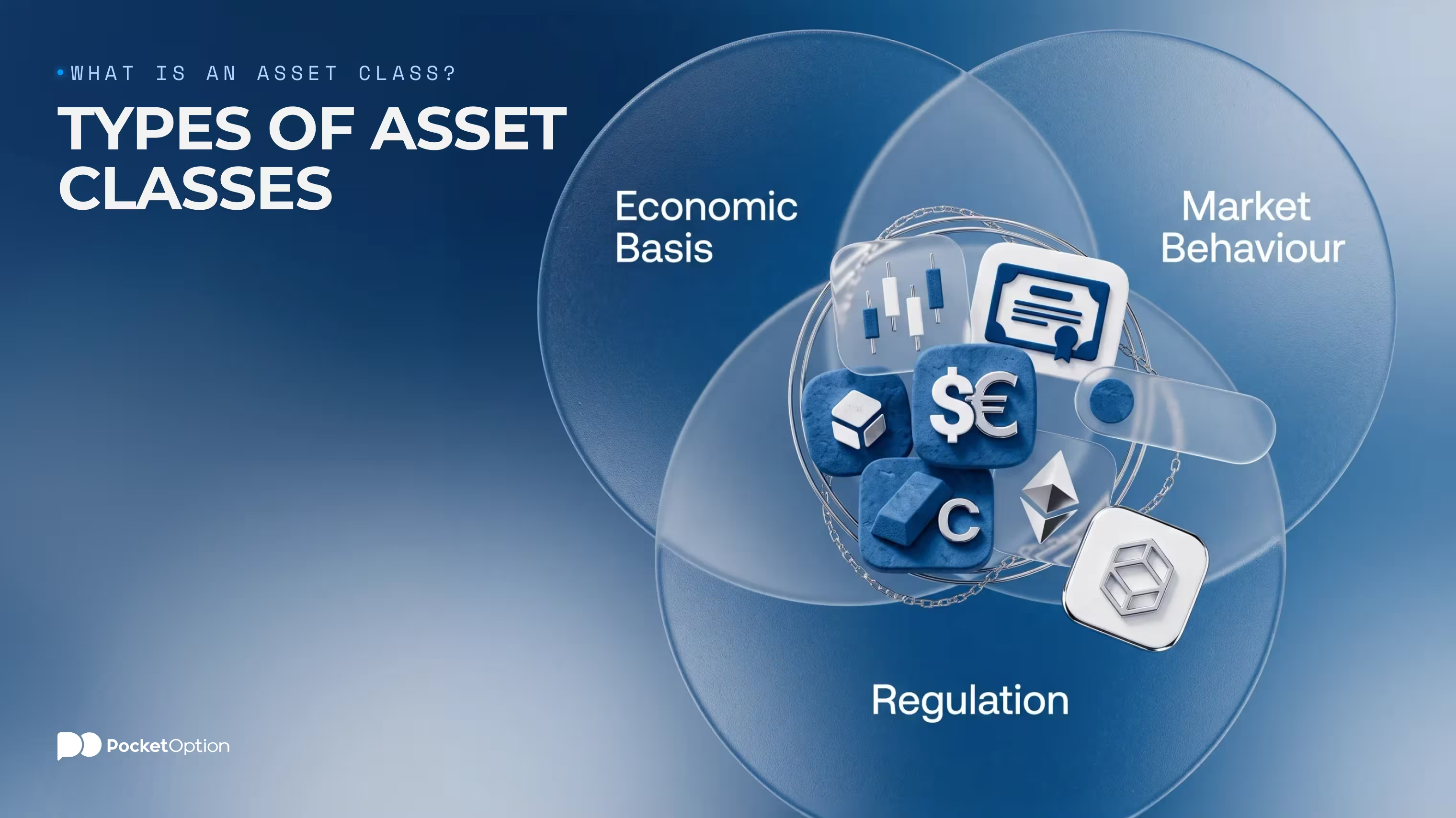
The asset class definition rests on three things holding at the same time. Instruments share an economic basis, they tend to behave similarly in the market, and they fall under broadly the same rules.
Miss one of the three and the grouping gets shaky. Two instruments can move together for a year and still belong apart, because the reason they moved happened to be coincidence rather than anything structural.
Classification is not fixed, either. It varies by market, by jurisdiction, and by whoever is doing the analysis. A regulator, an index provider and a risk desk can all draw the lines differently and all be right for their own purposes.
How Financial Instruments Are Grouped
Financial instruments explained by class rather than by name is the usual approach, mostly because names multiply and classes do not.
Economic basis. What actually generates the return. Company earnings, interest payments, a physical good, or something else entirely.
Market behaviour. How the thing responds to rates, growth, inflation and stress.
Regulatory treatment. Which rules apply and who oversees them.
The commonly used types of asset classes number around six, though the count shifts depending on who is counting: stocks, bonds, cash and cash equivalents, currencies, commodities, cryptocurrencies. Some frameworks add real estate and private assets. Others fold currencies into a wider alternatives bucket. What each group gets called matters less than knowing why the line was drawn where it was. How a mix of them gets weighted is a separate question about allocation and is not covered here.
Stocks as an Asset Class
Stocks are ownership. Buy one and you hold a slice of a company, along with whatever that company earns and whatever somebody else will pay for the slice later on.
Returns arrive from two directions, price appreciation and dividends. Stocks as an asset class tend to be the most volatile of the traditional three, and historically they have been the growth engine in most long horizon portfolios. Volatility is the price of that rather than a defect in it.
Bonds as an Asset Class
Bonds are lending. Capital gets handed over, the issuer pays interest, and the principal comes back at maturity assuming the issuer is still standing when it arrives.
Bonds as an asset class behave very differently from equities. Prices move inversely to interest rates, credit quality drives much of the remainder, and the return is largely known at the point of purchase. Government bonds and corporate bonds sit inside the same class and carry quite different risks, which is a decent illustration of how much room a single class can contain.
Cash and Cash Equivalents
Cash is currency held in accounts. Cash equivalents are short term instruments that convert back to cash quickly and with very little price risk, things like treasury bills, money market funds and short dated commercial paper.
The defining features are liquidity and a stable nominal value. Purchasing power is another matter. Cash holds its number and loses ground to inflation, which is why it tends to be treated as a parking place rather than as a holding.
Currencies as an Asset Class
Currencies are traded in pairs, always. A position in one is a position against another, so there is no such thing as simply holding a view on a single currency and expressing it in the market.
Returns come from exchange rate movement and from the interest rate differential between the two sides. Central bank policy, trade balances and rate expectations do most of the driving, which makes the currency exchange market run on a different logic from equity markets. Whether currencies constitute a class in their own right is disputed, since some frameworks treat them as an exposure rather than as an asset.
Commodities as an Asset Class
Commodities are physical goods. Energy, metals, agricultural products, each standardised so that one unit is interchangeable with the next.
They pay nothing. No dividend, no coupon, and storage costs money, so the whole return has to come out of price. Supply and demand do the driving, and both can be upset by weather, geopolitics or one disrupted shipping route. Most exposure gets taken through futures or commodity CFDs rather than by taking delivery of anything.
Cryptocurrencies as an Asset Class
Cryptocurrencies are the newest entry on the list and the most contested one.
The argument for treating them as their own class is that they share an economic basis in blockchain networks, behave distinctly from everything else at times, and increasingly sit under rules written specifically for them. The argument against is that the behaviour has been inconsistent, correlations with equities have shifted around considerably, and regulatory treatment still differs sharply between jurisdictions. Both arguments have something in them. Cryptocurrencies as tradable assets covers the mechanics separately.
Where Do ETFs Fit?
This is the one that gets misfiled most often, and the short answer is that an ETF is not an asset class at all.
An ETF is a wrapper. A fund that trades on an exchange the way a share does, holding something else inside it. What it holds is what determines the exposure:
An equity ETF holds stocks, so the exposure is equity.
A bond ETF holds bonds. Fixed income exposure, in a wrapper that happens to trade intraday.
A commodity ETF may hold the physical good, or futures, or neither, and the difference turns up in how closely it tracks.
A multi asset ETF holds several classes at once and cannot be filed under any single one of them.
Treating ETFs as a class of their own produces odd conclusions. It implies two funds are alike because they share a structure, when one holds government bonds and the other holds small cap equities. The wrapper is a delivery mechanism. Look through it to the holdings and the class becomes obvious again.
Forex, stocks, commodities, crypto.
Get StartedConclusion
Two ETFs, same exchange, same ticker format, same intraday pricing, same wrapper. One holds short dated treasuries and the other holds emerging market equities. Nothing they have in common tells you anything useful about either of them. Which is exactly what makes an asset class a property of the holdings rather than of the instrument they were bought through.
Disclaimer: This article is for informational purposes only and does not constitute financial advice. All investing carries risk, including the possible loss of capital.
See more:Glossary