What Is a Sidechain and How Do Sidechains Connect to Main Blockchains?
A blockchain sidechain is a separate network that runs alongside a main blockchain and allows assets to move between the two. Understanding what is sidechain architecture helps traders and developers evaluate the trade-offs between speed, cost, and security when interacting with different networks.

What Is a Sidechain: Definition
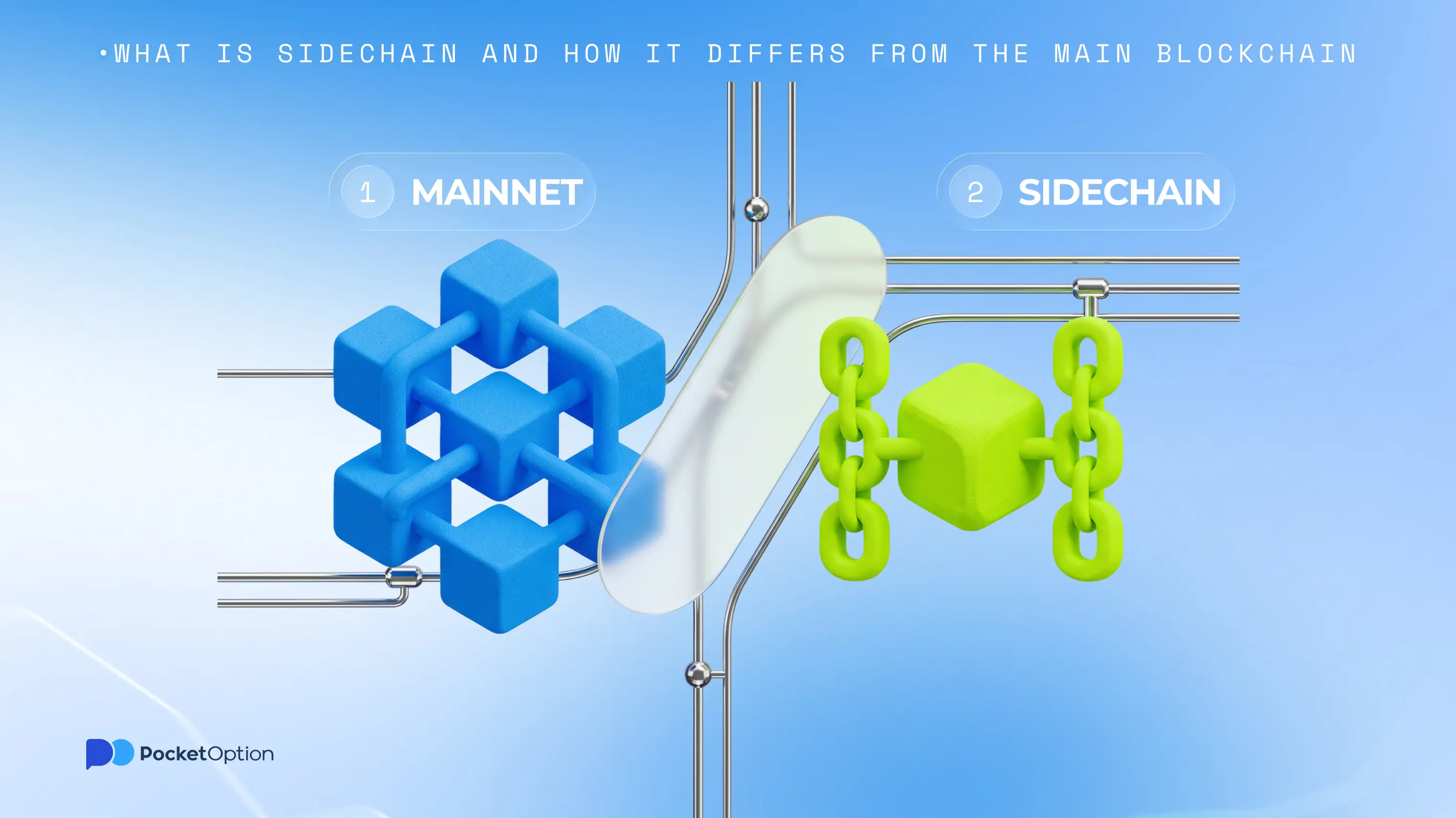
A sidechain is an independent blockchain running in parallel with a parent chain (mainnet). It has its own consensus mechanism, block production, and validators. Assets move between the two through a bridge called a two-way peg. The sidechain processes transactions independently, offering faster throughput and lower fees.
Sidechain vs Layer 2 Rollup
The terms are sometimes confused. A Layer 2 rollup (such as Optimism or Arbitrum) settles transaction data on the mainnet and derives its security from it. ZK-rollups publish validity proofs; optimistic rollups publish transaction results and rely on fraud proofs if challenged. In both cases, the rollup's security is anchored to the mainnet. A blockchain sidechain, by contrast, maintains its own security through its own validator set. If those validators fail, the mainnet cannot intervene. Sidechains gain independence but sacrifice inherited security.
How the Two-Way Peg Connects a Sidechain to the Mainnet
The two-way peg is the bridge that allows assets to move between chains. The process typically works as follows:
A user locks tokens in a smart contract on the mainnet
The bridge protocol verifies the lock and mints equivalent tokens on the sidechain
The user transacts on the sidechain using the minted tokens
To return, the sidechain tokens are burned, and the original mainnet tokens are unlocked
A guide to how wrapped tokens bridge between networks explains how wrapped tokens follow a similar lock-and-mint pattern. The security of this process depends entirely on the bridge implementation. A look at how blockchain nodes validate transactions covers how nodes on each side validate these transfers.
Real Examples: Polygon PoS, Rootstock, Liquid Network
Polygon PoS runs its own proof-of-stake consensus alongside Ethereum, offering lower fees. Rootstock (RSK) adds smart contract functionality to Bitcoin. Liquid Network, developed by Blockstream, is a Bitcoin sidechain designed for faster settlement and confidential transactions between exchanges and traders.
Ronin, originally built as a sidechain for Axie Infinity, completed its migration to an Ethereum Layer 2 on OP Stack in May 2026 and no longer operates as a sidechain. Its earlier architecture, including the 2022 bridge exploit that cost over $600 million, remains a widely cited example of sidechain-specific risks. A broader look at Ethereum's evolving role in the blockchain ecosystem provides context on how scaling solutions are evolving.
on Pocket Option Demo account
Get StartedBenefits of Using a Sidechain
Lower transaction fees compared to congested mainnet periods
Higher throughput: more transactions per second
Customisable rules, consensus mechanisms, and block times for specific use cases
Reduced load on the mainnet, benefiting the broader ecosystem
Risks: Why Sidechains Don't Inherit Mainnet Security
A blockchain sidechain relies on its own validators. If the set is small or poorly incentivised, the chain is vulnerable. Bridge hacks are another critical risk: the Ronin bridge exploit in 2022 (when Ronin still operated as a sidechain) cost over $600 million after validators' private keys were compromised. A guide to setting up a crypto wallet for cross-chain transfers covers the importance of verifying the network before transferring assets.
risk-free and no initial deposit!
Open DemoConclusion
A sidechain is an independent blockchain connected to a mainnet through a two-way peg. It offers faster, cheaper transactions but does not inherit mainnet security. Understanding what is sidechain architecture and the bridge risks helps evaluate which network to trust.
Risk Disclaimer: Trading and interacting with blockchain networks involve significant risk, including the possibility of losing funds through bridge exploits or validator failures. This article is for educational purposes only and should not be treated as financial advice.
Ver más:Glossary