What Is a Grey Market and How Does Trading Outside Official Exchanges Work?
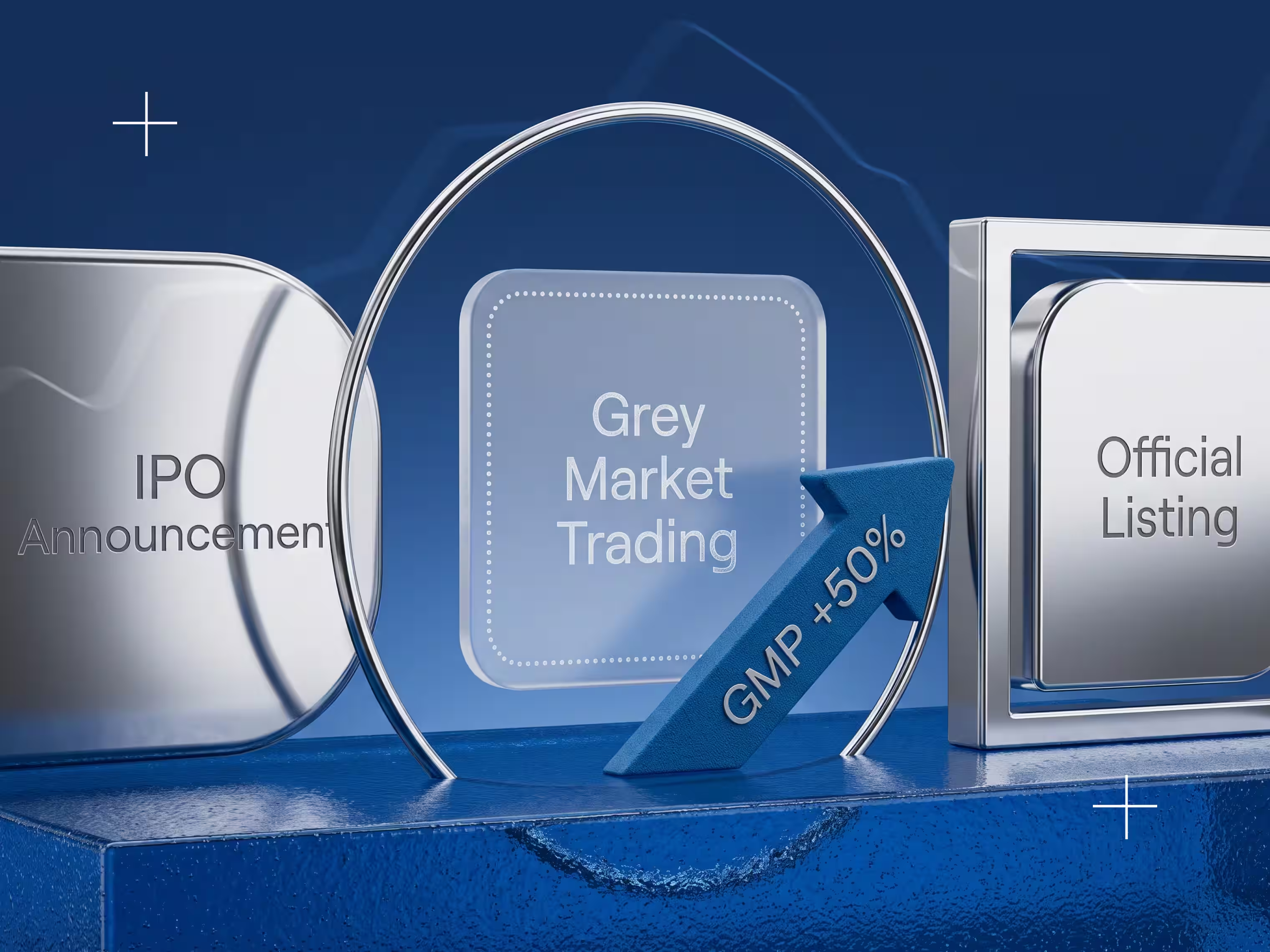
Before a company's shares begin trading on an official exchange, a parallel market sometimes forms where IPO allocations and applications change hands informally. This is the grey market. Understanding what is the grey market, how grey market ipo activity works, and why it carries significant risk is essential for anyone following IPO-related price action.

What Is the Grey Market: Definition
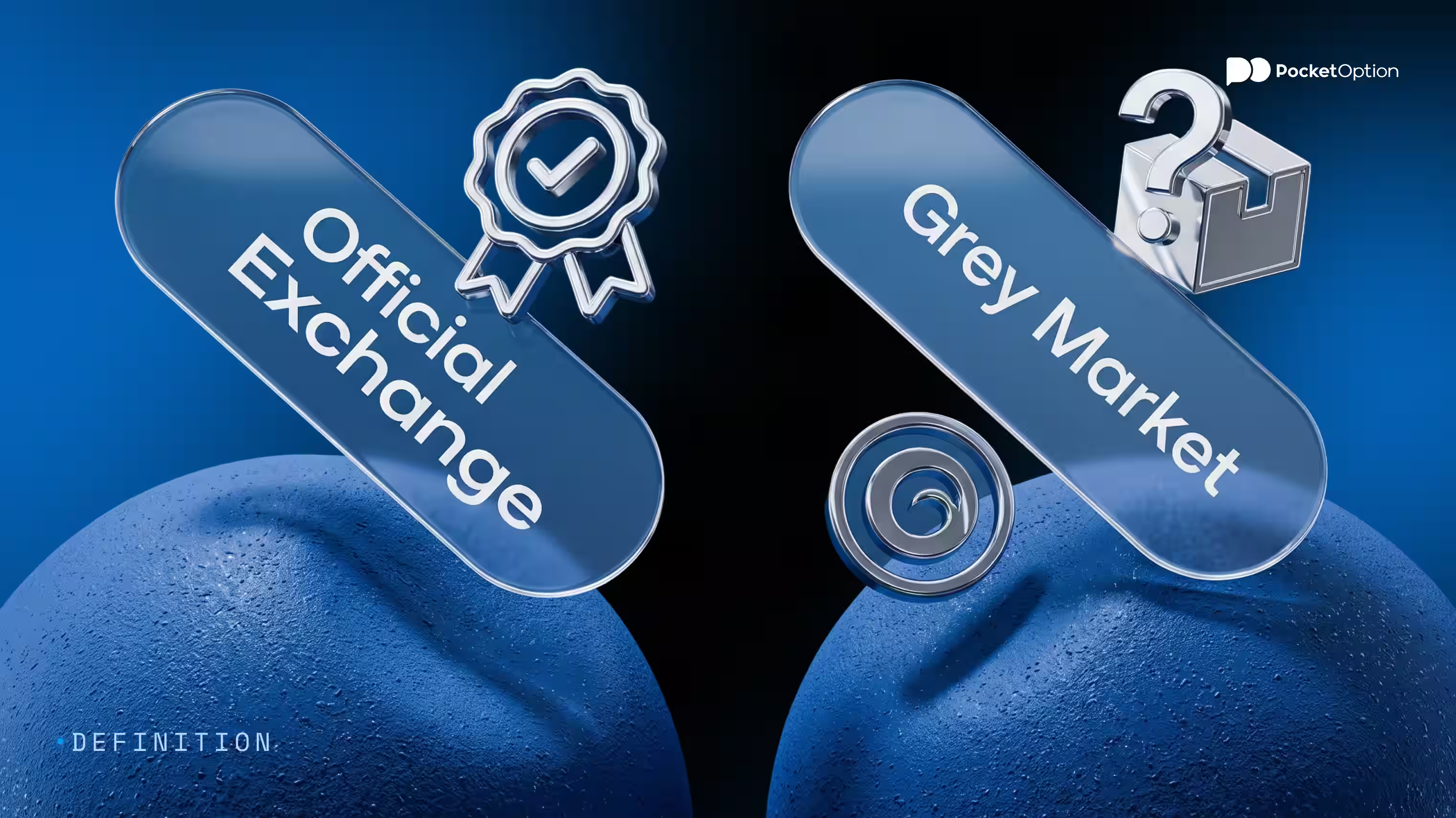
The grey market is an unofficial, unregulated market where securities, typically IPO shares or IPO applications, are bought and sold before the stock is officially listed on an exchange. It operates outside the oversight of regulators and exchanges. Transactions are privately negotiated, often through informal networks, and carry no legal protections. A guide to how stocks are traded on official exchanges explains how official exchange trading differs.
How Grey Market Trading Works
In a typical grey market ipo scenario, an investor who has received an IPO allocation sells their shares (or their application) to a buyer before the listing date. The buyer pays the IPO price plus an agreed premium. If the stock lists above the IPO price, the buyer profits. If it lists below, the buyer absorbs the loss. No formal contract or exchange settlement exists; the deal relies on trust between counterparties.
What Is Grey Market Premium (GMP)
The gray market premium is the amount above the IPO issue price at which shares are trading in the grey market. If an IPO is priced at $20 and the grey market quotes $25, the GMP is $5 or 25%. GMP is widely tracked as a real-time gauge of demand for the IPO before the official listing. A comparison with off-exchange mechanics is covered in how OTC and off-exchange securities trade.
What a Rising or Falling GMP Signals
A rising gray market premium suggests strong demand: more buyers are willing to pay above the issue price. A falling GMP signals weakening appetite or growing concern about overvaluation. Traders use GMP trends as a sentiment indicator, not a price guarantee.
Grey Market vs Official Exchange Trading
The differences are structural:
Regulation: official exchanges are regulated; the grey market is not
Transparency: exchange trades are recorded and publicly visible; grey market trades are private
Settlement: exchanges guarantee settlement through clearing houses; grey market trades depend on counterparty trust
Legal recourse: disputes on exchanges have formal resolution paths; grey market disputes typically do not
Risks of Grey Market Trading
The grey market carries several risks that do not exist on official exchanges:
No regulatory oversight or investor protection
Counterparty risk: the other party may not honour the deal
No transparent price discovery; quotes vary between dealers
GMP can collapse between the trade and the listing date
A broader look at understanding risk in unregulated trading environments covers why unregulated environments amplify risk.
Why GMP Doesn't Guarantee Listing-Day Gains
A high gray market premium reflects current demand, not future performance. Market conditions can shift between the grey market trade and the official listing. Macro events, sector rotations, or simply a cooling of hype can cause a stock to list at or below the IPO price even when GMP was high. Strategies for trading around volatile events explain how event-driven volatility works in practice.
on a free Demo account with real market conditions!
Get StartedConclusion
The grey market is an informal space where IPO shares trade before official listing. The gray market premium serves as a demand indicator but not a price guarantee. Trading in the grey market carries no regulatory protection, no settlement guarantees, and significant counterparty risk. For most traders, monitoring GMP as a sentiment signal is more practical than participating in the grey market directly.
Disclaimer: Trading involves significant risk of capital loss. Past performance does not indicate future results. Grey market trading is unregulated and carries additional counterparty risk. This article is for educational purposes only.
See more:Glossary