What Is a Floating Exchange Rate and How Do Flexible FX Rates Work?
A floating exchange rate is a currency value set by supply and demand in the open market, rather than by a central bank holding it at a fixed level. Most of the world's most heavily traded currencies, including the US dollar, euro, pound, and yen, work this way.

What Is a Floating Exchange Rate: Definition
To define exchange rate regimes broadly, a currency either floats freely against market forces or is pegged to hold a fixed relationship with another currency. A floating exchange rate moves continuously as buyers and sellers trade the currency, with no official target level the central bank is committed to defending.
The float meaning here is specifically about who sets the price: under a floating regime, the market sets it minute by minute, not a government body.
Examples of Floating Currencies
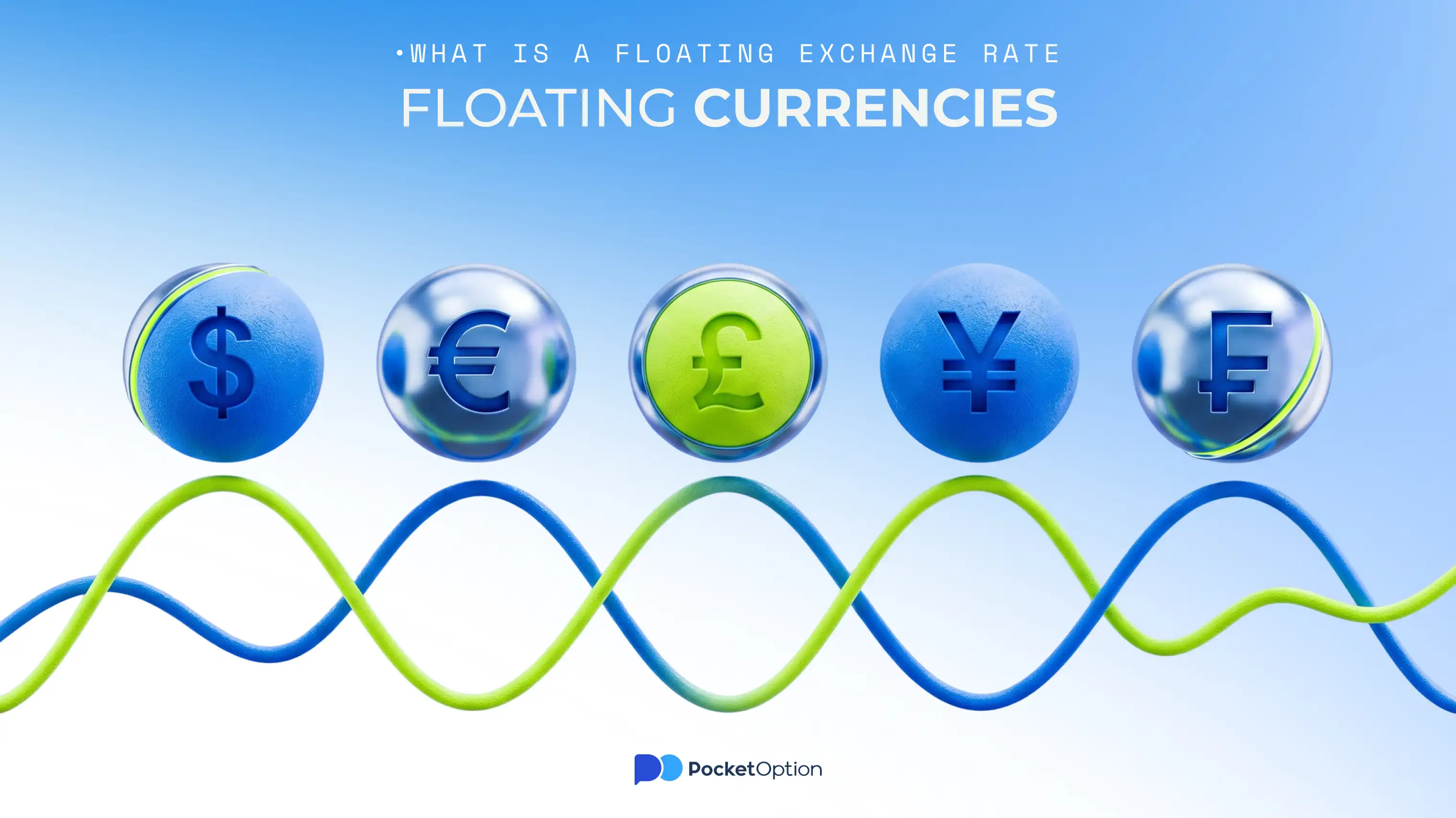
The US dollar, euro, British pound, Japanese yen, and Australian dollar are all floating currencies, meaning their exchange rates move freely based on market conditions rather than a fixed peg. These currencies make up the bulk of daily volume in the major currency pairs traded worldwide.
Not every currency floats freely. Some governments intervene occasionally even within a floating system, while others maintain a hard peg to another currency, which keeps their exchange rate fixed by design rather than by market forces.
What Drives a Floating Currency's Value
Interest rate decisions, inflation data, trade balances, and political stability all influence how a floating currency trades, since each factor changes how attractive that currency looks relative to others. A country raising interest rates, for example, tends to attract more foreign capital seeking a better return, which increases demand for its currency.
These forces play out constantly in pairs like EUR/USD, where economic data from both the Eurozone and the United States can move the exchange rate within minutes of a release.
Floating vs Fixed (Pegged) Exchange Rate
A fixed, or pegged, exchange rate is held at a set level by a central bank willing to buy and sell its own currency to defend that level. A floating exchange rate has no such target, so it can adjust gradually to changing economic conditions instead of building up pressure that eventually forces a sudden, disruptive devaluation.
The trade-off is stability versus flexibility. A peg offers predictability but limits a country's ability to run independent monetary policy, and it also produces the kind of flat, uneventful price action that volatility-focused trading strategies have nothing to work with, unlike a floating rate's constant movement.
Why Most Liquid Forex Pairs Are Floating
The most heavily traded currency pairs in the world are floating almost without exception, since the deep liquidity that makes a pair easy to trade also makes it impractical for any single central bank to hold it at a fixed level. Defending a peg requires constant intervention, which becomes exponentially harder as trading volume grows.
This is part of why floating pairs dominate retail and institutional forex trading alike: enough independent buyers and sellers are active at any moment that no single actor can control the price for long.
How This Volatility Creates Trading Opportunities
The same freedom that makes a floating currency less predictable is what creates trading opportunities in the first place. Prices react constantly to new information, from central bank statements to employment data, movement that simply would not exist under a rate held flat by policy.
A trader watching a floating pair is watching a live, continuous negotiation between buyers and sellers, repriced constantly rather than reset occasionally by a central bank's announcement.
See floating rates move in real time.
Try Free DemoConclusion
A floating exchange rate lets the market, not a central bank, decide what a currency is worth from moment to moment. That constant repricing is exactly why the world's most liquid currencies also tend to be its most actively traded ones, since price movement is what creates an opportunity to trade in the first place.
Disclaimer: Trading involves significant risk of capital loss and may not be suitable for all investors. Currency values can move quickly, and past movement does not guarantee future results.
Xem thêm:Glossary