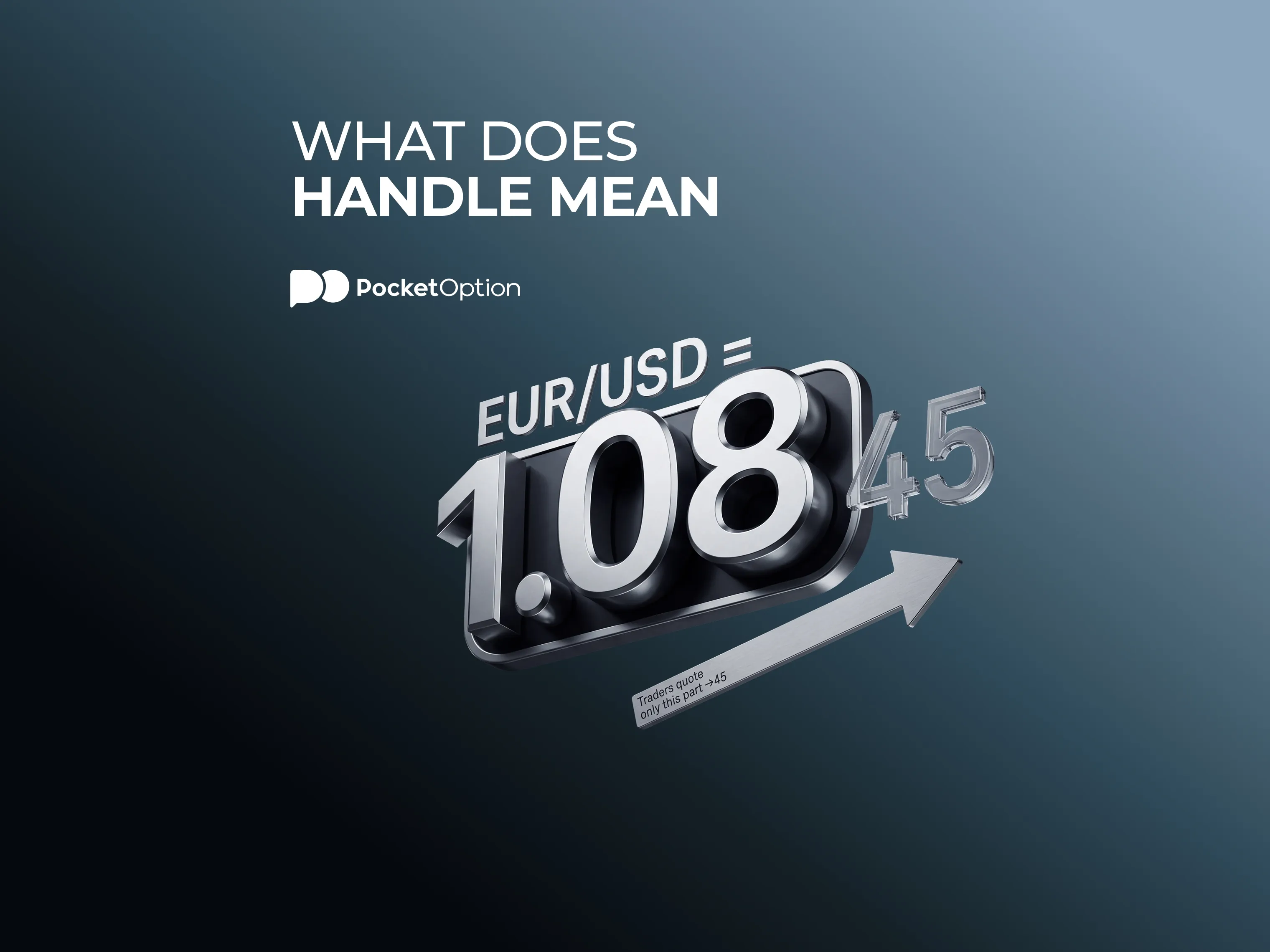
What Does Handle Mean and How Is the Handle Used in Price Quotes?
Traders on a dealing floor or in a chat rarely quote the full price. They drop the digits everyone already knows and communicate only the part that has changed. The dropped portion is the handle. Understanding what is a handle in trading makes it easier to follow professional shorthand and avoid misreading price levels.

What Is a Handle in Trading: Definition
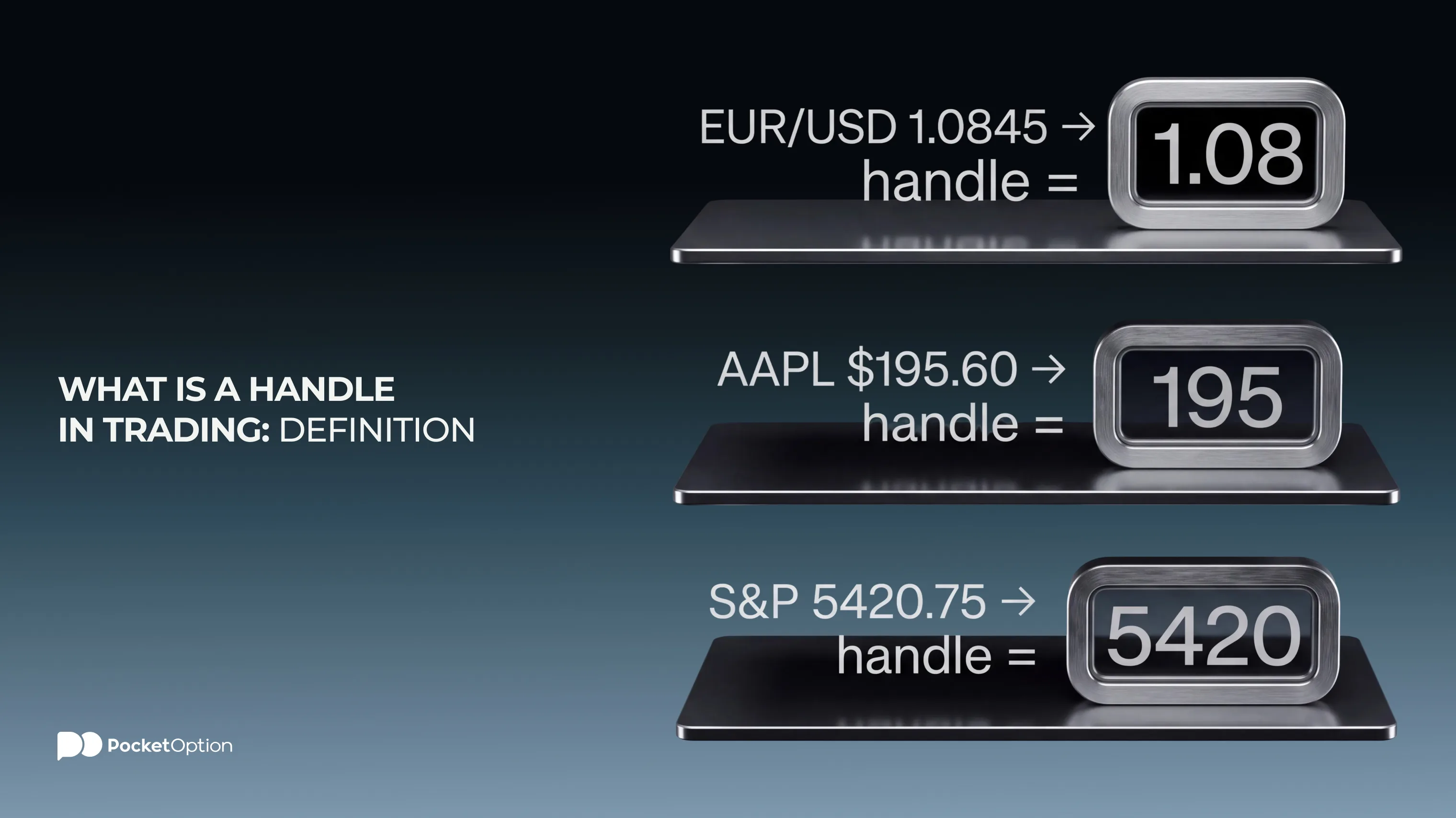
A handle in trading refers to the whole-number portion of a price quote. In stock trading, if a share is quoted at $142.35, the handle is 142. In forex, the handle is the leading digits shared by both the bid and ask that rarely change within a session. The handle is the stable part of the quote; the digits that follow are the variable part that traders focus on.
Handle in Forex Trading
In forex, the handle typically refers to the first three or four digits of a currency pair quote. If EUR/USD is quoted at 1.0845/1.0848, the handle is 1.08. Traders shorten the quote to "45/48" because the 1.08 handle is assumed. A guide to how forex currency pairs are quoted and traded covers how forex pairs are structured and why quoting conventions differ across brokers.
When the handle itself changes, for example from 1.08 to 1.09, it signals a significant price move. These transitions often coincide with key support or resistance levels and may attract increased volume. A look at how the forex market operates explains why these levels matter in the broader forex market.
Handle in Stocks and Other Markets
In stock trading, the handle is simply the whole-dollar amount. If Apple is trading at $195.60, the handle is 195. Traders might say "it's at sixty" to refer to the decimal portion, assuming the handle is known. A review of equity trading terminology and price conventions covers price conventions used across equity markets.
In futures trading, the handle works similarly. If the S&P 500 E-mini is at 5,420.75, the handle is 5,420. Futures traders often drop the thousands digit as well in fast-paced environments, quoting only "twenty and three quarters."
Why Traders Use the Handle as Shorthand
Speed and clarity. In fast markets, quoting the full price wastes time and introduces errors. By dropping the handle, only the changing digits are communicated. This convention is universal across forex, equities, and futures trading. It also helps traders set mental reference points: a "change of handle" from 1.08 to 1.09 is immediately recognised as a 100-pip move in EUR/USD.
Handle vs Pip: How They Relate
A pip is the smallest standard price increment in forex, typically the fourth decimal place (0.0001). The handle is much larger: it covers the first two or three digits of the quote. Moving from a 1.08 handle to a 1.09 handle represents 100 pips. The two terms operate at different scales. Pips measure individual price changes; the handle provides the reference frame within which those changes occur. Knowing both is part of fluent handle in trading terminology. Strategies for trading around rapid price moves often rely on handling changes as trigger levels.
Register Demo account in 5 minutes!
Get StartedConclusion
The handle in trading is the stable, whole-number part of a price quote that traders drop when communicating. In forex, it is the shared leading digits of bid and ask. In stock trading and futures trading, it is the whole-dollar or whole-point figure. Understanding the handle makes it easier to follow professional shorthand, set reference levels, and interpret rapid price communication accurately.
Disclaimer: Trading involves significant risk of capital loss. Past performance does not indicate future results. This article is for educational purposes only and should not be treated as financial advice.
See more:Glossary