What Does Gross Margin Mean and How Is Gross Margin Calculated?
What is gross margin, and why does it show up in almost every discussion of a company's financial health? Gross margin meaning, in short, is the percentage of revenue a company keeps after covering the direct costs of producing what it sells.

What Is Gross Margin: Definition
Gross margin measures how much of each dollar in sales is left over after paying for the direct costs of production, such as materials and direct labor. It is expressed as a percentage, which makes it easy to compare companies of very different sizes.
A retailer and a much larger competitor can both be evaluated on the same gross margin scale, even though their revenue and total profit dollars look nothing alike.
The Gross Margin Formula
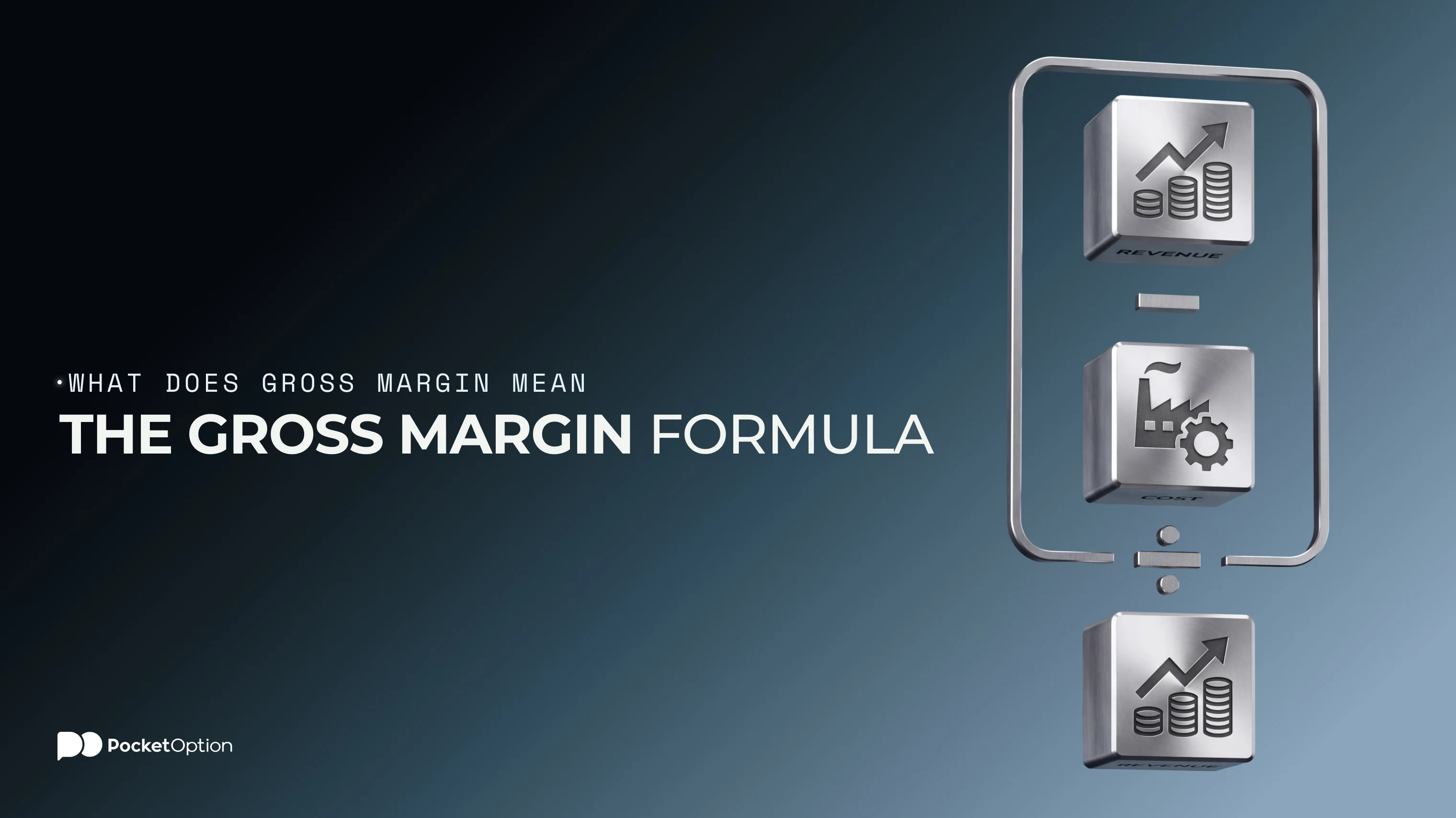
The gross margin formula is: Gross Margin = (Revenue minus Cost of Goods Sold) divided by Revenue, multiplied by 100. Cost of goods sold, or COGS, covers only the direct costs of producing what was sold, not the company's broader operating expenses.
This same gross margin formula is a specific version of the broader profit margin formula, applied specifically to production costs rather than every expense a business carries.
A Worked Example
Suppose a company generates $500,000 in revenue over a quarter, with $300,000 in cost of goods sold. Gross profit works out to $200,000.
Dividing that $200,000 by the $500,000 in revenue and multiplying by 100 gives a gross margin of 40 percent, meaning the company keeps 40 cents of every sales dollar before accounting for rent, salaries, marketing, and other operating expenses.
Gross Margin vs Gross Profit: Key Difference
Gross profit is a dollar figure: revenue minus cost of goods sold, full stop. Gross margin takes that same dollar figure and expresses it as a percentage of revenue, which is what makes it useful for comparison.
A company can grow its gross profit in dollar terms while its gross margin actually shrinks, if revenue grows faster than the underlying cost efficiency does. Comparing revenue against gross profit side by side makes this distinction concrete rather than abstract.
The Most Common Mistake When Calculating Gross Margin
The most common error is misallocating labor costs, specifically counting direct production labor as a general operating expense instead of including it in cost of goods sold. This mistake inflates gross margin artificially, since costs that should reduce it get pushed further down the income statement instead.
The fix is consistency: labor directly tied to producing the product or service being sold belongs in COGS, while labor tied to sales, administration, or management belongs in operating expenses.
What a Good Gross Margin Looks Like
A good gross margin depends heavily on the industry. Software companies often post gross margins above 70 percent since their marginal cost of delivering another unit is low, while grocery retailers frequently operate with gross margins under 30 percent due to thin markups on physical goods.
Comparing a company's gross margin to its direct competitors, the same benchmarking used when researching which stock to buy, is the only way the number means much of anything on its own.
Why Investors Check Gross Margin Before Trading a Stock
A rising gross margin over several quarters often signals pricing power or improving production efficiency, both of which tend to support long-term profitability. A shrinking gross margin can signal rising input costs or pricing pressure from competitors, either of which erodes the cushion available to cover operating expenses.
Investors typically track this trend over multiple reporting periods rather than reacting to a single quarter, since one-off cost spikes or temporary pricing moves can distort a single data point
Practice spotting margin trends.
Try Free DemoConclusion
Gross margin reduces a company's production efficiency down to a single comparable percentage, which is exactly why it shows up so often in financial analysis. The number means the most when tracked over several quarters and compared against direct competitors, rather than read as a single isolated figure.
Disclaimer: This article is for informational purposes only and does not constitute financial advice. Past gross margin performance does not guarantee future results.
See more:Glossary