What Does EBITDA Mean and How Is EBITDA Used to Value Companies?
Profit can be measured more than one way, and the number you pick changes the story. EBITDA is one of those numbers. It shows up all over valuation work, and it gets read wrong about as often as it gets read right.

EBITDA Meaning: What Does EBITDA Stand For?
The ebitda meaning sits right there in the letters. EBITDA is short for earnings before interest taxes depreciation amortization. So it is a measure of what a business made from running its operations, worked out before four particular costs get taken off.
Each of the four is pulled out for its own reason. Interest depends on how much the company borrowed. Tax depends on where it is registered. Depreciation and amortization are book entries that spread an asset's cost across several years, so no money leaves the business in the year they get recorded. Strip all four away and what is left is meant to look like plain operating performance.
Here is depreciation and amortization explained in a line. Depreciation covers physical things, machinery and buildings. Amortization covers what you cannot touch, licenses or patents. Both spread a cost over time rather than booking the lot at once.
How Is EBITDA Calculated?
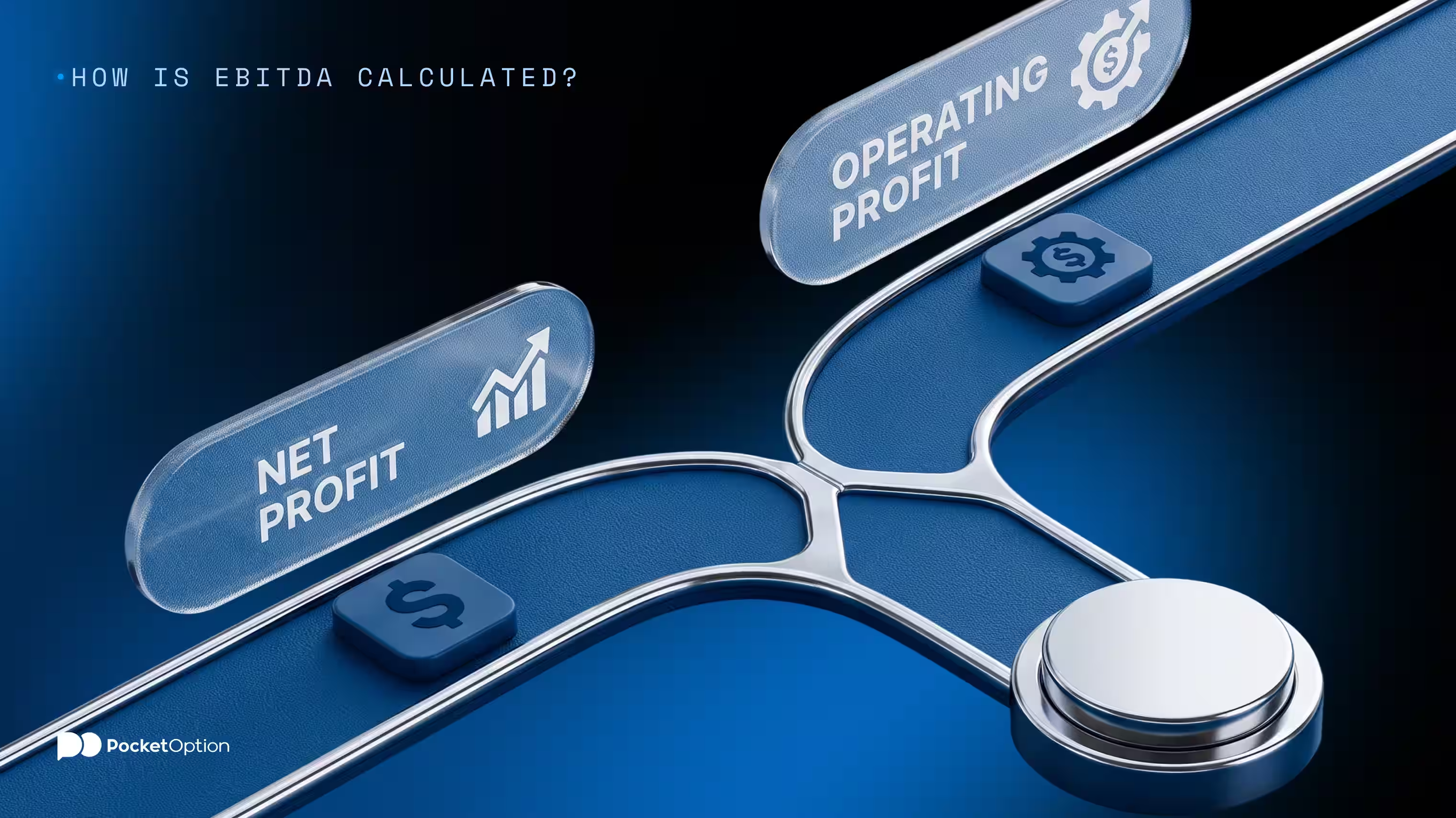
Two routes get you there, and both of them start on the income statement.
Work from the bottom up. Take net income and add back interest, tax, depreciation and amortization. This is the path people mean when they talk about going from net income to ebitda.
Work from the middle. Take operating profit and add back only depreciation and amortization, since interest and tax already sit below that line.
Both should land in roughly the same place. One practical note: the depreciation and amortization figures are often easier to dig out of the cash flow statement than the income statement, which is where a lot of first-time readers get stuck.
Why Do Investors Use EBITDA?
Mostly because it makes two businesses easier to line up next to each other. Two firms can run near-identical operations and report very different net income, simply because one is loaded with debt and the other is not. Taking those differences out puts the attention back on the operating side. The same instinct sits behind fundamental trading and value analysis.
Comparing companies with ebitda works best where the businesses do roughly the same thing but are funded differently. Across industries it gets shaky fast.
EBITDA in Valuation: Multiples and Comparisons
The usual tool here is the ev/ebitda multiple. Enterprise value, meaning market capitalization plus net debt, gets divided by EBITDA. The result is a rough answer to how many years of operating earnings the whole business is priced at.
Valuation multiples in investing all work the same way. A price figure on top, an earnings figure underneath, then a comparison against similar companies. The ev/ebitda multiple gets picked over price-to-earnings fairly often in deal work, because it counts debt as part of what a buyer takes on. This guide on how to invest in stocks sets out the wider picture before any single ratio.
Limitations and Risks of Relying on EBITDA
The big one is capital expenditure. A business that keeps buying and replacing equipment carries a real cost EBITDA does not show, since the depreciation charge standing in for that spending has just been added back. So capital expenditure and ebitda need reading together, never separately. A factory and an app studio can post the same EBITDA and be nowhere near the same shape.
Working capital gets skipped too, and so does debt service. Then there is adjusted ebitda, where management strips out whatever it calls one-off. Sometimes that is fair. Sometimes the same restructuring cost turns up four years running, so reading adjusted ebitda means reading the footnote underneath it. Much of this comes down to trading versus investing in outlook.
EBITDA vs Net Income, Operating Profit, and Cash Flow
The operating profit vs ebitda question is the smallest of the set. Operating profit already leaves out interest and tax. EBITDA takes that figure and removes the depreciation and amortization charge as well, so EBITDA is always the higher of the two at any company that owns assets.
Measure | What it leaves out | What it is useful for |
|---|---|---|
Net income | Nothing; it is the bottom line after everything | Shareholder earnings and per-share figures |
Operating profit | Interest and tax | Core trading performance with asset costs still counted |
EBITDA | Interest, tax, depreciation, amortization | Lining up companies with different debt and tax positions |
Operating cash flow | Non-cash items, but keeps working capital movements | Whether cash is genuinely coming in |
Operating cash flow is the one worth checking EBITDA against. Both start from a similar place, but cash flow keeps the working capital swings EBITDA drops. A wide gap that lasts more than a quarter or so is worth a closer look.
Common Misuses of EBITDA in Analysis
A few patterns come up again and again. EBITDA gets quoted as though it were cash, which it is not. It gets compared across industries with very different asset needs, which flatters the light ones. And a rising figure gets read as proof of health even while the debt pile grows underneath it.
It also gets used where the number barely means anything. Banks are the standard example: interest is not a financing cost for a bank, it is the business itself. EBITDA is a screening tool, and it was never meant to be the last word on anything.
Learn the mechanics before the money.
Open Demo AccountConclusion
If one thing sticks here, make it the depreciation add-back. That single adjustment is what lets you hold a debt-heavy company up against a debt-free one, and it is also the exact reason a capital-hungry business can look better than it deserves to. Same adjustment, both effects. Read the capital expenditure line beside it and most of the trouble goes away.
Disclaimer: This article is for informational purposes only and does not constitute financial advice. Trading involves risk, and losses can exceed initial deposits.
Xem thêm:Glossary