What Are Tangible Assets and How Do Physical Assets Create Value?
Tangible assets are the physical things a company owns and can put a price on: buildings, machinery, inventory, cash. They sit on the balance sheet as a floor under the business, value that does not depend on a brand story or a patent holding up in court. Intangible assets often drive growth, but tangible assets are what a company can fall back on when growth stalls.

What Are Tangible Assets: Definition
A tangible asset is any resource with a physical form that a company owns and expects to use or sell for economic benefit. It appears on a company's balance sheet at a value based on cost, adjusted over time for wear or depreciation. The test is simple: if it can be touched or physically inspected, it is tangible. Everything else, from patents to brand value, falls under the intangible definition instead.
Common Examples of Tangible Assets
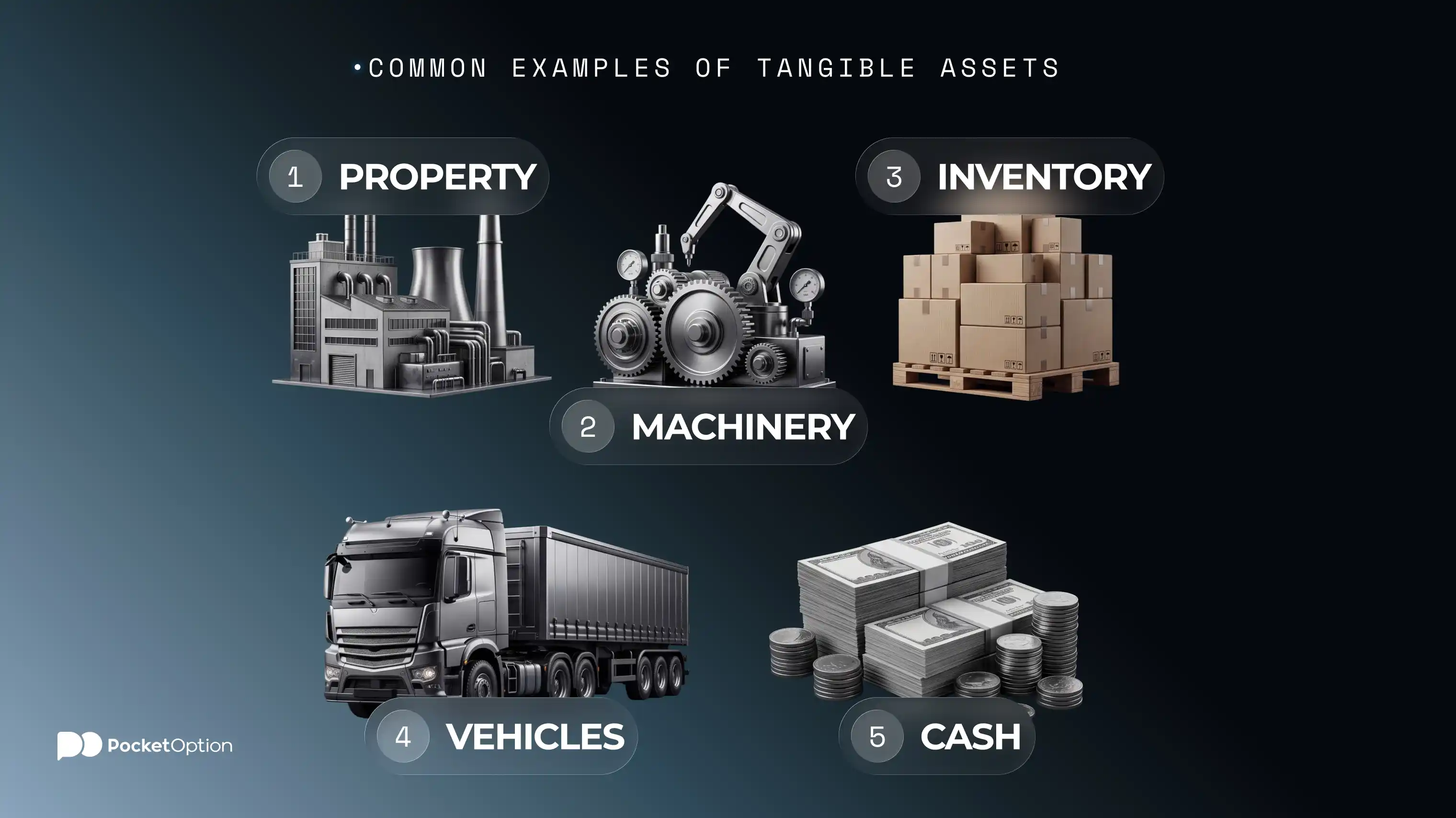
Tangible assets usually fall into a short, familiar list:
Property, plant, and equipment: factories, offices, machinery
Inventory: raw materials, work in progress, and finished goods
Vehicles and transport equipment
Land, held either for use or for its own resale value
Cash and cash equivalents, the most liquid tangible asset of all
Each can be sold on its own, apart from the rest of the business, which is part of what makes tangible assets easier to value than a brand or a customer list.
Current vs Fixed Tangible Assets
Tangible assets split further by how quickly they turn into cash. Current tangible assets, such as inventory, are expected to convert within a year. Fixed tangible assets, such as buildings, machinery, and land, are held for years and support production rather than being sold in the ordinary course of business. The split matters because market value can diverge sharply from a company's recorded book value for fixed assets, while current assets like inventory usually trade close to what their books already show.
Tangible vs Intangible Assets
Aspect | Tangible Assets | Intangible Assets |
|---|---|---|
Physical form | Yes | No |
Examples | Equipment, inventory, land, cash | Patents, trademarks, goodwill, brand value |
Valuation | Based on cost, market price, or replacement cost | Often estimated, harder to verify |
Behavior in a downturn | Can be sold or used as loan collateral | Value can fall sharply or become hard to realize |
Intangible meaning, in practice, is anything of value a company controls that cannot be physically handed over. The two categories are not opposites in importance: a strong brand, an intangible asset, can be worth more than every factory a company owns. It is simply harder to verify and sell in a hurry.
How Tangible Assets Are Valued
Three methods are commonly used to put a number on a tangible asset:
Book value: original cost minus accumulated depreciation, taken from the balance sheet
Market value: what the asset would sell for today, which can sit well above or below book value
Replacement cost: what it would cost to buy or build an equivalent asset new, useful for insurance and spotting outdated book values
Asset based company valuation typically starts from book value, then adjusts toward market value where a reliable market price exists.
Why Tangible Assets Matter to Investors
A company heavy in tangible assets has something to sell or borrow against if revenue disappears, which is why lenders like to see a solid asset base before extending credit. A company built mostly on intangible assets can still be a strong investment, but its downside is less cushioned: if the brand loses favor or a patent expires, there may be little physical value left to fall back on. Comparing tangible assets to total assets is a quick way to gauge how much of a company's value can actually be seen and sold.
Start with data, not guesswork.
Open Free AccountConclusion
Tangible assets are the part of a balance sheet that does not require faith in a brand, a patent, or a customer relationship holding its value. They can be touched, sold, and valued with reasonable confidence. That reliability has a cost: tangible assets rarely grow as fast as a successful intangible one can. Investors weighing a balance sheet benefit from checking both, rather than assuming either category tells the full story alone.
Disclaimer: Trading involves significant risk of capital loss and may not be suitable for all investors. Past performance does not guarantee future results.
See more:Glossary