What an Open Position Really Means for Your Live Risk
You place a trade and it fills. For as long as it stays open, you are exposed to the market: every price tick changes your potential profit or loss, whether you are watching the screen or not. That is what an open position is, a trade that is still active and exposed to market movements, the opposite of a trade that has been realised, or closed. This guide explains what an open position is, how floating P&L is calculated, and why it means real, live risk.

What Is an Open Position: Definition
An open position is a trade that has been entered but has not yet been closed, remaining active and exposed to market movements until it is closed with an offsetting trade. Buying a currency pair, stock, or commodity opens a position; selling it back closes it. While open, it generates floating, or unrealised, profit and loss, and consumes margin until it is closed or expires.
Open Position vs Closed Position
An open position is still exposed to market risk and generates floating P&L that can be adjusted or closed at any time; a closed position is completed, with no further market risk and a realised result that is locked in and cannot change.
Aspect | Open Position | Closed Position |
|---|---|---|
Status | Active, live trade | Completed trade |
Exposure | Exposed to market risk | No market risk |
P&L | Floating (unrealised) | Realised (locked in) |
Margin | Consumes margin | Frees up margin |
Can be modified | Yes: can be adjusted or closed | No: trade is finished |
How Floating P&L Is Calculated
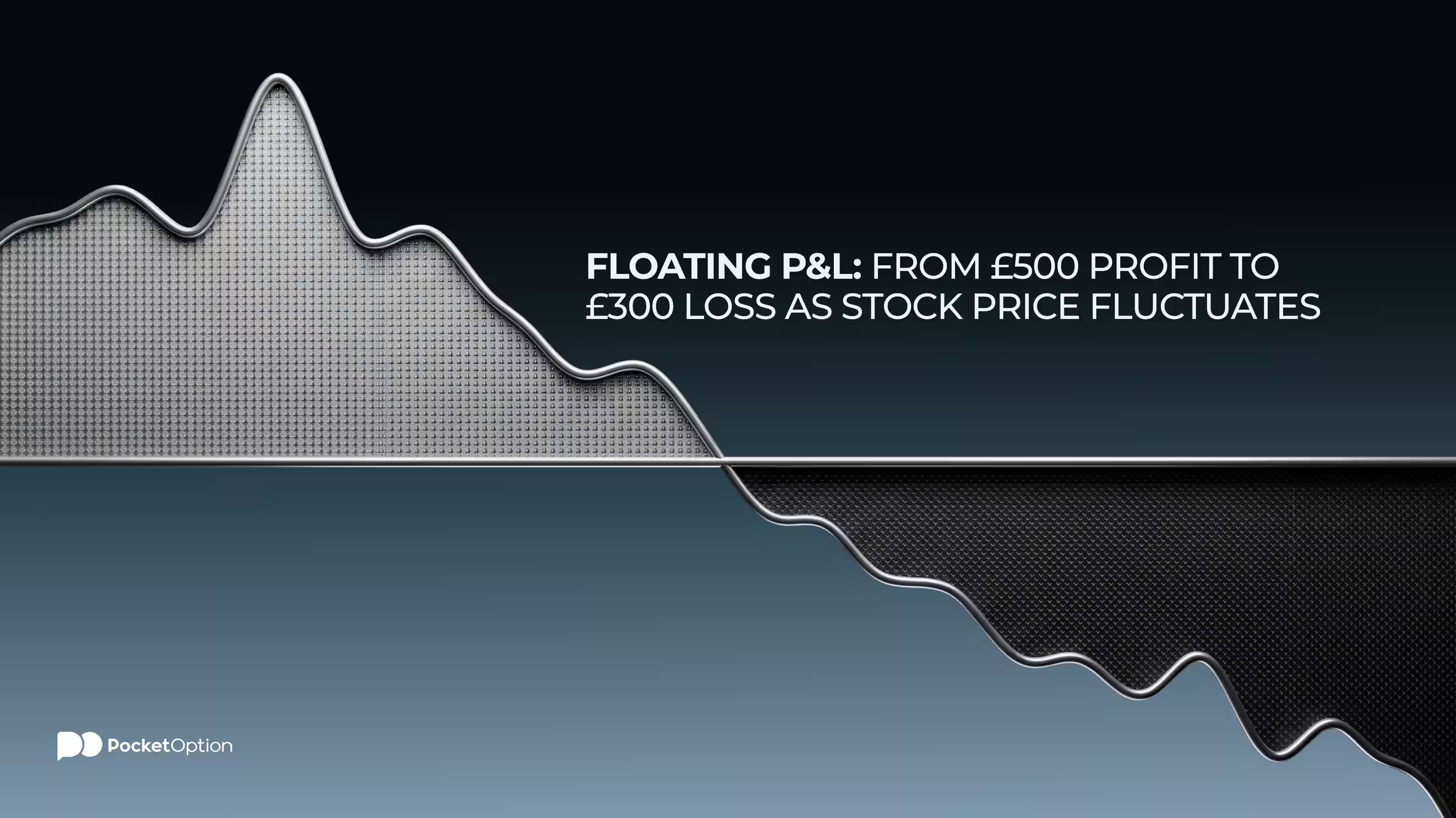
Floating P&L compares the current market price to the entry price. For a long position, Floating P&L = (Current Price – Entry Price) × Units, so it rises as price rises above entry. For a short position, it is reversed: Floating P&L = (Entry Price – Current Price) × Units. Buying 100 shares at £50.00 that move to £55.00 gives a floating profit of (£55.00 – £50.00) × 100 = +£500, which only becomes realised once the position is closed; if the price instead falls to £47.00, the same position shows a floating loss of –£300.
Why an Open Position Means Live Risk
An open position carries real, ongoing risk for as long as it stays open. Market risk is the most immediate: the longer a position is open, the more time the market has to move against you, and leverage can magnify a small move into a much larger swing in account equity. Positions are also exposed to overnight and weekend gaps, funding costs from holding past a rollover point, and margin risk, since a broker may close a position automatically if equity falls below the required level. The risk continues, in short, until the trade is actually closed.
Managing Risk While a Position Stays Open
Setting a stop-loss and take-profit level before entering, rather than after, gives a position a clear exit plan in both directions. From there, monitoring the position for changing conditions, using a trailing stop to protect gains as a trade moves favourably, and being aware of scheduled news events all help manage the risk that comes with staying exposed.
Conclusion
An open position is a trade that has been entered but not yet closed, still active and exposed to the market, generating floating profit or loss that changes with every price tick. It differs from a closed position mainly in that its result is not yet locked in and it continues to consume margin and carry risk. Managing that risk well means planning exits before entering and monitoring the position while it remains open.
Risk Disclaimer: Trading involves significant risk of capital loss. This article is for educational purposes only and does not constitute financial advice. Always conduct independent research and consider your risk tolerance before making any trading decisions.
Learn how floating P&L works and test stop-loss and take-profit strategies, without risking real capital.
Open Demo AccountSee more:Glossary