What Is Stagflation? Meaning, Causes and Impact on Financial Markets
Stagflation is the mix of high or stubborn inflation, weak growth and a soft job market. Here is what causes it, how it differs from plain inflation and recession, why it squeezes central banks, and how it may touch currencies, stocks, bonds and commodities.

Gas lines in 1974. Layoffs at the factory. Prices still climbing. The textbooks of the day said that combination shouldn't happen. It did.
What Is Stagflation?
Stagflation is the awkward mix. High or stubborn inflation. Weak or stalled growth. A soft job market too, or outright high unemployment. Iain Macleod, a British politician, coined the word in 1965.
Why awkward? Because the usual cures clash. Inflation calls for tighter policy. A weak economy begs for support. You can't do both. And no magic number says when an economy officially is in it. Analysts argue about that. Always have. Prices up. Paychecks stuck. Jobs scarce. That's the household version. That's why stagflation is more a diagnosis than a threshold.
Open a demo account and watch currencies, stocks and oil react on live charts.
Try Demo AccountHeadlines shout. Charts show what actually moved.
When stagflation fears hit the news, several markets react at once. Currencies, bonds, stocks, oil. A demo account lets you open those charts side by side. Virtual funds, real prices. Watch which ones jump first. Watch which ones just shrug. That's a better education than any definition. Try it during the next big data release.
Spend one data-release day on demo trading. See which markets flinch first.
What Causes Stagflation?
So what is stagflation really caused by? Rarely one thing. Usually a pile-up. Take the 1970s. Oil prices leapt after the 1973 embargo. Energy costs seeped into everything, from freight to fertilizer. Factories slowed. Prices kept rising anyway.
Want oil and a currency pair on one screen? The pocket option tutorial shows how to set that up.
Common causes:
Adverse supply shocks
Sharp rises in energy or commodity costs
Persistent supply constraints
Weak productivity growth
Policy conditions that keep inflation high as the economy slows
Real episodes mix several of these. One factor may lead. Others pile on. And what is stagflation, in the end? A pattern. Not a single cause.
Stagflation vs Inflation and Recession
Quick test for stagflation meaning: look at the combo. Inflation alone? Annoying, but not it. A recession alone? Painful, but not it either. Recessions can come with falling prices. Or rising ones. Only the pair, high inflation plus weak growth, fits.
Aspect | Weak growth, high inflation | Inflation | Recession |
|---|---|---|---|
Inflation | High or persistent | Prices rising | Can be high, low or falling |
Economic growth | Weak or stagnant | Can be strong or weak | Contracting |
Unemployment / labor market | Soft jobs, higher unemployment | Can be low or high | Usually rising unemployment |
Typical policy challenge | Fighting prices and weak growth at once | Tightening to cool prices | Easing to support activity |
Key distinction | Both problems together | Only prices rise | Output falls |
Why Stagflation Is Difficult for Central Banks
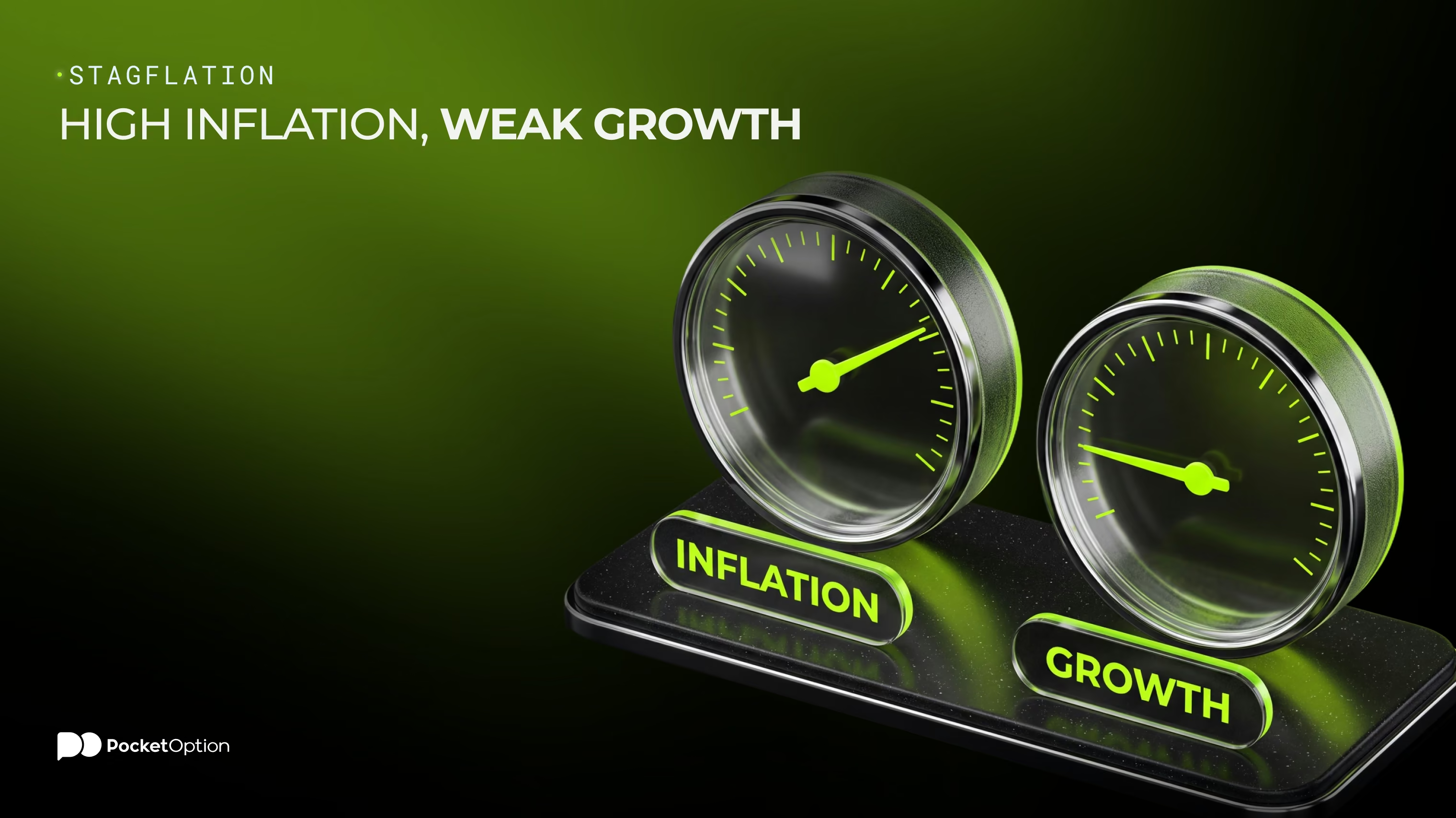
Here's the squeeze. Raise rates and tighter financial conditions can cool prices. They can also choke growth and jobs. Higher rates cool demand. That's the point. It's also the problem. Support the economy instead, and you may feed the price problem. Pick your poison.
Paul Volcker's Fed pushed rates very high in the early 1980s. The goal: break inflation. It worked. It also helped tip the economy into a deep recession. Was that the right call? Ask ten economists, get ten answers. There's no single correct response. And central banks don't follow a script.
How Stagflation Can Affect Financial Markets
Forget rules. Think channels. Stocks first. Costs climb while customers pull back. Margins get squeezed, and higher rates make future profits worth less today. Bonds are a tug of war. Inflation expectations pull one way. Rate policy pulls the other. Currencies depend on the other side of the pair: which economy has worse inflation, which has better growth, who inspires more confidence. Commodities? Supply shocks and price pressure can lift some. Can. Not will.
Nothing here is automatic. "Stocks always fall" and "commodities always rise" are slogans, not facts.
How Traders Can Interpret Stagflation Signals
No trades here. Look at the whole dashboard. Inflation trend. Growth data. Labor-market numbers. Commodity prices. Central-bank talk. One reading proves nothing. Which numbers moved together? What are central banks saying about them? Slowing growth next to high inflation can fuel worries. Worries aren't confirmation.
Risk Disclaimer: Trading involves significant risk of capital loss. This article is for educational purposes only and does not constitute financial advice. Always conduct independent research and consider your risk tolerance before making any trading decisions.
See more:Glossary