Place a Day Order and Limit Your Unfilled Order to One Session
You have found a stock you want to buy, set a limit price, and submitted the order. But how long does that unfilled order remain valid? If you do not specify otherwise, the answer on most platforms is: until the end of the trading day. That is a day order, the default time-in-force setting that controls how long an unexecuted order stays active. This guide explains what a day order is, what happens if it is not filled, and how it compares to GTC and market orders.

What Is a Day Order: Definition
A day order is a trade instruction with a time-in-force setting that keeps the order valid only for the current trading session. If the order is not executed by market close, it is automatically cancelled and does not carry over into after-hours trading or the next day. A day order can be a limit order, a stop order, or any other order type; the "day" designation controls how long the unfilled order remains active, not the duration of any resulting position. If placed outside regular hours, a day order is typically queued for the following session. A guide to how different order types are processed covers how different order types interact with time-in-force settings.
What "Duration: Day" Means on an Order Ticket
When an order ticket shows "Duration: Day" or "TIF: Day," it means the order will be automatically removed from the book at the end of the current session if it has not been filled. This is a time-in-force instruction that applies to the unfilled order only. It is important to understand what this does not do: a day order does not close an open position at the end of the session. If a day limit order is filled during the day, the resulting position remains open until the trader closes it. The "day" label governs order lifespan, not position lifespan.
What Happens If a Day Order Isn't Filled
If a day order is not executed by session end, it expires and disappears from the order book automatically, with no action required. In a partial fill, the unfilled portion is cancelled at market close. To attempt the same trade again, a new order must be placed the following session.
Day Order vs GTC Order
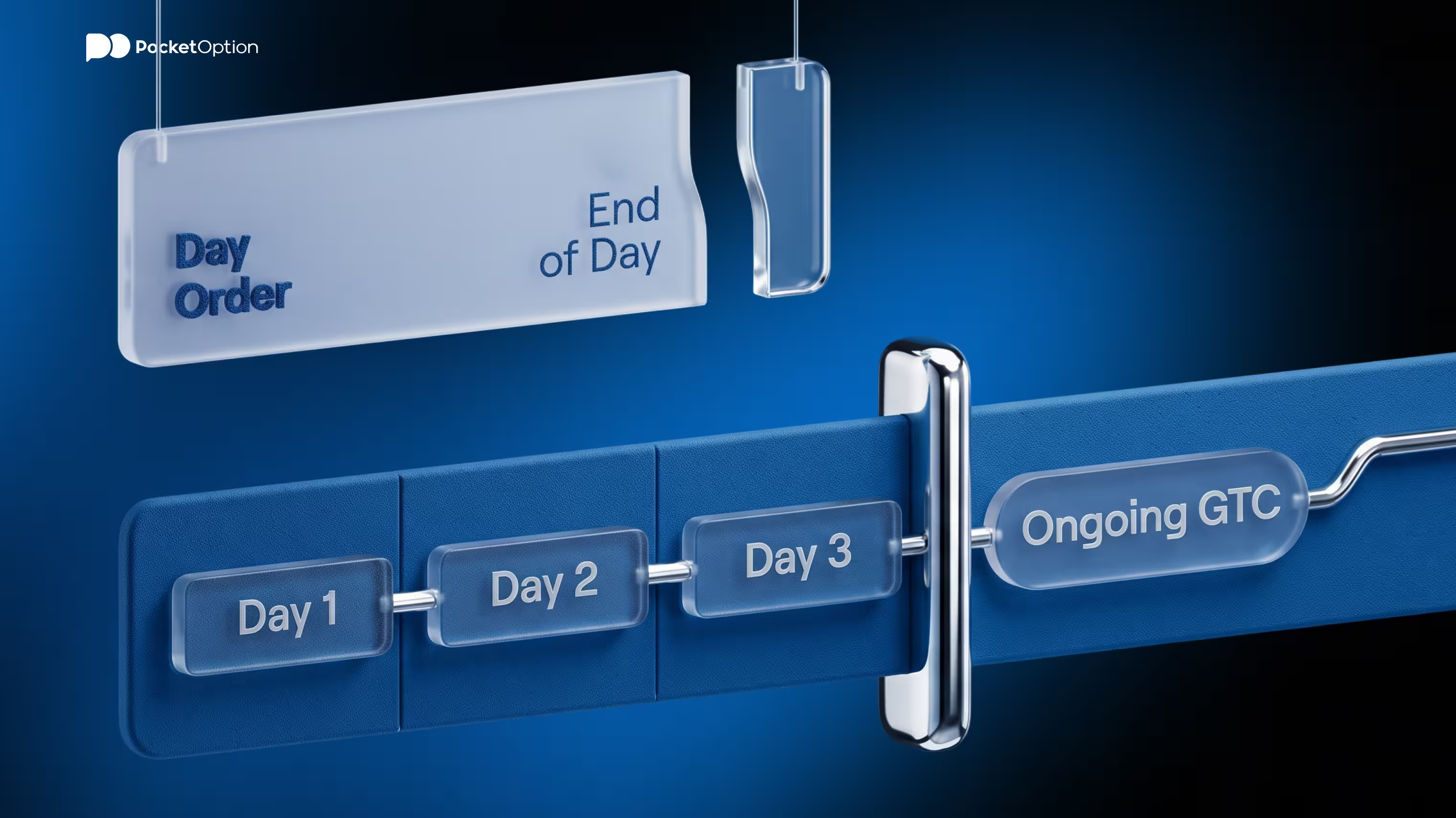
The main alternative is a Good 'Til Cancelled (GTC) order, which stays active until filled or manually cancelled, typically for 30 to 90 days depending on the broker.
Day Order | GTC Order | |
|---|---|---|
Duration | Current session only | Until filled or cancelled (30-90 days) |
Expiration | Cancelled automatically at close | Remains active across sessions |
Best for | Orders tied to same-day conditions | Longer-term price targets |
Risk | Must be re-entered if not filled | Can be forgotten; may execute unexpectedly |
Day Order vs Market Order
A day order and a market order are different concepts. A market order instructs the platform to execute immediately at the best available price, prioritising speed over price certainty. A day order is a time-in-force setting that controls how long an unfilled order stays active. Most market orders use a day time-in-force by default, but a day order can also be a limit order that waits for a specific price throughout the session. A guide to equity trading fundamentals and order mechanics covers how these distinctions apply in practice.
Day Orders in Practice
Day orders are commonly used when a trader's price target or analysis applies specifically to the current session's conditions. Because unfilled day orders are removed at the close, the trader avoids the risk of a stale limit order executing days later under different market conditions. However, if a day order does execute, the resulting position carries over into subsequent sessions unless separately closed. A guide to risk management strategies for active traders covers how to manage open positions beyond the session in which they were entered.
Conclusion
A day order is a time-in-force instruction that keeps an unfilled order valid only for the current trading session. It is automatically cancelled if not filled by market close. It differs from a GTC order, which can remain active for weeks, and from a market order, which describes execution priority rather than duration. Understanding how day orders work as a time-in-force setting is essential for managing unfilled orders effectively.
Risk Disclaimer: Trading involves significant risk of capital loss. This article is for educational purposes only and does not constitute financial advice. Always conduct independent research and consider your risk tolerance before making any trading decisions.
Test trading strategies in a risk-free environment with real-time price data.
Open Demo AccountSee more:Glossary