Isolated Margin: How It Limits Risk to a Single Position
Leveraged trading amplifies gains and losses alike. Isolated margin caps the damage: it assigns a fixed amount of collateral to one position, so a liquidation costs only that margin rather than the full account. This entry explains the mechanics, walks through an example, and compares isolated margin to cross margin.

What Is Isolated Margin: Definition
Isolated margin is a margin mode in which a specific amount of collateral is assigned to an individual position. If the position moves against the trader and hits liquidation, only that allocated margin is lost. The remaining account balance is unaffected. A guide to practical risk management strategies for traders covers how this fits into a broader risk management framework.
How Isolated Margin Works Step by Step
The sequence is straightforward:
The trader selects isolated margin mode before opening a position
A specific amount of collateral is allocated to the trade
The position is monitored against its allocated margin, not the full account
If the unrealised loss approaches the allocated margin, the position is liquidated
The rest of the account remains untouched
A Worked Isolated Margin Example
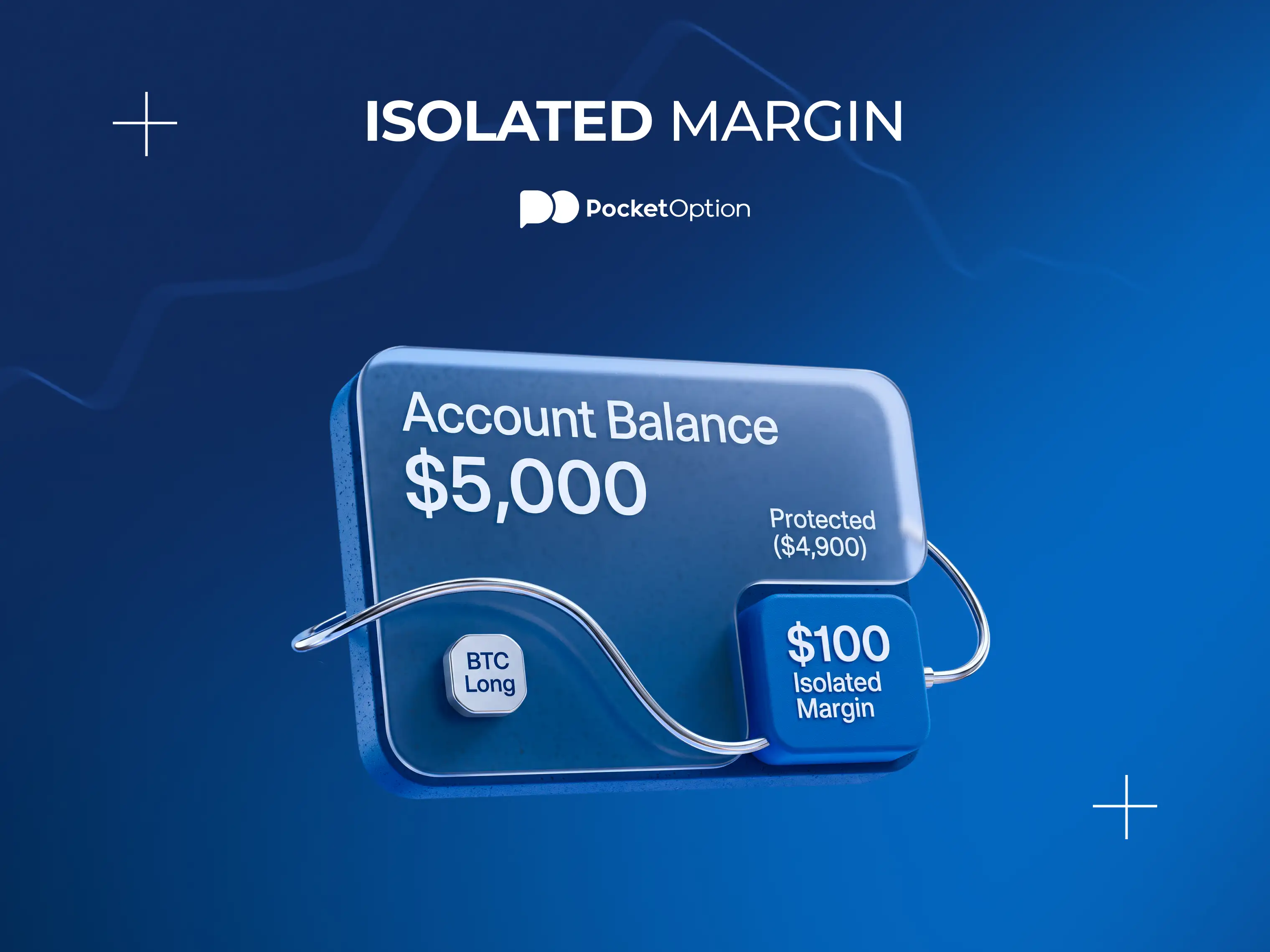
Suppose a trader has $5,000 and opens a long BTC position worth $1,000 at 10x leverage. In isolated margin mode, $100 is allocated as collateral. If BTC declines enough for the unrealised loss to consume the allocated $100 margin (the exact liquidation point depends on the platform's maintenance margin requirements, fees, and funding rates), the position is liquidated. The remaining $4,900 stays intact and is not affected by the liquidation.
Under cross margin, the same position would use the full $5,000 account balance as collateral. This delays liquidation because more collateral is available to absorb the loss, but it also means that if the position does eventually liquidate, the potential account-level loss is far larger. The loss itself does not change; what changes is how much of the account is exposed to it.
with Pocket Option Quick Trading
Get StartedIsolated Margin vs Cross Margin
The isolated margin vs cross margin distinction comes down to collateral scope. In cross margin mode, the entire account balance backs every open position. This provides more room before liquidation but exposes the full account to a single position's adverse move. A guide to managing risk in leveraged forex positions covers how leverage and margin interact in forex.
In short: cross margin is more capital-efficient but riskier at the account level. Isolated margin protects the account from a single catastrophic position.
Advantages and Disadvantages of Isolated Margin
The main advantages:
Maximum loss per position is known before the trade is placed
One liquidation does not affect other positions or the remaining balance
Forces disciplined position sizing
The main disadvantages:
Positions are liquidated sooner because less collateral backs them
Margin must be managed manually for each position
Unused balance does not support open trades
When to Use Isolated Margin
Isolated margin suits higher-risk or experimental trades where capping downside is the priority. It is also useful when running multiple positions to prevent contagion: if one position liquidates, the others and the remaining balance are unaffected. An overview of how margin works in crypto derivative trading shows how margin modes apply in crypto derivatives. Before trading with real capital, testing any margin-based strategy in a risk-free environment is advisable.
Conclusion
Isolated margin assigns collateral to a single position and limits the loss to that amount. It trades capital efficiency for account protection. Understanding the isolated margin vs cross margin choice is a key risk management decision for any leveraged trader.
with 0 risks and upfront payments!
Open DemoRisk Disclaimer: Trading with leverage involves significant risk of capital loss. Past performance does not indicate future results. This article is for educational purposes only and should not be treated as financial advice.
Vedi di più:Glossary