How Wrapped Assets Work: Minting, Backing and Depeg Risk
A token that tracks another asset one for one is worth exactly what stands behind it, and not a penny more. That backing is the whole story. It is also where wrapped assets go wrong on the occasions they do go wrong.

What Is a Wrapped Token?
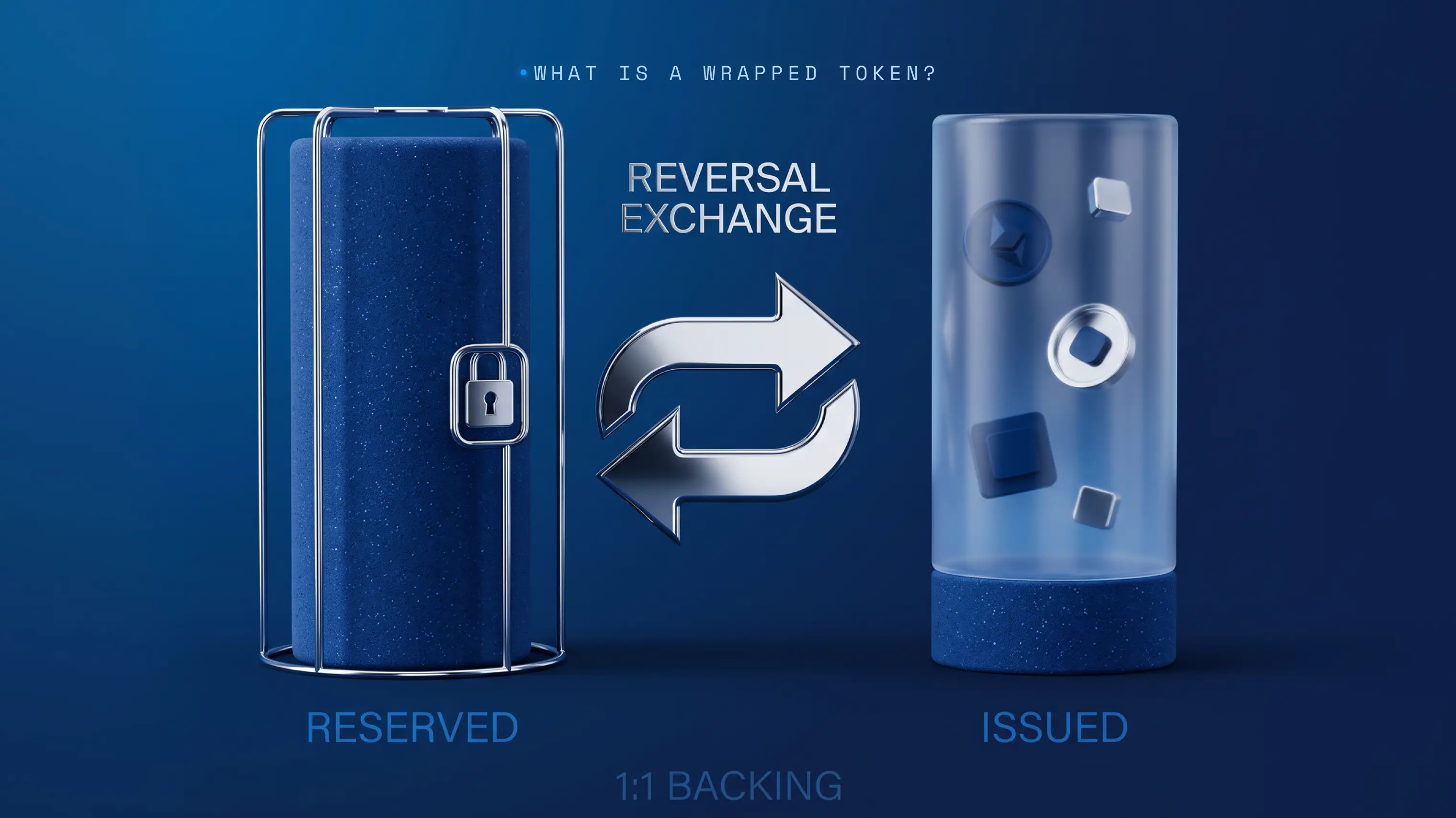
A wrapped token is a token on one blockchain standing in for an asset held somewhere else. The original gets locked up. A new token gets issued against it, on a chain where the thing can actually be used.
Wrapped asset explained in a line: plumbing is new, value is borrowed. WBTC represents Bitcoin over on Ethereum. WETH is ether repackaged so it behaves like every other token on its own chain. Neither one is the original. Both are claims on it.
The claim is the part that has to hold. A token is only ever worth whatever can be got back for it, and that rests on the arrangement behind the ticker rather than on the ticker.
Why Are Assets Wrapped?
Chains do not talk to each other natively. Bitcoin does not run Ethereum's smart contracts, and Ethereum has no idea what is going on over on Bitcoin. Wrapping is the workaround.
It lets an asset from one chain be used inside applications built on a different one.
It makes older assets conform to a token standard that lending pools and exchanges already understand.
It puts holdings to work somewhere they can earn rather than sitting still.
It saves the round trip of selling on one chain and buying back on the other, which costs fees and time in both directions.
Ether is the odd case here, since the mismatch is on its own chain. What wrapped Ethereum is comes down to timing more than anything: ether predates the token standard most applications were later built around.
How Wrapped Assets Maintain a 1:1 Peg
The 1:1 token peg is not a price anybody defends. It falls out of two things being true at once, that reserves cover what has been issued, and that somebody is able to get those reserves back. Who that somebody is depends on the arrangement. Some tokens let any holder redeem, others keep direct redemption to a short list of approved participants, and the terms come from whichever issuer or protocol stands behind the token.
Where both hold, arbitrage keeps the price honest. Wrapped version trades below the original, whoever can redeem buys it cheap, hands it in for the real asset and pockets the difference. Gap closes because closing it pays. That is all a peg is, really.
Break either half and the mechanism goes quiet. Reserves that do not cover issuance mean there is nothing on the other side to redeem for. Redemption that is paused, gated to approved partners, or simply slow means the arbitrage nobody can execute corrects nothing at all. Price drifts. A wrapped token can lose its peg without a single line of its code failing, which is the part that catches people out. Wrapped Bitcoin set against Bitcoin runs at the same distinction from the other side.
Minting and Redeeming Wrapped Tokens
Minting and redeeming tokens is the loop the whole arrangement runs on.
Someone sends the original asset to a custodian or a smart contract, where it gets locked.
Once that deposit is confirmed, an equal amount of the wrapped version is issued on the target chain.
The token then trades, lends and moves around like anything else native to that chain.
To go back the other way, the token is handed back and burned, and the original is released, though who is allowed to start that leg is set by the issuer.
On chain wrapping, the kind WETH and ETH held up next to each other describes, runs that entire loop inside a contract with nobody in it. Cross chain wrapping has to reach across two networks, and there is more than one way of arranging that. Sometimes a custodian holds the original, a company with staff and an address. Sometimes the original sits locked in a contract or a bridge mechanism on the source chain while the wrapped version is issued on the destination one. Which model is in use decides who ends up being trusted, so it is worth knowing which one you are buying into.
The Role of Collateral and Custodians
Crypto token backing splits into two separate questions. What is held, and who is holding it.
A collateralized crypto token backed inside an on chain contract is verifiable. Anyone can read the balance for themselves. A token custodian is a different proposition, though not always a blind one. Reserves parked on another blockchain can still be public, since a published address can be read on that chain by anyone who cares to look, even where the keys belong to a custodian. What no contract on the destination chain can check is whether those addresses are the right ones, whether anything else is owed against them, or whether some of the backing sits outside public chains altogether. That part runs on attestation.
Before buying, worth working through:
Wrapped coin reserves published on chain, and whether the address given is one you can check yourself.
How often reserves are attested, and by whom. An annual review is not a daily feed.
Who the custodian is, which jurisdiction it answers to, and what happens to holders if it fails.
Redemption terms. Open to anyone, or only to approved partners above a minimum size?
Audit history on the contract, plus whether anything found in one has since been fixed.
Whether mint and burn activity roughly tracks the reserve balance over time.
None of that makes a wrapped token safe. It tells you what is being relied on instead, which is a different thing and a more useful one.
No exchange hours, no waiting.
Open an AccountConclusion
The Bitcoin behind a wrapped token is sat in a vault somewhere and the token in the wallet is a note saying that it is yours. Hold the note, trust the vault. Every question worth asking about a wrapped asset is some version of that second half, and no amount of clean contract code on the first half will answer it for you.
Disclaimer: Digital assets carry significant risk and prices can move sharply. This article is for informational purposes only and does not constitute financial advice.
See more:Glossary