How the Offer Price Appears in the Market
Every price quote in financial markets is actually two prices, not one. If you have ever looked at a stock or currency pair and wondered why there are two numbers side by side, you have encountered the bid and the offer. This guide explains what the offer price means in everyday trading, how it differs in an IPO context, and how it forms the spread.

What Is Offer Price: Definition
The offer price (also called the ask price) is the lowest price at which a seller is willing to sell a specific asset at any given time. It is the price you pay when you buy immediately with a market order. Under normal market conditions, the offer price is higher than the bid price, the price a buyer is willing to pay. An offer quote might look like $5.24 x 1,000, meaning someone is offering to sell 1,000 shares at $5.24 per share. A guide to how currency pairs are quoted covers how two-way quotes are structured across different instruments.
Offer Price vs Bid Price: Reading a Quote
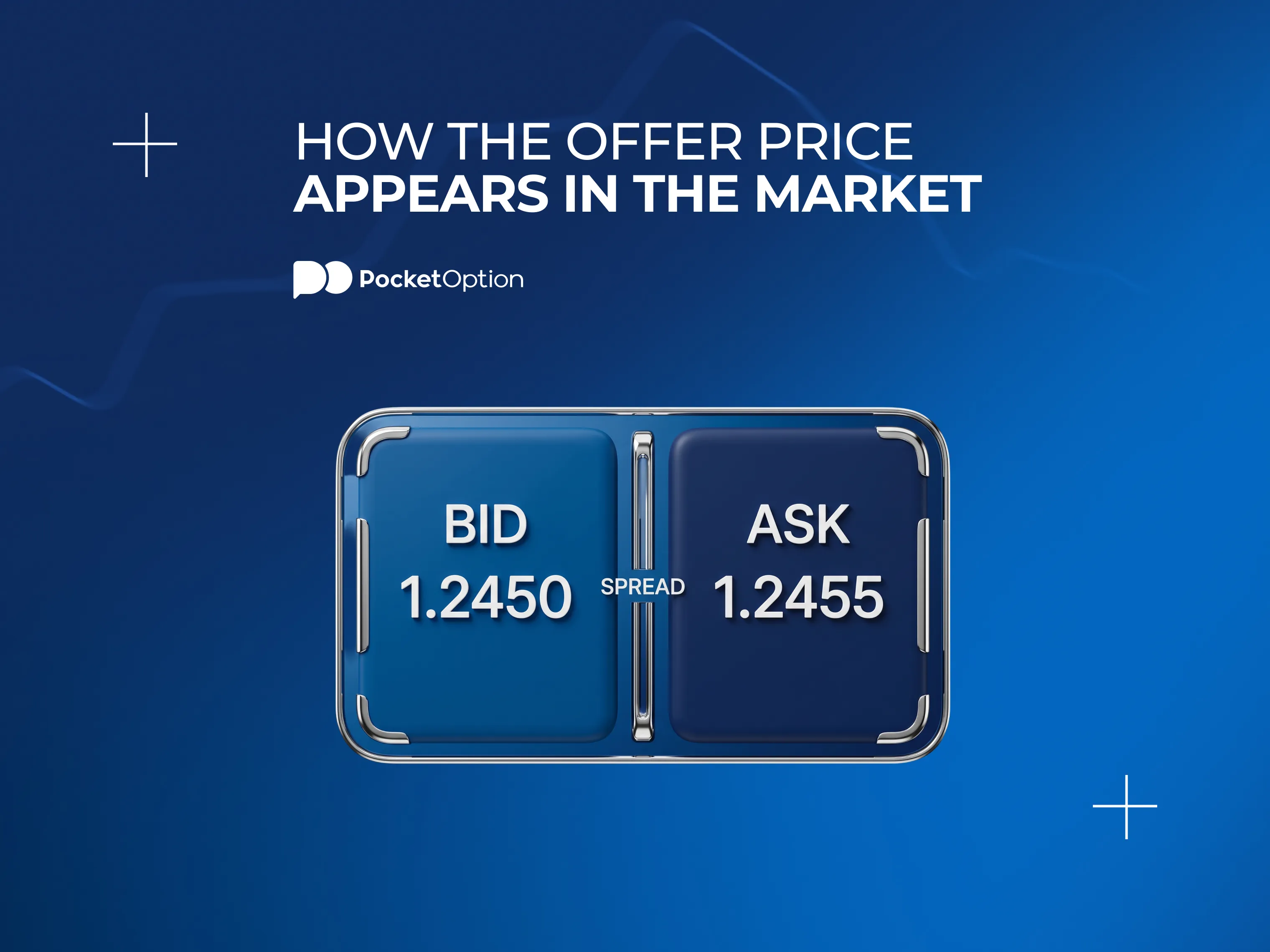
A typical two-way quote shows both prices. The bid is on the left; the offer (ask) is on the right. For EUR/USD at 1.2872/73:
Bid: 1.2872 (you can sell one euro for 1.2872 US dollars)
Offer (Ask): 1.2873 (you can buy one euro for 1.2873 US dollars)
Aspect | Bid Price | Offer Price |
|---|---|---|
Who sets it | Buyers | Sellers |
What it means | Highest price a buyer will pay | Lowest price a seller will accept |
Side of market | Demand | Supply |
Your action | You sell at the bid | You buy at the offer |
How the Offer Price Forms the Spread
The spread is the difference between the bid and offer prices. It represents a trading cost: buying at the offer and immediately selling at the bid means losing the spread. Spreads tend to be narrower on highly liquid instruments and wider during volatile conditions or on thinly traded assets. The spread is separate from any commissions or markups a broker may charge on top; the total transaction cost is the spread plus any additional broker fees.
Why Offer Price Can Move Throughout the Day
The offer price is not static. It shifts continuously as supply and demand change. Several factors drive these movements:
New buy or sell orders entering the order book alter the best available offer
Economic data releases and scheduled events can cause rapid repricing; a guide to how scheduled events drive price moves covers the most impactful ones
Liquidity changes across trading sessions: offer prices tend to tighten during peak hours and widen during quieter periods
Shifts in broader market sentiment or risk appetite can move offer prices across entire asset classes simultaneously
Understanding how volatility affects price behaviour helps explain why the offer price can gap or spike around high-impact events.
Offer Price in an IPO or New Issue Context
In an initial public offering, the offering price is the price at which new shares are offered to the public by an underwriter, a fixed price set before trading begins. Underwriters weigh the company's financials, growth prospects, market conditions, and demand during bookbuilding to set it.
Offering Price vs Opening Price
Aspect | Offering Price | Opening Price |
|---|---|---|
When set | Before the IPO, by underwriters | On the first day of trading |
Determined by | Underwriters and bookbuilding | Market supply and demand |
Who can buy | Varies by offering and broker | All market participants |
A stock's offering price is an estimation of what bankers expect the market to pay. Once trading begins, market forces take over and the price can deviate, sometimes jumping on the first day and sometimes falling below the offering price.
Conclusion
The offer price means two different things depending on context. In daily trading, it is the lowest price a seller will accept, almost always higher than the bid under normal conditions, with the difference forming the spread. In an IPO, the offering price is a fixed price set by underwriters before trading begins. Knowing which meaning applies and how to read a quote is essential for any trader.
Risk Disclaimer: Trading involves significant risk of capital loss. This article is for educational purposes only and does not constitute financial advice. Always conduct independent research and consider your risk tolerance before making any trading decisions.
See live price quotes in action and test your trading ideas without risking real capital.
Open Demo AccountSee more:Glossary