How Pump and Dump Schemes Create Short-Lived Spikes and Painful Drops
A sudden surge in a stock price followed by an equally sudden collapse is a hallmark of market manipulation. The pump and dump scheme is the mechanism: inflate a price through misleading promotion, sell at the peak, and leave late buyers with losses. This entry explains the mechanics, which assets are targeted, and what warning signs to watch for.

What Is a Pump-and-Dump Scheme
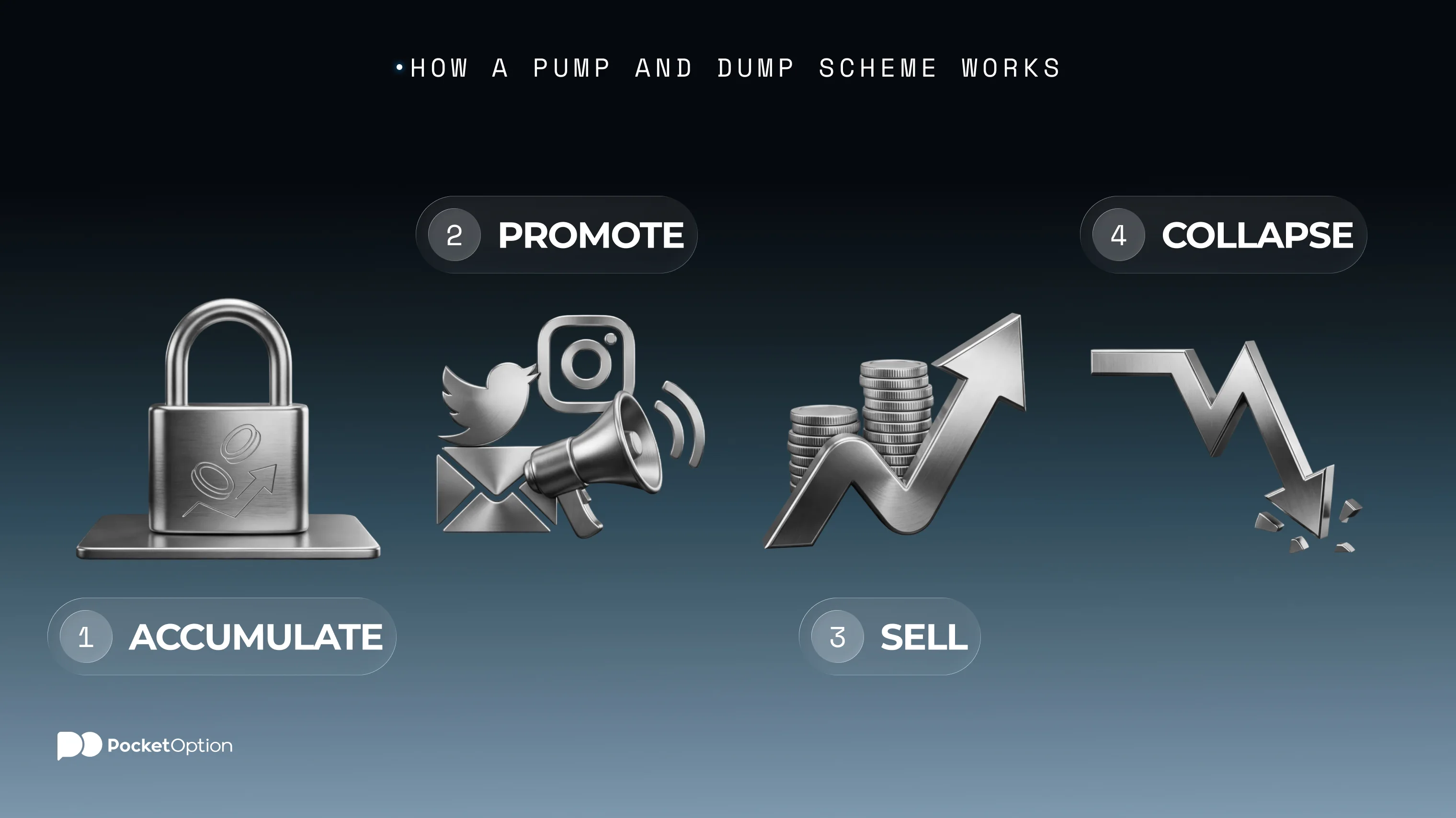
A pump and dump is a form of market manipulation in which promoters accumulate a low-priced asset, then inflate its stock price through exaggerated or false claims. Once the price attracts outside buyers, the promoters sell. The stock price then falls sharply, and late buyers absorb the loss.
How the Scheme Unfolds Step by Step
The sequence begins with quiet accumulation at low prices. Next comes coordinated messaging across social media or newsletters, often citing fabricated catalysts. As outside buyers respond and the stock price climbs, the promoters sell. Volume dries up, and the price falls back to its starting point or lower.
Why Penny Stocks and Small-Cap Assets Are Common Targets
Pump and dump schemes overwhelmingly target penny stocks and small cap stocks. A guide to how penny stock markets work explains why these securities behave differently. The reasons are structural:
Low liquidity means a small amount of buying pressure can move the stock price sharply
Limited analyst coverage means fewer independent voices questioning the hype
Many penny stocks trade on OTC markets with lighter disclosure rules
Retail-heavy investor bases are more responsive to promotional messaging
An overview of how OTC and pink-sheet securities trade describes the disclosure gap on these exchanges. The same dynamics apply to low-liquidity cryptocurrency tokens, which have become frequent pump dump targets.
with real market conditions!
Try Demo AccountRed Flags That Signal a Pump Before the Dump
Recognising the pump phase early is the best defence. Warning signs include:
Sudden volume spikes with no material news or filings to justify the activity
Aggressive promotion on social media or unsolicited newsletters with vague claims
A rapid stock price increase of 50%+ in a session on thin volume history
No institutional ownership or credible analyst commentary on the asset
Promoters urging urgency: "get in before it's too late"
How to Protect Yourself from Getting Caught
Avoiding losses starts with scepticism toward unsolicited tips on penny stocks and small cap stocks. Check filings before acting on claims and verify that volume has a real catalyst. A grounding in risk management strategies for active traders helps build protective habits.
in different trading modes
Get StartedConclusion
A pump and dump scheme exploits low liquidity and retail enthusiasm to create an artificial stock price spike. Penny stocks, small cap stocks, and low-liquidity tokens are the most common vehicles. Recognising red flags, checking filings, and maintaining disciplined strategies for navigating volatile price moves are the best defences against this form of market manipulation.
Risk Disclaimer: Trading involves significant risk of capital loss. Past performance does not indicate future results. This article is for educational purposes only and does not constitute financial advice. Pump-and-dump schemes are illegal in most jurisdictions.
See more:Glossary