Dovish Central Bank Signals Before Volatility Hits Forex Markets
Central bank language can move a currency pair further and faster than any data release. When policymakers shift toward a dovish tone, the signal often reaches forex markets before the rate decision. This entry explains what dovish means, how it contrasts with hawkish, and what traders watch for when a policy shift is forming.

What Does Dovish Mean: Definition
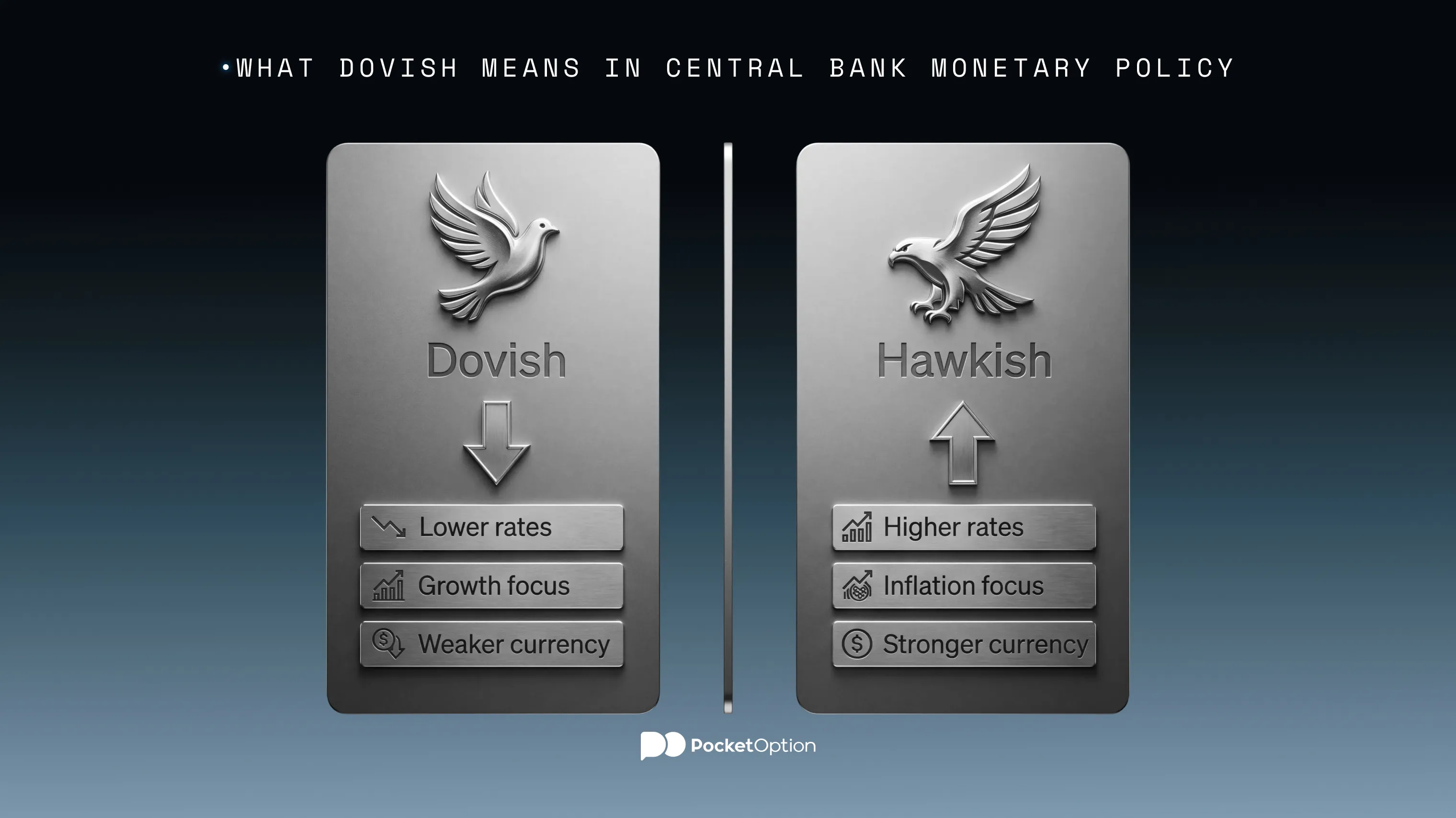
In monetary policy, dovish describes a stance favouring lower interest rates and accommodative conditions to support growth and employment, even if it means tolerating moderate inflation. A dovish central bank is more likely to cut rates or delay hikes. A deeper look at how central bank decisions drive forex volatility covers the tools central banks use to influence forex prices.
Dovish vs Hawkish: Key Difference
A hawkish stance prioritises inflation control through higher rates. A dovish stance prioritises growth, accepting some inflation. The distinction drives capital flows: a hawkish Federal Reserve strengthens the dollar, while a dovish Fed weakens it as lower yields reduce its appeal. Understanding how interest rate differentials affect currency pairs explains how rate differentials feed into pair pricing.
Signals That Suggest a Central Bank Is Turning Dovish
The shift rarely happens overnight. Traders monitor several leading indicators:
Forward guidance shifting to phrases like "patient approach" from "vigilant on inflation"
Open market operations that inject liquidity rather than drain it
Voting records showing more dissents in favour of lower rates
Wall Street analysts revising rate-path forecasts downward
Softening economic data (rising unemployment, slowing GDP) that gives room to ease
to practice trading strategies!
Open DemoHow Forex Markets React to Dovish Announcements
When a dovish shift is confirmed, the domestic currency typically weakens against peers. Lower interest rates reduce the yield advantage, and capital flows toward currencies offering better returns. The stock market may rally, as cheaper borrowing supports corporate valuations.
The reaction is sharpest when the announcement surprises. If Wall Street already prices in a rate cut, the decision may produce a muted move. If the tone is more dovish than expected, the currency can drop rapidly and the stock market may gap higher.
Trading Volatility Around Dovish Policy Shifts
Volatility spikes around central bank events create opportunity and risk. A guide to strategies for trading around volatile events covers how traders structure entries around announcements. Key points:
Spreads widen and slippage increases in the minutes surrounding the release
Whipsaw moves are common: the initial reaction may reverse within the session
Position sizing should reflect elevated risk; managing risk during high-impact forex events outlines practical approaches
on Pocket Option Forex trading Demo account
Get StartedConclusion
Dovish describes a central bank posture favouring lower rates and accommodative policy. It stands opposite hawkish, which targets inflation control. For forex traders, spotting a dovish shift early through forward guidance, open market operations, and voting records can be as valuable as the announcement itself. The currency weakens, the stock market often strengthens, and volatility rises around the event.
Risk Disclaimer: Trading involves significant risk of capital loss. Past performance does not indicate future results. This article is for educational purposes only and should not be treated as financial advice.
See more:Glossary